By research themesBy division(s)By experiments
![]() |
27-12-2009
Since the restart of the LHC on 20 November, CMS has taken advantage of the excellent operating performance of the collider to record a large amount of useful data. This is now being used to check its correct operation and calibration. During this period, CMS has demonstrated the stability of ... More » |
![]() |
23-12-2009
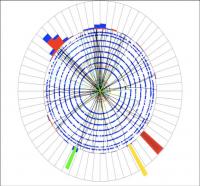
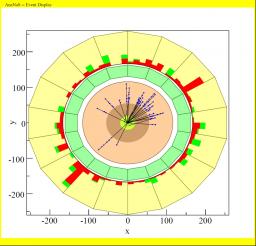
Monday, 23 November 2009, marked the first particle beam collision inside the large detectors of the LHC. ALICE saw its first collisions at an energy of 900 GeV, enabling it to check for correct operation of the 18 large detectors which comprise it. Since 27 November, with just a few days worth ... More » |
![]() |
23-12-2009
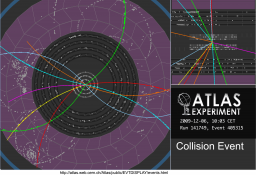
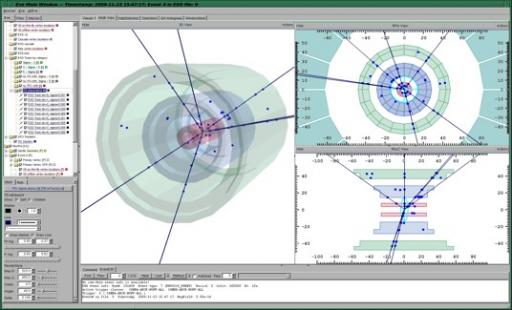
Since the accident which occurred on the LHC accelerator several days after its commissioning in 2008, the ATLAS collaboration has been impatient to observe "true" events produced at the centre of the detector, and to make the equipment function under real conditions. On 23 November, following ... More » |
![]() |
14-12-2009
Microquaser gamma emission observed for the first time
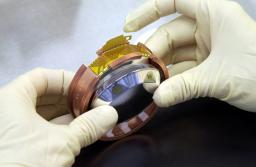
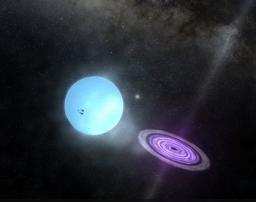
For the first time, the high-energy gamma rays emitted by a microquasar have been spotted with certainty, thanks to NASA's Fermi telescope. The observation of the microquasar Cygnus X-3 by a French team (CEA-IRFU, CNRS-INSU and IN2P3, University of Paris Diderot, Joseph Fourier University) ... More » |
![]() |
11-12-2009
Edelweiss-ID: innovative detectors for tracking dark matter in the Milky Way
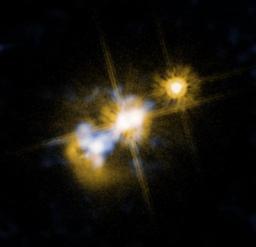
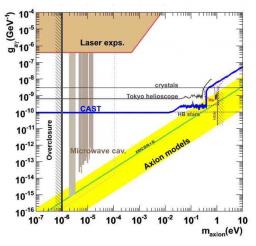
The new generation of detectors from the Edelweiss experiment, which is searching for dark matter, have just delivered their first results. Remarkably reliable and robust, they have proved excellent at removing interference signals. Although only just installed and not yet ... More » |
![]() |
26-11-2009
Do quasars give birth to galaxies?
Which came first - the black hole or the galaxy? Many large galaxies in the Universe have a supermassive black hole at their centre. But which came first? The black hole that is frantically consuming the matter around it or the vast galaxy that is its home?
A European team led by David Elbaz from ... More » |
![]() |
16-11-2009
Work on a new clean room, begun in July 2007 at the Saclay accelerator platform, has just been completed. The new clean room will be officially opened on 24 November 2009 and will replace the chemical facilities and clean room of IRFU's Accelerators, Cryogenics and Magnetism ... More » |
![]() |
16-11-2009
For more than 20 years, solid niobium has had the monopoly on high-gradient applications of superconducting radio frequency (SRF) cavities for particle accelerators. But it will soon have reached its limits. It was only recently that A. Gurevich, a theoretician from Florida State University, put ... More » |
![]() |
10-10-2009
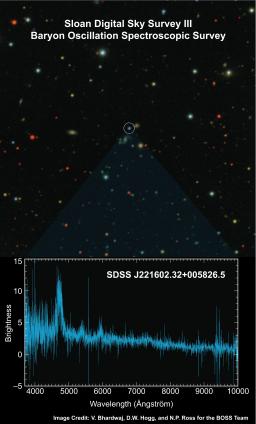
The Baryon Oscillation Spectroscopic Survey - known as Boss - delivered its first data during the night of 14-15 September. This experiment, devoted to the search for baryon oscillations, heralds the start of a new era of research into dark energy and the evolution of the Universe. Several ... More » |
![]() |
30-09-2009
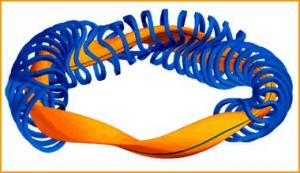
The last coil of the Wendelstein W7X stellarator left CEA-Saclay last week, on Wednesday 9 September 2009 to be precise. The event marks the end of trials on the 70 coils of this fusion reactor and seals the success of a major project that began in 1998 and involved many teams from IRFU ... More » |
![]() |
14-09-2009
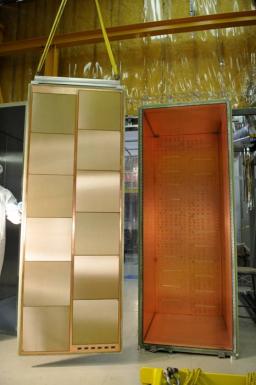
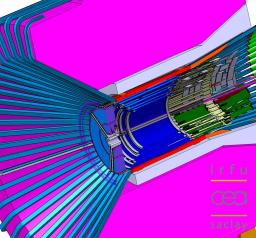
Engineers and physicists from IRFU have successfully assembled and commissioned three large chambers designed to reconstruct charged particle tracks. The chambers will characterize the neutrino beam used in the T2K (Tokai to Kamiokande) experiment. They are the first large Time ... More » |
![]() |
18-06-2009
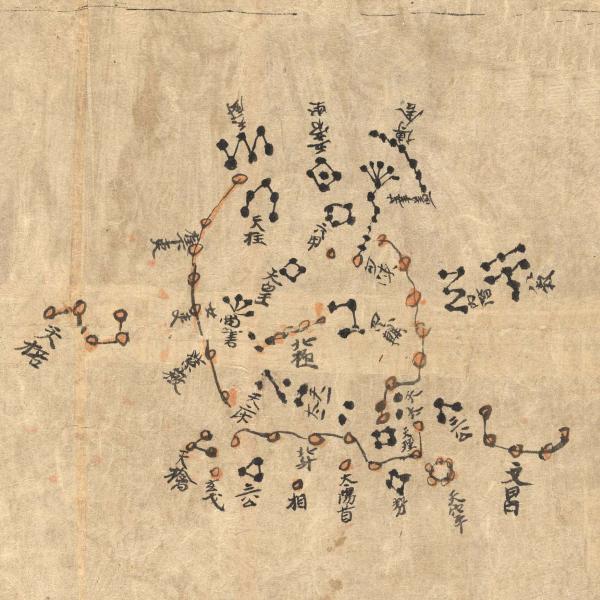
A precious Chinese document brought back to light from the legendary Silk road
A spectacular document relating to the history of astronomy is brought back to light by a recent study from a group of scholars led by Jean-Marc Bonnet-Bidaud from the CEA Astrophysical Department [1]. The document, called the Dunhuang chart, now kept at the British Library in London, is a complete ... More » |
![]() |
05-06-2009
An IRAMIS team is fitting out a basement area for the purposes of a scientific programme to study laser electron acceleration. Electrons will be generated by the interaction of a laser beam with a helium gas jet. The team called on SENAC, an IRFU department concerned with decommissioning, clean-up ... More » |
![]() |
02-06-2009
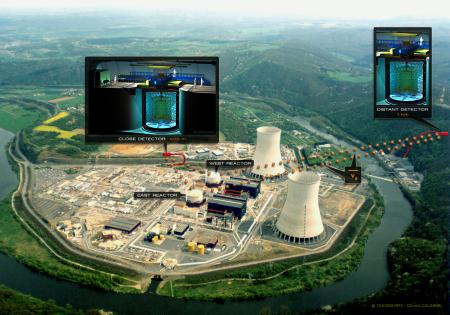
The second phase of the Double Chooz international experiment officially began on Wednesday 20 May. The Declaration of Intent signed by the four partners (CEA, CNRS, EDF, Champagne-Ardenne Region) is the first step in the plan to build a second detector devoted to neutrino research next ... More » |
![]() |
02-06-2009
A research team has just published the most precise measurement ever of the rate of gravitational collapse supernovae observed in the Universe 3.7 billion years ago
The Supernova Legacy Survey (SNLS) team at the Canada-France-Hawaii Telescope facility has just obtained the world's best measurement of the explosion rate of massive stars when the Universe was only 10 billion years old. A research team at IRFU's particle physics department at the ... More » |
![]() |
05-05-2009
At the end of March 2009, the ALICE Muon Spectrometer took cosmic rays over a period of two weeks. The ALICE group at Saclay2 was closely involved in the design, development, construction and installation of a part of the chambers of this Spectrometer3. The purpose of the cosmic ray test was to ... More » |
![]() |
22-04-2009
Since researchers have been confronting the standard model of particle physics with experimentation, nothing has been able to shake it. Of all particles it describes, only the Higgs Boson has not yet been discovered. But the standard model is probably not the ultimate theory: it does not cover ... More » |
![]() |
21-04-2009
It has now been more than two years that Antares1, the underwater telescope installed in the depths of the abyssal plains 2500 m under the Mediterranean, is scanning the skies through the Earth in search of neutrinos. Over a thousand of them have already been observed until today, making ... More » |
![]() |
06-04-2009
Until the advent of the LHC, the Tevatron at the Fermi National Accelerator Laboratory, Fermilab (close to Chicago, USA), will remain the world's most powerful collider and the only location where the top1 quark can be produced.
The DØ experiment recently published2 ... More » |
![]() |
07-03-2009
The Nobel Prize for Physics 2008 rewarded Makoto Kobayashi and Toshihide Maskawa for having realised that the weak interaction does not affect particles and antiparticles in the same way1. In this theory, it was expected that the strong interaction would exhibit the same type of asymmetry between ... More » |
![]() |
18-02-2009
The FERMI observatory has discovered the most energetic gamma-ray burst ever detected
The Fermi gamma-ray space telescope [1] has detected the most violent gamma-ray burst ever recorded; a gigantic explosion marking the death of a massive star. Light from this explosion, captured by the Fermi observatory on September 16th 2008, had taken 12.2 billion years to reach Earth. ... More » |