CEA    Saclay    SACM    SAp     

Institut de Recherche sur les Lois Fondamentales de l'Univers

drapeau drapeau

« Research themes

« Magnets and accelerators

Superconducting magnets 

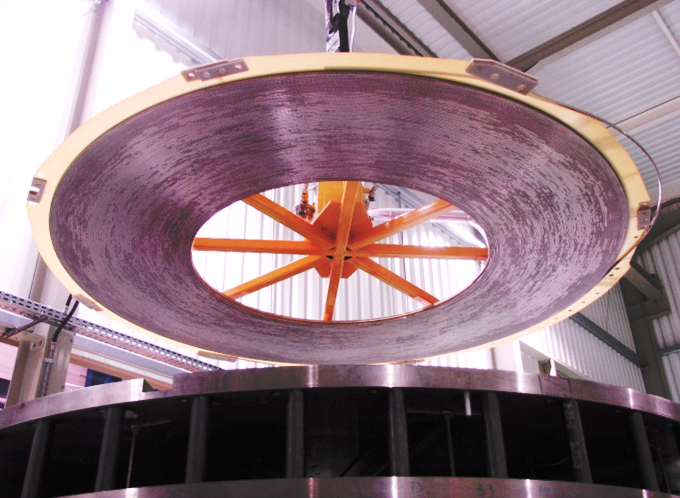
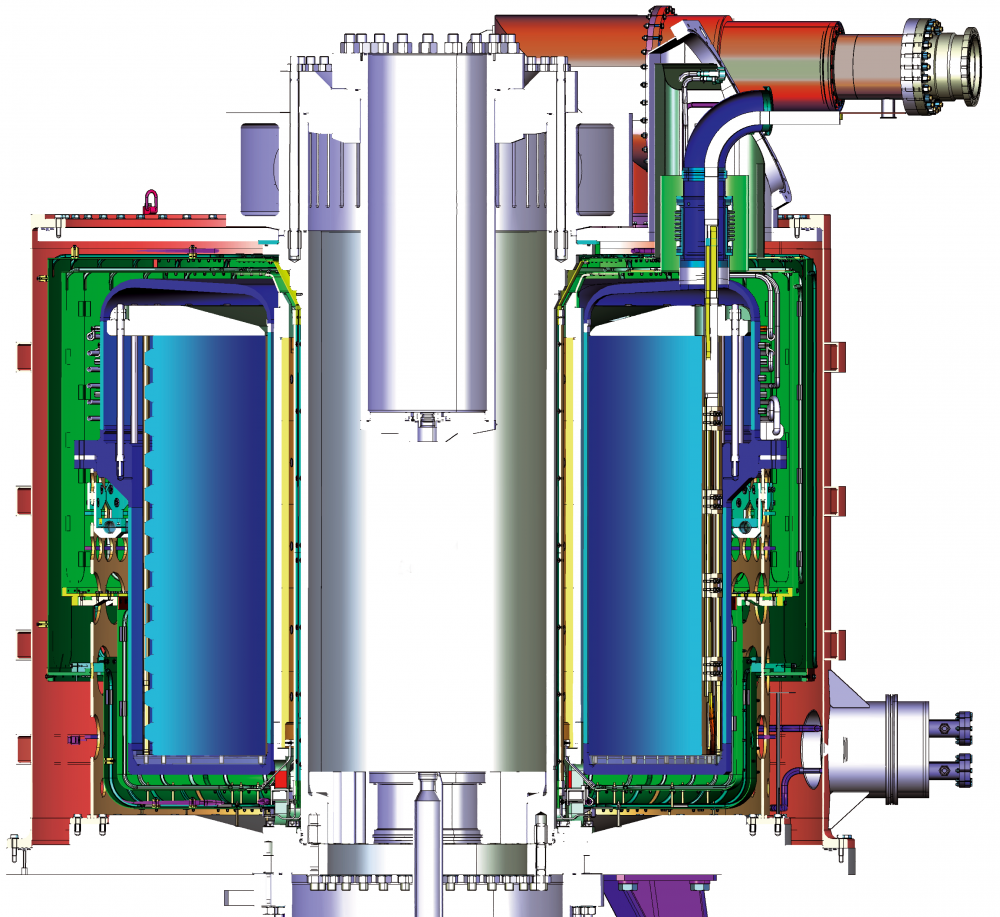
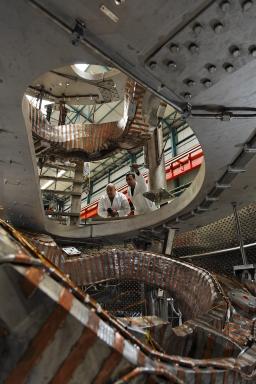
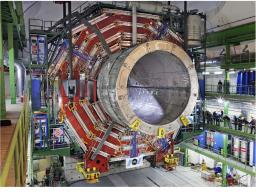
CMS solenoid ready to be cooled. The current cable feedthrough system can be seen in the top left.
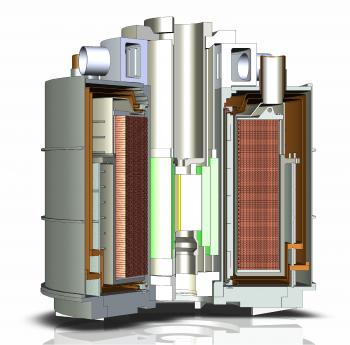
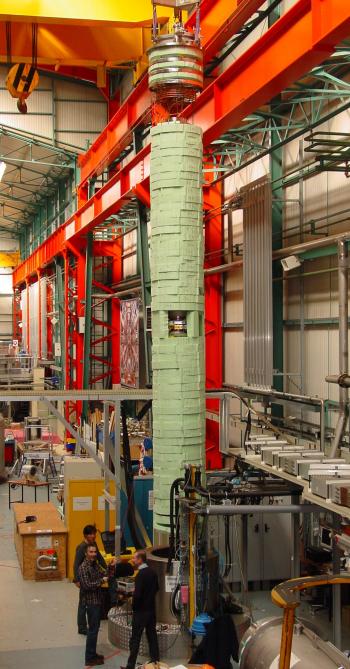
DAPNIA has acquired significant expertise in the design and construction of superconducting magnets for physics experiments, from quadrupole electromagnets for particle beam control to huge electromagnets used in large detectors. DAPNIA's expertise ranges from laboratory prototyping to technology transfers and monitoring of industrial series production. The ATLAS and CMS detector magnets and the approximately 400 quadrupole magnets constructed for the LHC at CERN are the most representative achievements of the recent period. Beyond the LHC, other systems have recently been developed (e.g. for JLAB and GSI) or are currently being designed (e.g. for the NEUROSPIN and R3B projects). These activities require expertise in electromagnetism, cryogenics and mechanics.
 

last update : 02-20 00:00:00-2007 (1288)

Superconducting dipole for an isocentric gantry

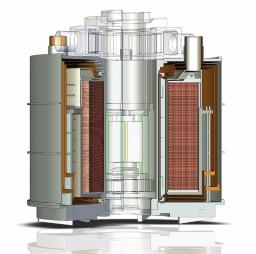
As part of the Etoile and Asclepios projects, IRFU (SACM, SIS), CNRS/IN2P3 (IPN-Lyon) and GANIL have carried out a feasibility study for an isocentric gantry line to guide beams of 400 MeV carbon ions using superconducting dipole magnets. The study also included costings and timescales.

Superconducting magnet for the LNCMI
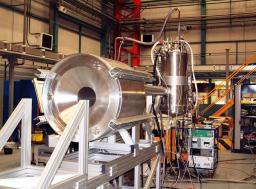
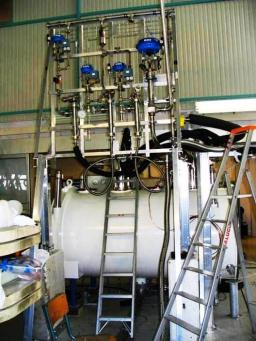
At the request of the National High Magnetic Fields Laboratory (LNCMI) in Grenoble, SACM has been studying the feasibility of a superconducting magnet with a field of 8.5 tesla to be used with existing conventional high field magnets (35 tesla) to provide a hybrid assembly capable of generating a ... More »
Tests on the Wendelstein 7-X stellarator coils
The Plasma Physics Institute in Garching, Germany, is responsible for the manufacture of one of the research machines for the European thermonuclear magnetic confinement fusion program, the Wendelstein 7-X stellarator. This machine, also known as the W7-X, has a diameter of around 15 meters and a ... More »
The Iseult project for the Neurospin platform
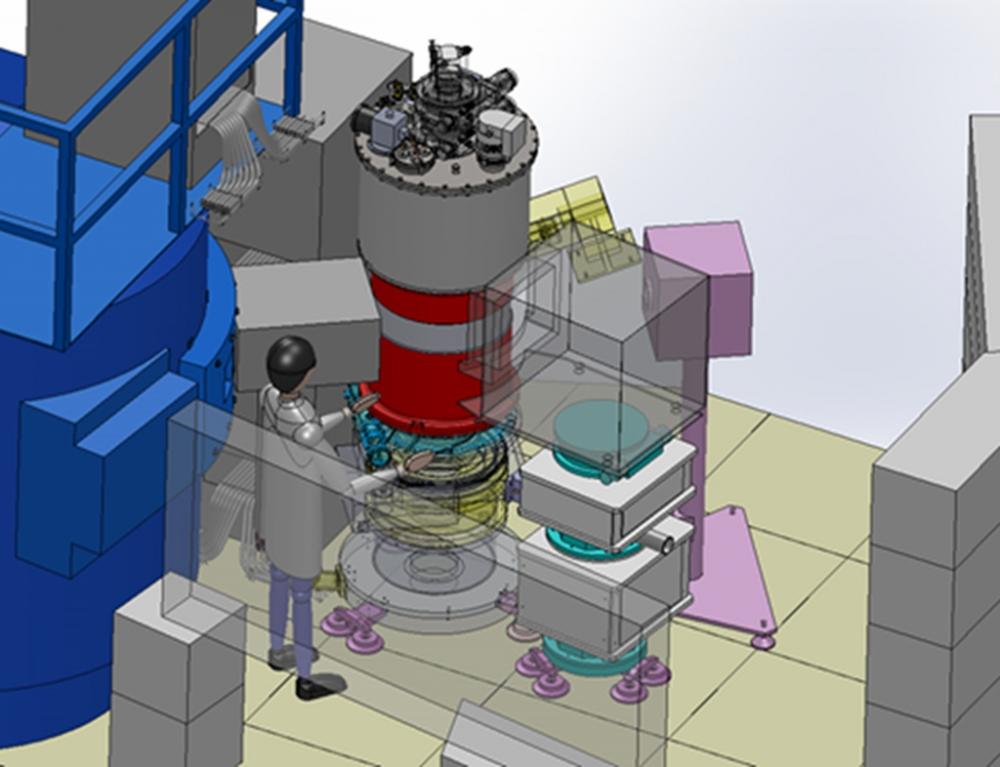
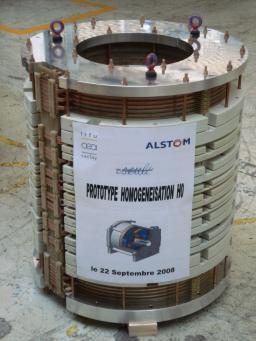
The whole body 11.7 T Iseult magnet due to be installed at Neurospin in 2013 is the core component of a magnetic resonance imaging (MRI) scanner that is expected to set new standards for cerebral imaging. The success of this joint French-German project depends on the development of prototypes to ... More »
The R3B – GLAD superconductor dipole
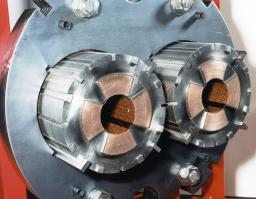
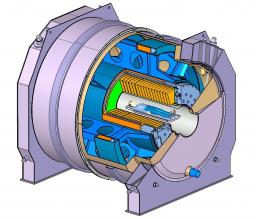
The European collaboration R3B (Reactions with relativistic radioactive beams of exotic nuclei) brings together 230 physicists from 63 institutes in 21 countries. The group has set up a program at GSI in Darmstadt, Germany to investigate the emerging physics of exotic nuclei with relativistic ... More »
The superconducting solenoid for the CMS detector
The superconducting Compact Muon Solenoid (CMS) installed on the Large Hadron Collider (LHC) at CERN is remarkable not only for its size and its stored magnetic energy. It is also notable for its reinforced aluminum alloy conductor and the design of the solenoid coil in five separate modules, each ... More »
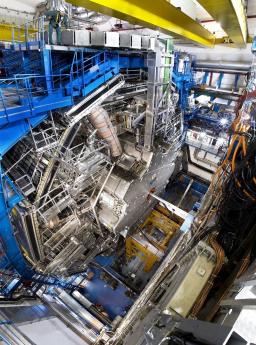
Toroidal magnet for the ATLAS detector
The magnetic system of the ATLAS detector in the Large Hadron Collider at CERN is made up of several superconducting magnets, operating at the temperature of liquid helium, i.e. –269°C. It comprises a central toroid, two end toroids and a central solenoid. IRFU was responsible for the ... More »
Excellent winter collisions for CMS
27-12-2009
Since the restart of the LHC on 20 November, CMS has taken advantage of the excellent operating performance of the collider to record a large amount of useful data. This is now being used to check its correct operation and calibration. During this period, CMS has demonstrated the stability of ... More »
Archives...