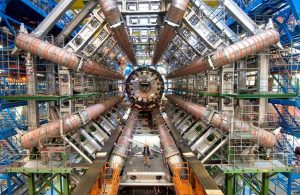
The Laboratory for the Integration of Electronic Processing and Acquisition Systems (LISETA) designs, produces, assembles and validates the electronic equipment and software integrated into the scientific detection instruments developed and used by the IRFU’s various departments. It is involved in the development and production of both very large research instruments (CTA, ATLAS, ALICE, ESS, etc.) and smaller-scale experiments or R&D programs (Calipso, Sphère, MicroCal-X).
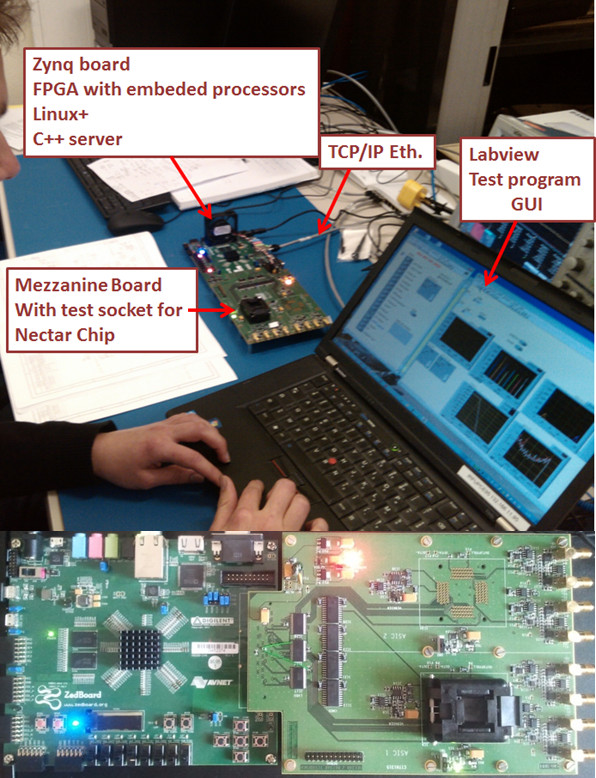
The laboratory develops the electronic boards that make up the various links in the acquisition chain, from the detector to the control and acquisition systems. It also develops the test, characterization and quality control hardware and software needed to evaluate and validate systems and their components. Finally, it oversees industrial manufacturing, assembly, integration and validation of research equipment prior to on-site commissioning.
Designed as part of international collaborations, the systems developed and their interfaces are increasingly complex. Their manufacture and integration are a challenge in themselves, which LISETA takes up through methodological actions (quality control, logistics of production and integration flows, database management) and also thanks to the expertise of each individual and the generalist skills of the whole team.
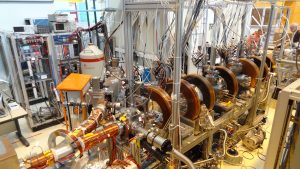
LISETA’s operational resources make an effective contribution to the running of the department. The laboratory provides a wiring service to equip prototype boards designed in the department, to troubleshoot faulty boards, to adapt existing boards and to support the production of small series. The laboratory also makes available to the department the work of the printed circuit CAD group, which each year designs the printed circuits for dozens of electronic boards, from the simplest to the most complex, and the routing of detector floors using printed circuit technology (Micromegas detectors). With the miniaturization of components and the ever-increasing speed of analog and digital signals, mastering and extending wiring and CAD resources is a major challenge for LISETA.
The laboratory is also responsible for the design, development and testing of integrated circuits and electronic readout boards operating at ultra-low temperatures (50 mK to 4 K), as well as the integration of these very high-density systems in their cryogenic environment. The challenge is to combine very low noise, ultra-low power consumption, speed and thousands of readout channels, for dark matter detection (DPhP) and space astronomy (DAp) experiments.