
On Saturday 1 July 2023, the Euclid satellite was launched by a SpaceX Falcon 9 from Cape Canaveral spaceport in Florida. Euclid is now on its way to the second Lagrange point, 1.5 million kilometres from Earth, where it will observe thousands of galaxies for 6 years.
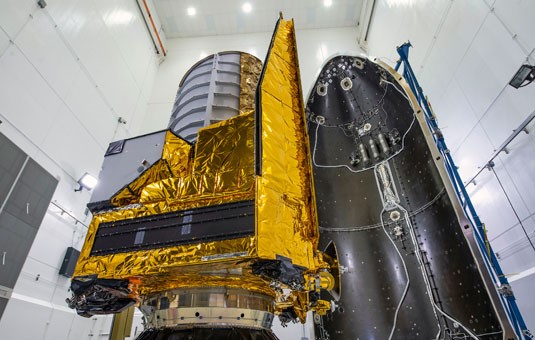
Credit: SpaceX, ESA
Euclid, a probe for the invisible
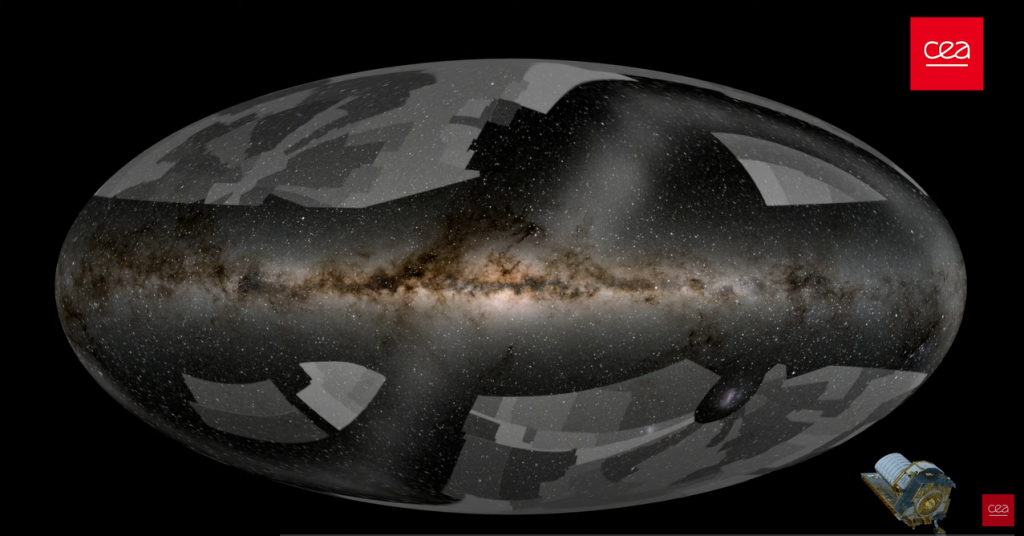
Models describing our Universe require the addition of two components whose nature still eludes astrophysicists: dark matter and dark energy. Dark matter has a gravitational effect, meaning that it is attractive and therefore structures the Universe by attracting more and more matter. Dark energy, on the other hand, has the opposite effect, exerting pressure on the geometry of the Universe and therefore tending to push objects further apart.
One way of obtaining information about the distribution of dark matter is to use gravitational shear, i.e. the distortion that the passage of light through the dark matter network creates in the image of galaxies. This requires measurement precision that is complicated to obtain from the ground because of the atmosphere.
In our cosmological era, the effect of dark energy is particularly visible on large scales. Euclid will therefore be studying the distribution of galaxies over immense distances for different ages of the Universe, thus probing dark energy.
L’Irfu et Euclid
For more than 10 years, Irfu teams have been involved in developing the two satellite instruments VIS and NISP, as well as the ground segment.
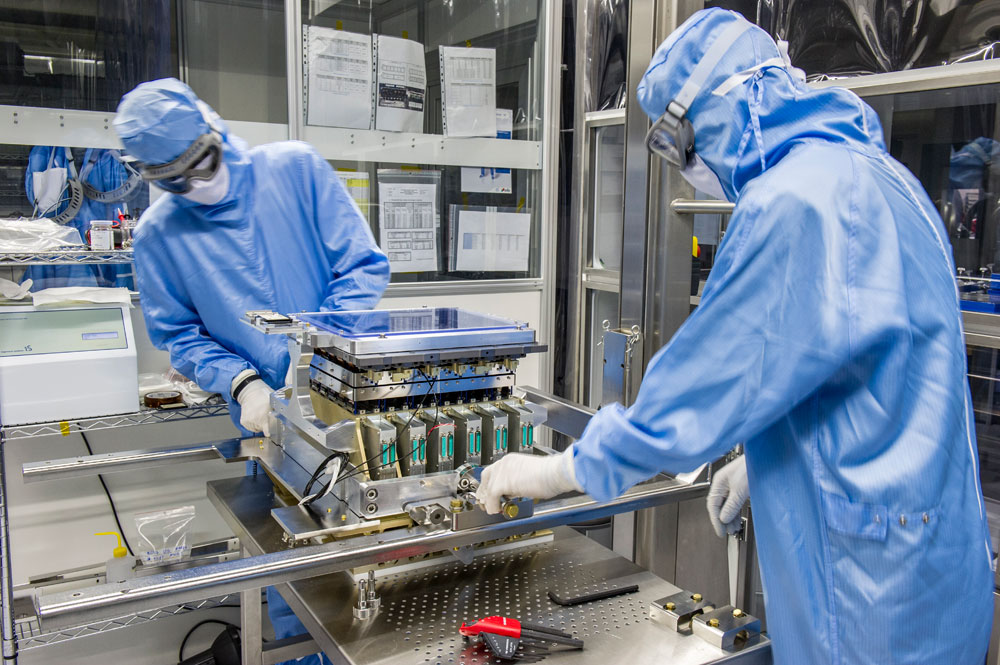
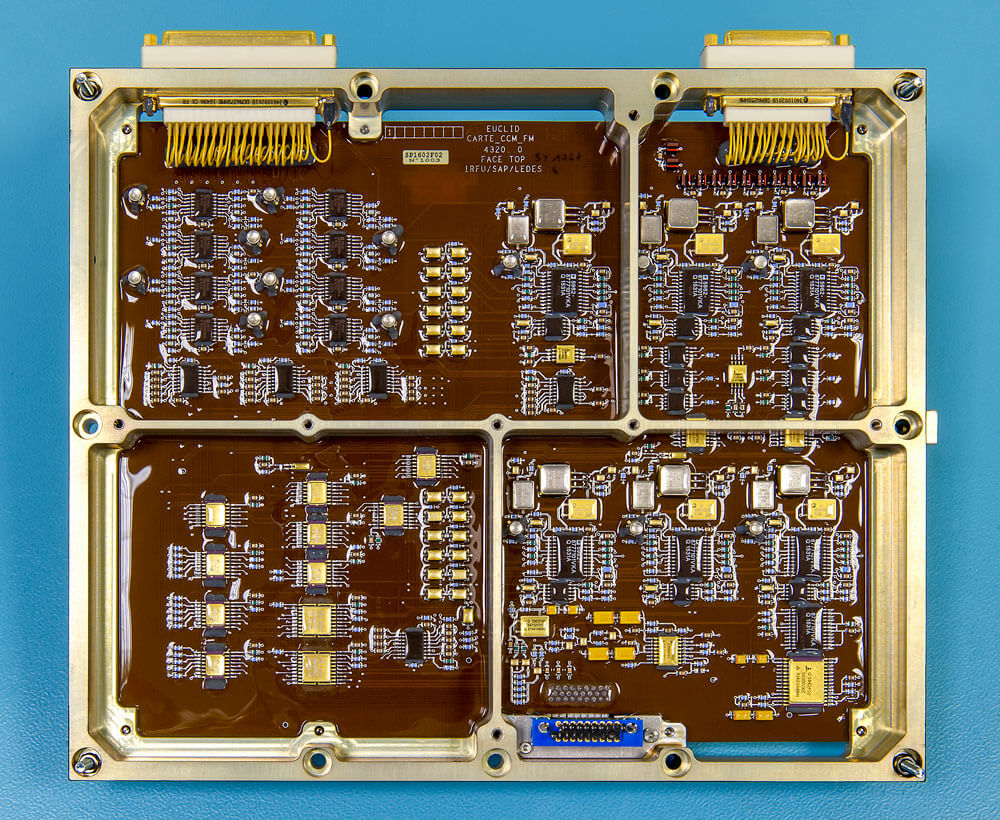
For the visible instrument, the VIS camera, in 2020 Irfu delivered the focal plane made up of 36 CCDs, which is the heart of the instrument, and also an electronic box, the PMCU, which is used to control a shutter that closes each time the sensors in this focal plane are read.
For the infrared instrument, the NISP spectro-imager, Irfu supplied the cryomotors – mechanisms operating at very low temperature with high precision that turn the wheels, enabling the instrument to switch from photometric mode to spectroscopic mode.
 |
 |
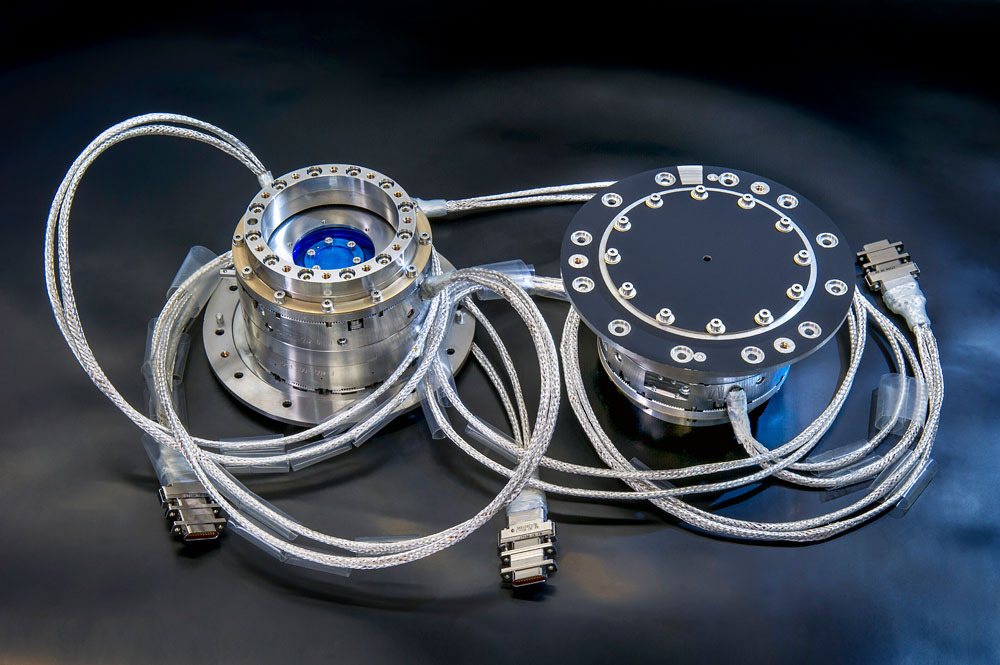 |
| Focal plane of the VIS camera designed, assembled and tested at CEA (Credit: CEA/L. Godart) | VIS wide-field imager PMCU electronic system (Credit: L. Godart/CEA) | Cryomechanisms used in the NISP spectrophotometer (Credit: L. Godart/CEA) |
View the videos in the “Frémir avec Euclid” series
Videos

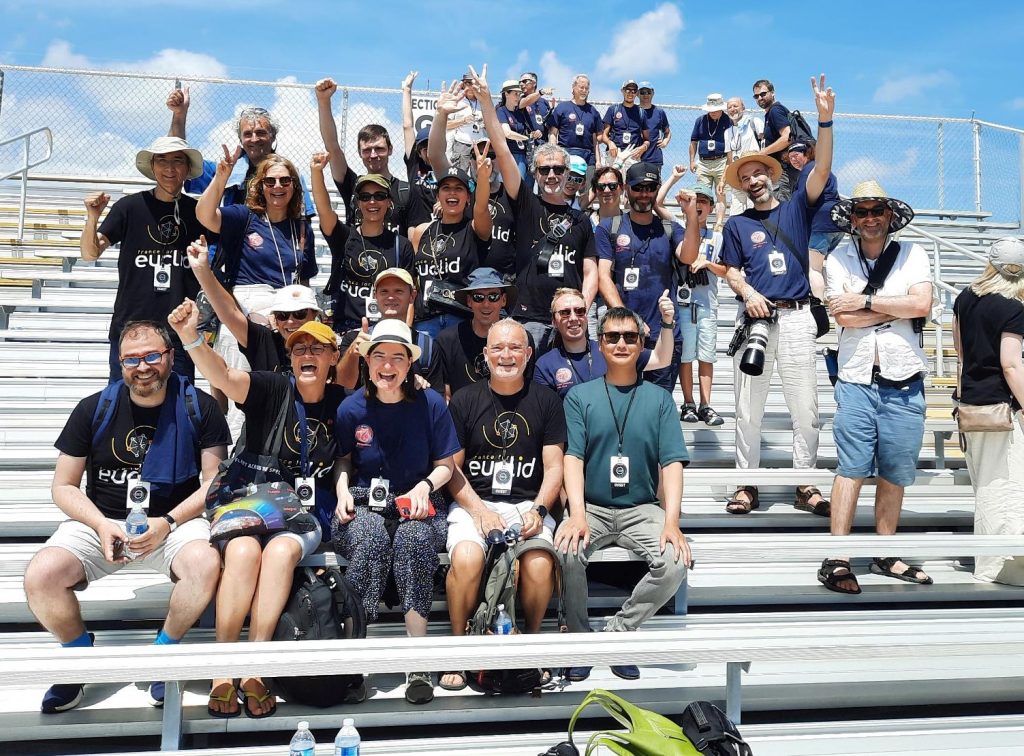
Part of the team following the successful launch of the Euclid satellite from Florida! A big well done to all the teams for this great success.
Credit CEA