
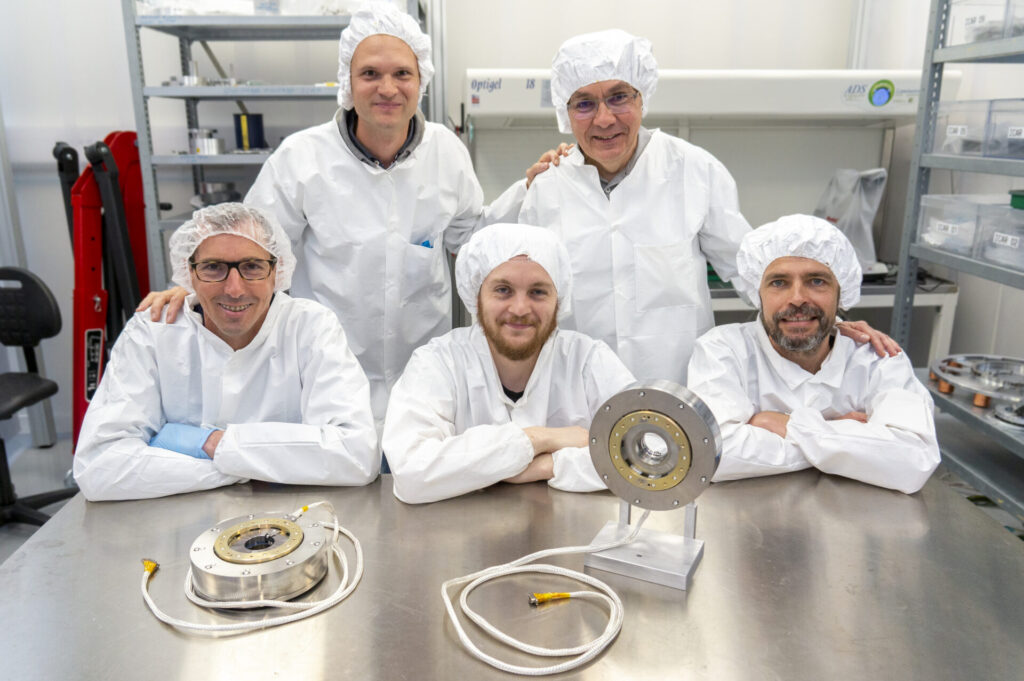
The final units of indexed cryomechanisms (ICAR) were delivered by IRFU to the METIS consortium in February 2025. For the DIS and DAp teams, this marks the culmination of 10 years of work. After the design and prototyping phase (2015–2021), the past three years have been dedicated to integrating and testing 14 mechanisms, including two spares. Far from being a smooth process, the production of this small series was punctuated by numerous technical challenges.
Mechanisms at the Heart of the Instrument
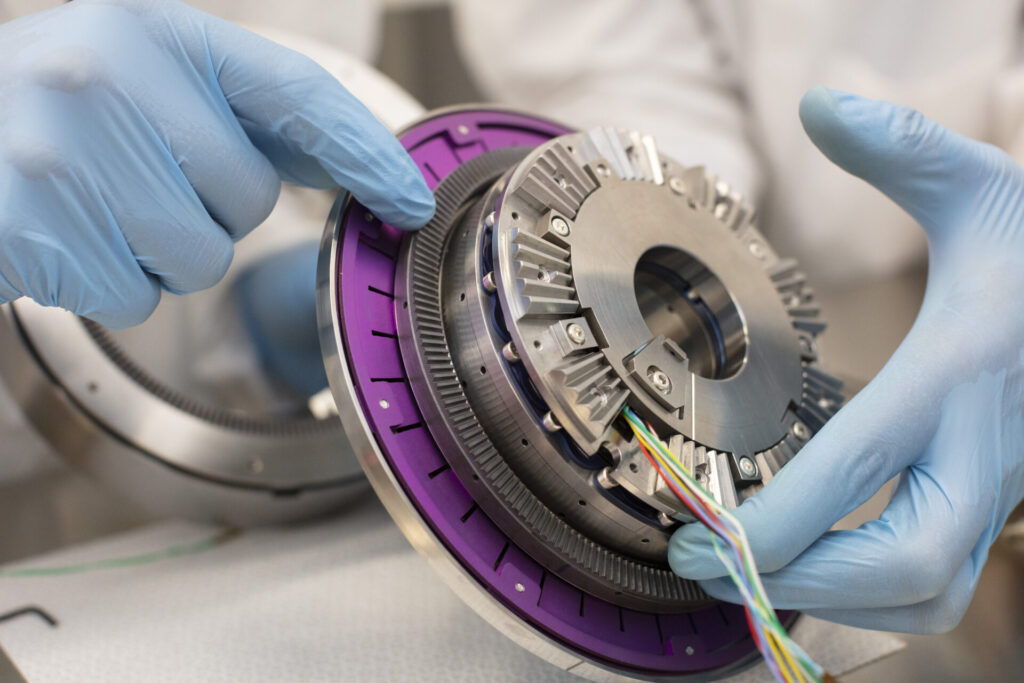
The METIS imager and spectrometer is one of the first instruments to be installed on the European Extremely Large Telescope (ELT). It is equipped with 12 cryogenic rotary mechanisms that allow its optical configuration to be changed. IRFU drew on 20 years of R&D and technical achievements (VISIR, EUCLID) to adapt its cryomechanisms to meet METIS’s needs. Beyond the technical specifications, a positioning repeatability of ±1/1000 of a degree and an operating temperature of –230 °C, the mechanism was designed with the goal of lowering its unit cost.
A Carefully Prepared Production
Following the prototype phase, validated through the Final Design Review, the teams began preparing the production of 14 mechanisms. This involved managing subcontracted manufacturing of mechanical parts, securing the supply of sensors and actuators, and preparing integration facilities.
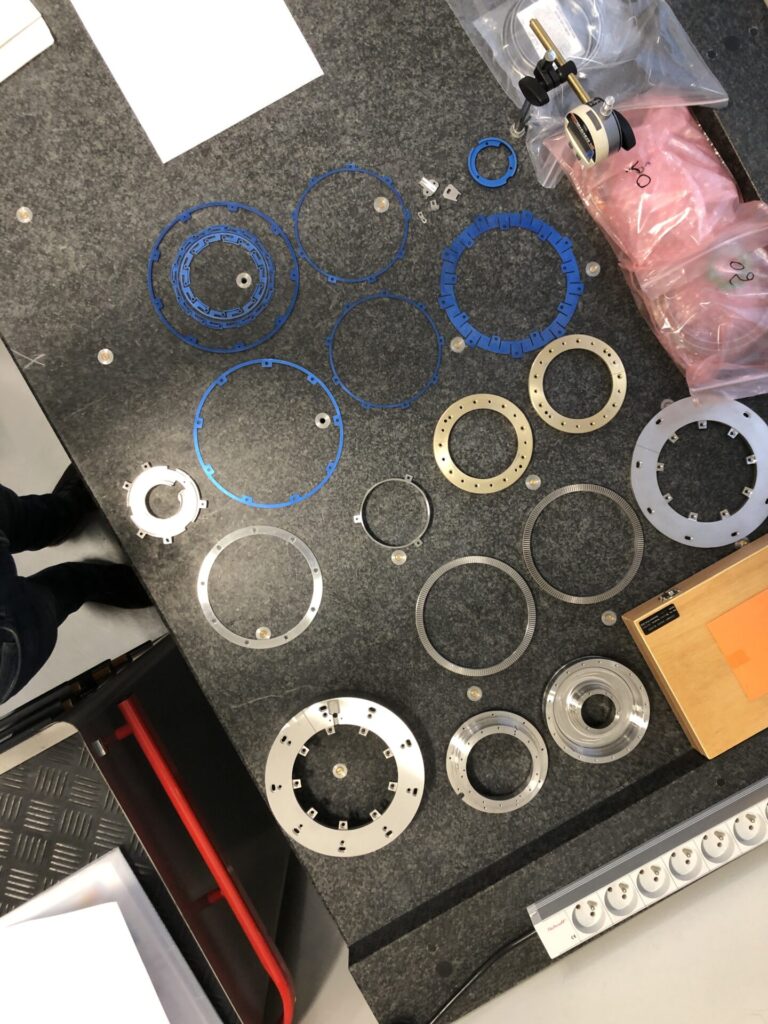
Precision machining company MEGEP was selected for manufacturing the mechanical components. These parts, with extremely tight tolerances, sometimes down to 5 µm, are delicate to produce. The contract’s duration (18 months) posed additional technical challenges: machine settings are difficult to maintain over time, and manufacturing schedules were affected by material and staffing changes at the subcontracted grinding facility.
At the heart of the mechanism, procurement of the stepper motor from Safran D&S was launched very early, given the complexity of the contract (options, staggered delivery). Supply of the electromagnet, which had appeared secure after the prototype phase, was slowed by a process change that affected the quality of the resin encapsulating the coil. This issue required ASELEC’s technical expertise and led IRFU’s engineers and technicians to develop a cleaning process for the non-compliant resin.
Finally, as no supplier could provide a ball bearing meeting our specific requirements at a cost compatible with a ground-based project, a procedure was developed to modify standard Kaydon bearings. The balls and cages were purchased separately and assembled at CEA. For the remaining components—temperature probes and home sensors—procurement was carried out in a single batch to ensure technical uniformity across all 14 units.
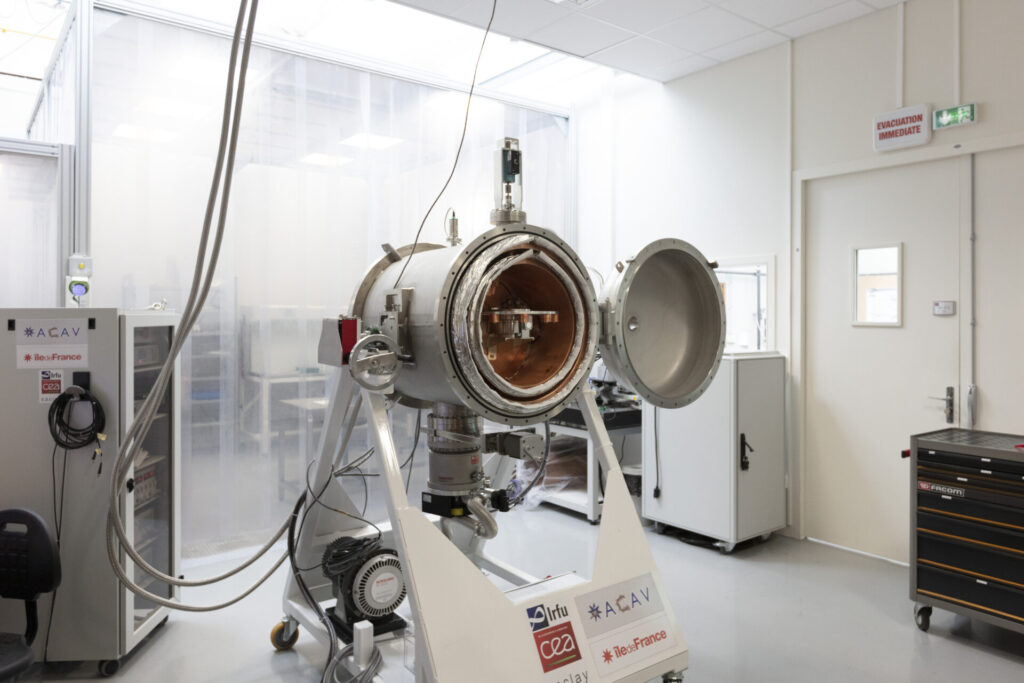
To optimize workflow, both tools and procedures for integration were carefully planned. The cryomechanism platform, created in 2019, was equipped with a second test cryostat to allow parallel testing of two ICARs. Method-wise, the integration and test procedure was broken down into over 100 individual steps. These were reorganized to allow work on 2 to 4 mechanisms in parallel. Regular quality checks were introduced to validate each assembly stage, and analysis of 3D measurement data was automated.
Fourteen mechanisms and almost as many surprises
After the preparation phase, assembly and testing of the 14 mechanisms took place over 24 months, a solid production pace. The METIS team had to overcome recurring issues, whether related to the mechanisms themselves or the test setups. Examples include: adapting the diameter of certain bearing balls to address excessive friction torques; a flaw in the assembly procedure requiring partial disassembly of some units; and the need to refine the home-position sensor’s adjustment procedure, which led to improvements in the adhesive bonding process. Thanks to the collective effort of engineers and technicians, all mechanisms were delivered 100% compliant with specifications.
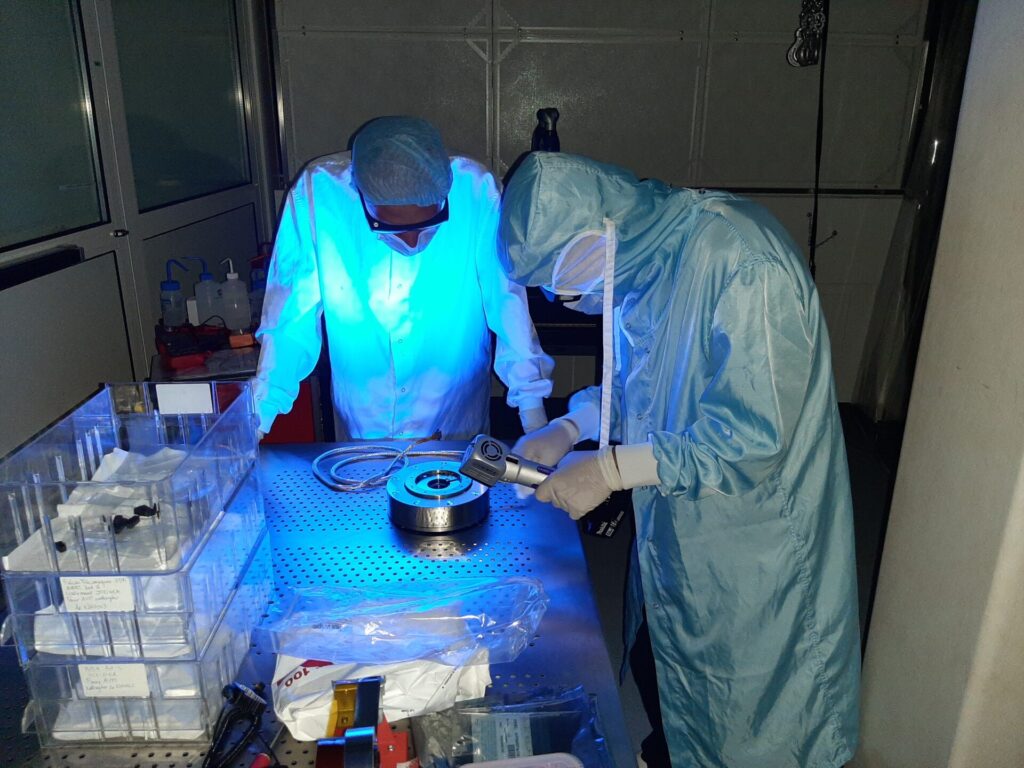
Shipped to laboratories responsible for different parts of the instrument in the Netherlands (NOVA), Germany (MPIA), Scotland (UK ATC), and Taiwan (ASIAA), the mechanisms will now be integrated into METIS subassemblies. The IRFU team will provide technical support during this phase.
Beyond the 14 ICAR Mechanisms
The delivery of the 14 ICAR mechanisms also marks the final stage of IRFU’s contribution to METIS. On the DAp side, the METIS infrared test bench was used to characterize the rejection rates of the coronagraphic masks in the spectral ranges from 8 µm to 12.5 µm at cryogenic temperatures. This work required a qualification phase for the test facility (2020–2023) followed by multiple measurement campaigns (2023–2024). The resulting report demonstrated that mask performance met the instrument’s requirements.
The DIS team also developed, built, tested, and delivered the cryogenic mechanism for the field derotator.
Contacts: Olivier Corpace – Jean-Christophe Barrière – Mickaël Lacroix