

The CEA plays a major role in space weather, a discipline that studies the interplanetary environment around the Sun to anticipate solar phenomena and protect our technological infrastructure. Indeed, the activity of our star can have direct consequences on our increasingly technology-dependent society.
A team of Sun-Earth relations experts, OFRAME, of which the CEA is a founding member alongside CNRS and ONERA—has come together to provide daily monitoring of our star, as its activity can have harmful effects on our technological society.
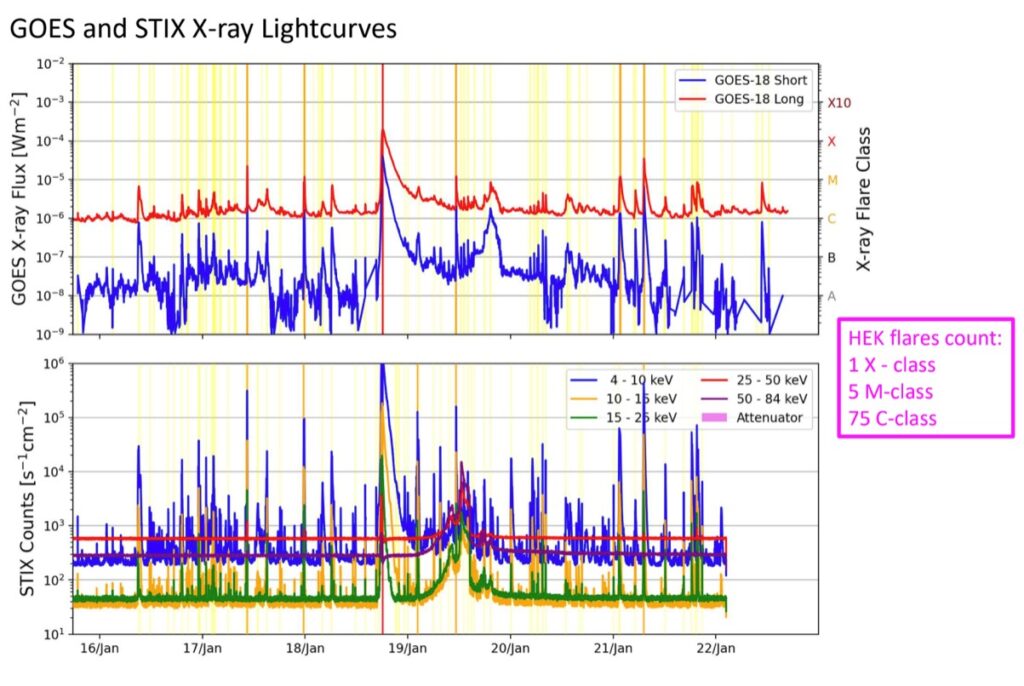
As part of scientific activities focused on the Sun and data from the Solar Orbiter satellite and the STIX instrument, CEA solar physicists were alerted to last Sunday’s event: the intense X1.9-class solar flare of January 18, 2026.
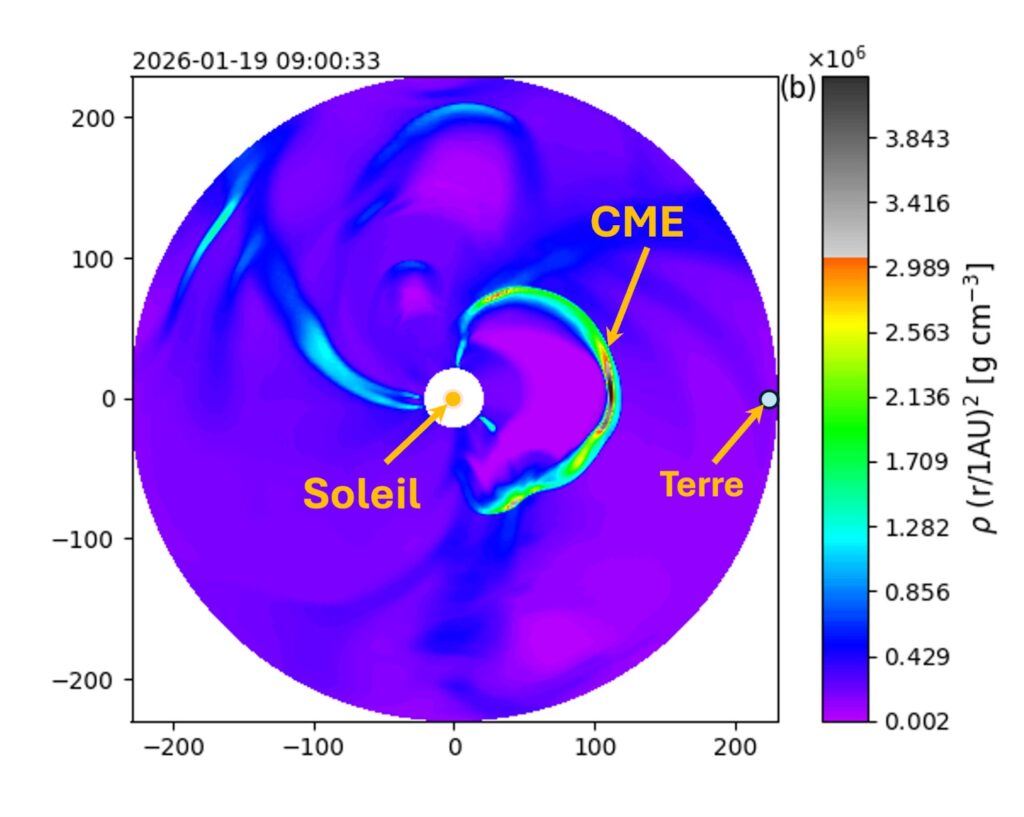
With the entire team mobilized, they updated the national space weather forecast bulletin by gathering all French diagnostics.
“France and the CEA possess some of the world’s most advanced models of the Sun and Sun-Earth relations, enabling rapid and increasingly accurate forecasts,” notes Sacha BrunThe results of this national coordination and the forecasts explaining the auroras observed in France on Monday, January 19, are available via this INSU link.
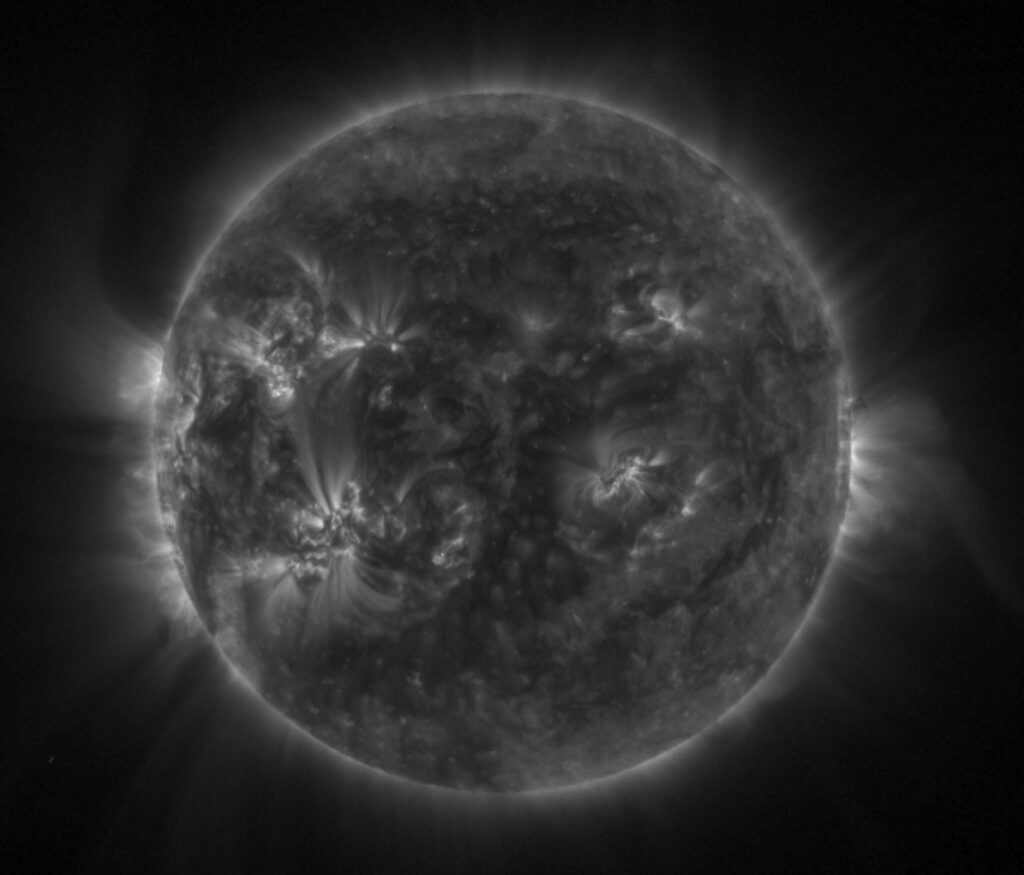
Solar Orbiter carries 10 scientific instruments, including 6 that measure the properties of energetic particles and electromagnetic waves in the solar wind, and 4 that capture images of solar emissions in different wavelengths (visible, UV, and X-ray), as well as magnetic field maps. Together, these two types of data help reconstruct a more complete picture of what occurs in the solar corona and solar wind.
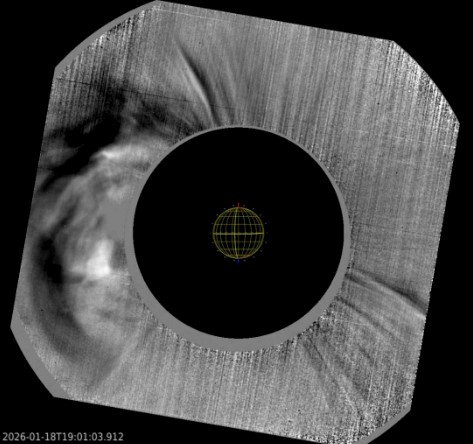
Below are some images and measurements from the EUI (above), STIX (below), and METIS instruments.
The Sun is active and complex, and the CME (Coronal Mass Ejection) is highly visible. A CME is a solar phenomenon where enormous amounts of plasma and magnetic field are ejected into space at very high speeds from the Sun’s corona.
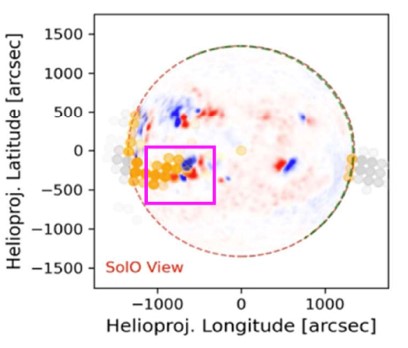
In the STIX image (circular one), the purple square highlights all the flare activity generated by this active region of the Sun. The STIX/GOES time series show this with yellow, orange, and red vertical lines marking each eruption (peaks in the time series according to energy bins). The colored circles correspond to the vertical lines in the time series.
The blue/red zones come from the magnetogram, i.e., the magnetic image of the Sun’s photosphere, which indicates whether the magnetic field is closed or open.
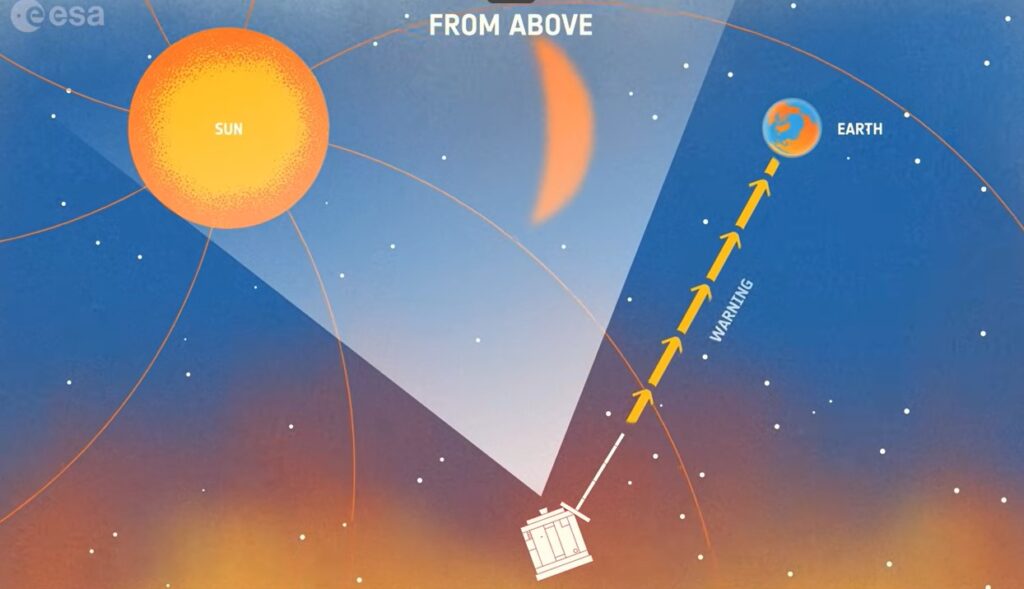
Given the growing importance of space weather and its impact on society, the ESA is preparing the Vigil mission, scheduled for 2031 as part of its Space Safety Program. The CEA will provide scientific support for the JEDI instrument, a NASA contribution. Positioned at the Lagrange L5 point, Vigil will observe solar regions likely to trigger eruptions before they become visible from Earth, providing advance warning to refine forecasts.
Additionally, the CEA’s work on Sun-Earth relations also benefits the exploration of new star-planet systems and the preparation for another ESA flagship mission, PLATO, scheduled for launch in 2027:
“The interactions between the Sun and Earth serve as a prototype system that we can compare with observations of other exoplanetary systems to better understand their mechanisms,” emphasizes Antoine Strugarek.Contacts: Barbara Perri, Allan Sacha Brun et Antoine Strugarek