




he European Southern Observatory (ESO) has officially signed the construction agreement for BlueMUSE, a next-generation integral field spectrograph for the Very Large Telescope (VLT) in Chile, with first light expected in 2034. Optimized for blue and ultraviolet wavelengths (350–580 nm), this instrument will study celestial objects such as massive stars, distant galaxies, and intergalactic matter, providing a complementary perspective to current observatories, which often focus on the infrared.
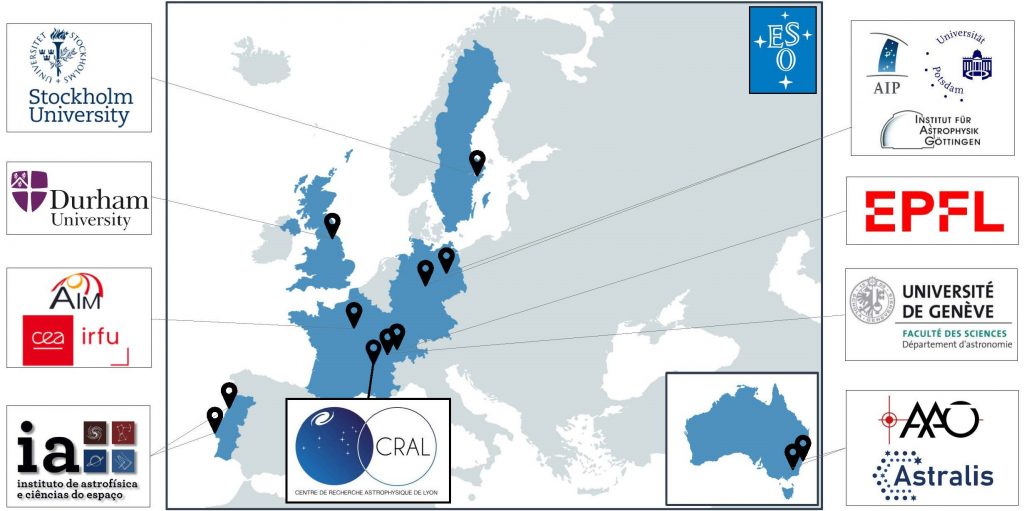
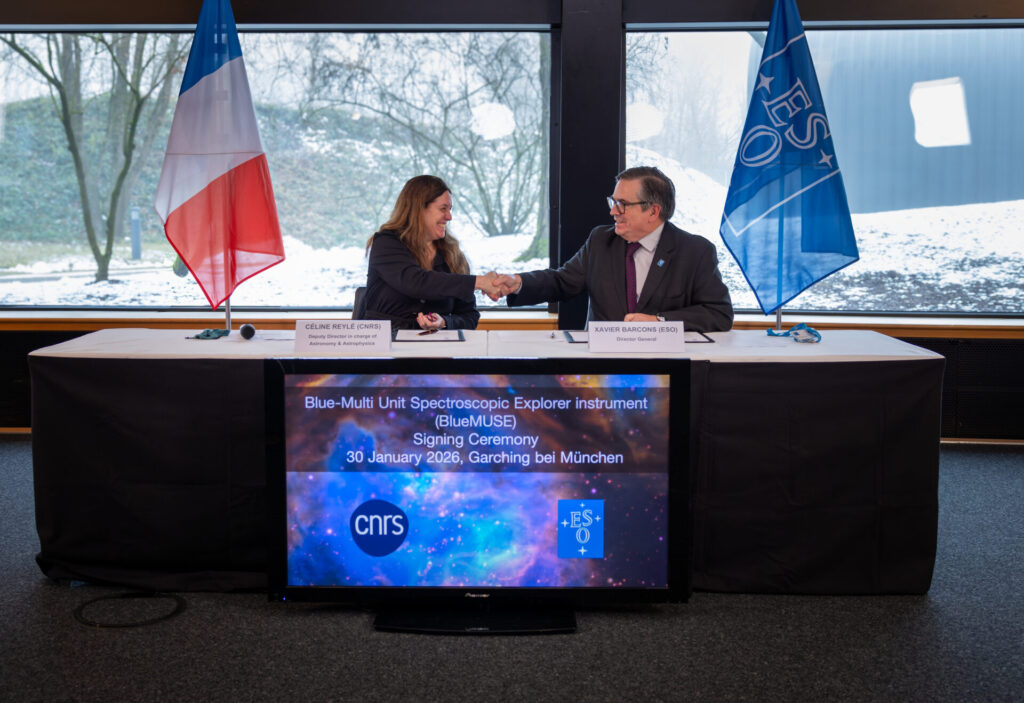
The agreement was signed at ESO’s headquarters in Garching, Germany, by Xavier Barcons (ESO Director General) and Céline Reylé (Deputy Director for Science at CNRS). The Lyon Astrophysics Research Centre (CRAL) leads the international consortium, which includes 9 European and Australian institutes. In France, two laboratories play a key role:
- CRAL ensures overall project coordination and vision
- IRFU (CEA Paris-Saclay) guarantees the performance of the detectors and vacuum and cryogenic systems, which are essential for sensitivity in the blue spectrum
IRFU’s Contributions
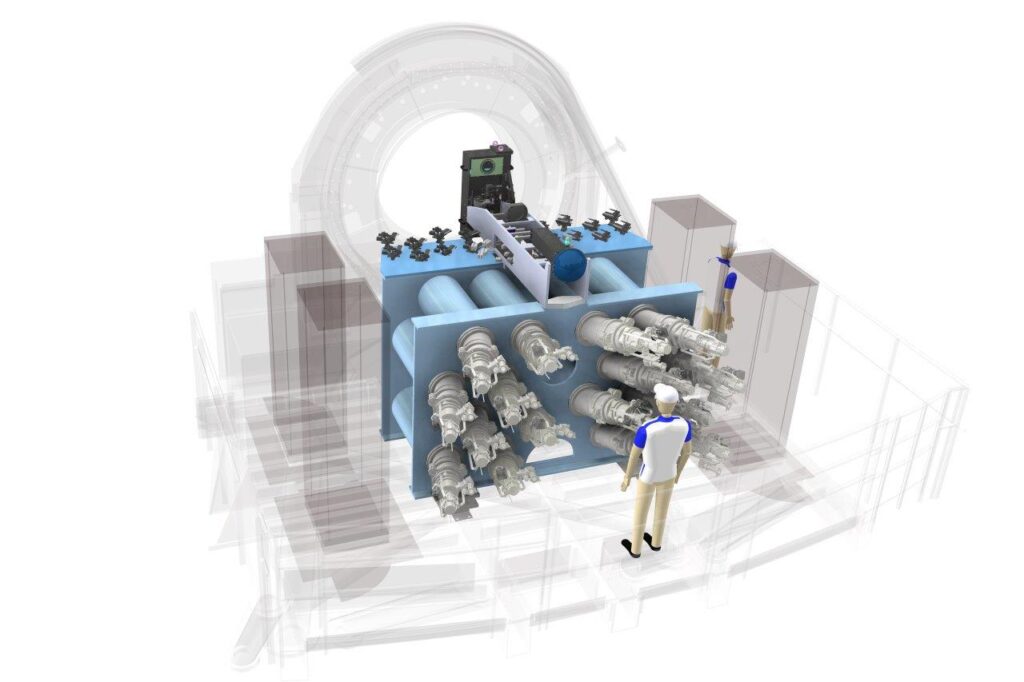
The Instrument Detector System (IDS), developed by IRFU, maintains BlueMUSE’s 16 CCD detectors in the required operating environment: high vacuum (< 10⁻⁶ mbar) and a temperature of -100°C.
A major challenge in developing the IDS is designing the vacuum chambers in which the CCDs will operate. These cryostats must integrate cryocoolers for cryogenics, eliminating the need for liquid nitrogen cooling. This provides greater flexibility in temperature regulation and simplifies operations by avoiding daily refills. Since cryocoolers generate vibrations, early testing phases must ensure they do not compromise BlueMUSE’s scientific data quality.
IRFU is also responsible for characterizing the CCDs and developing the associated precision test bench, aligning the CCDs within their cryostats, designing the vacuum system and also the automated vacuum and cryogenic management system, including cryocooler control, pressure and temperature sensor readings, vacuum pump operation, and alert management.
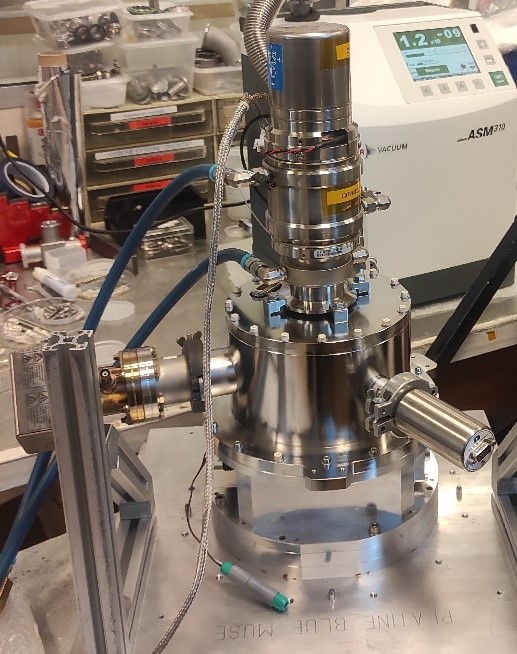
Teams from DEDIP (DéTeCS, LEMID), DIS (LCAP, LDISC, LEIGE), and DAP-AIM began R&D in 2022 and completed the first cryostat prototype by late 2024, validating the thermal performance of the cryocooler.
The next steps for the cryostat in 2026 include testing static vacuum (maintaining vacuum without pumps) and thermal regulation at the CCD level.
Expected Discoveries from 2034 Onward
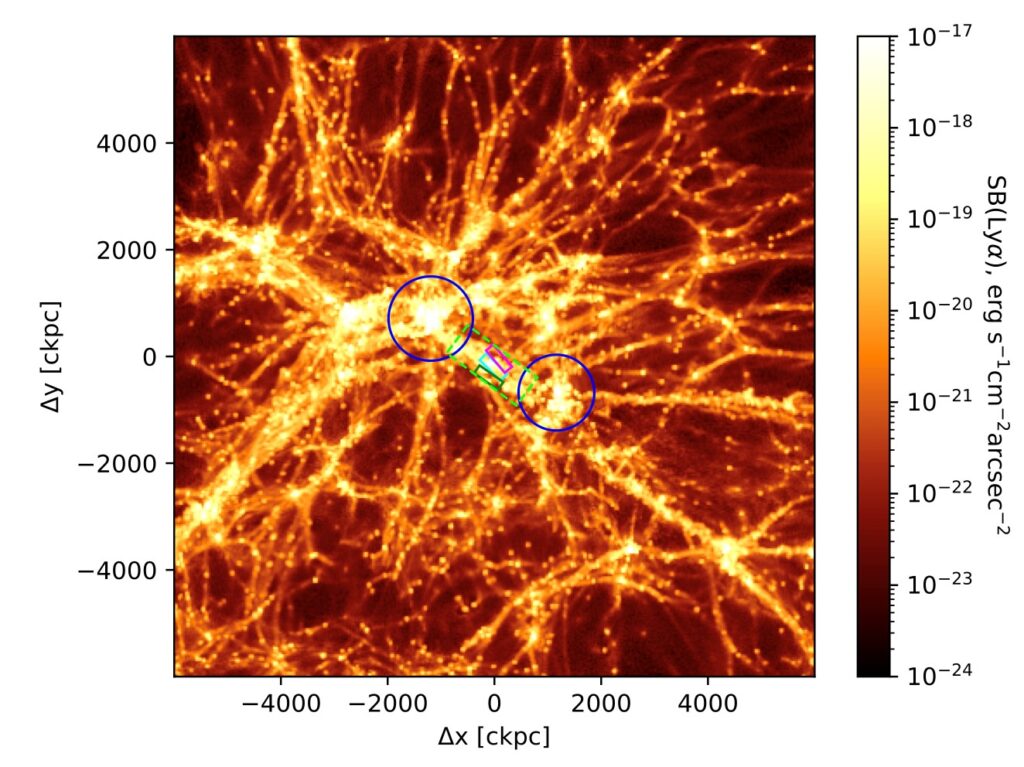
With a spectral resolution of R~4000 and a 1 arcmin² field of view, and detectors optimized for blue and UV light, BlueMUSE will study key spectral lines such as Lyman-alpha hydrogen, crucial for understanding the early Universe. IRFU’s main scientific interests lie in the interaction between gas in the cosmic web and galaxy formation, the study of primitive galaxy clusters (protoclusters) ans the nature of giant Lyman-alpha nebulae.
By complementing existing observatories, BlueMUSE will provide a unique and complementary view of the Universe, reinforcing Europe’s—and France’s—position at the forefront of global astronomy.
Contacts IRFU: Emanuele DADDI (DAp-AIM), Rémy LE BRETON (DEDIP), Olivier Tellier (DIS)
ESO press release: BlueMUSE: ESO signs agreement for new instrument on the VLT | ESO