




LCEG
The Cosmology and Galaxy Evolution team focuses on studying the formation, evolution, and physical properties of large cosmological structures, galaxy clusters, galaxies themselves and their internal structure, down to the large scales of star formation. These structures are studied throughout cosmic time, from the birth of the first galaxies to the objects closest to us today. These studies are conducted using multi-wavelength observations from state-of-the-art observatories (ALMA, JWST, VLT, IRAM, and Euclid) supplemented by cosmological simulations and state-of-the-art galaxy evolution simulations using the largest supercomputers in Europe. Continuous interaction between observations and simulations is sought in order to maximize data interpretation and provide the best constraints for structure formation models.
Main Activities
The key questions addressed by the “Cosmology and Galaxy Evolution” team are as follows:
- When and how do the largest structures in the Universe form, how are they shaped by dark energy and the nature of dark matter, and how do they feed galaxies by driving baryonic flows along the cosmic web?
- When do the first proto-clusters of galaxies emerge, and how do they evolve into modern galaxy clusters? How can they be robustly detected and characterized across cosmic timescales in order to constrain underlying cosmological models?
- How do massive galaxies assemble most of their mass, through mergers and gas accretion, and how do they evolve into the modern Hubble Sequence?
- What regulates star formation on a galactic scale? Why do most galaxies convert their gas into stars at a uniform rate, while a few rare objects become starburst galaxies, and the most massive galaxies eventually become star-forming-star-forming galaxies?
- What is the role of feedback (supernovae, stellar radiation, AGN, cosmic rays, etc.) in regulating galaxy growth and feeding the intergalactic medium with recycled, metal-enriched gas?
Galaxies
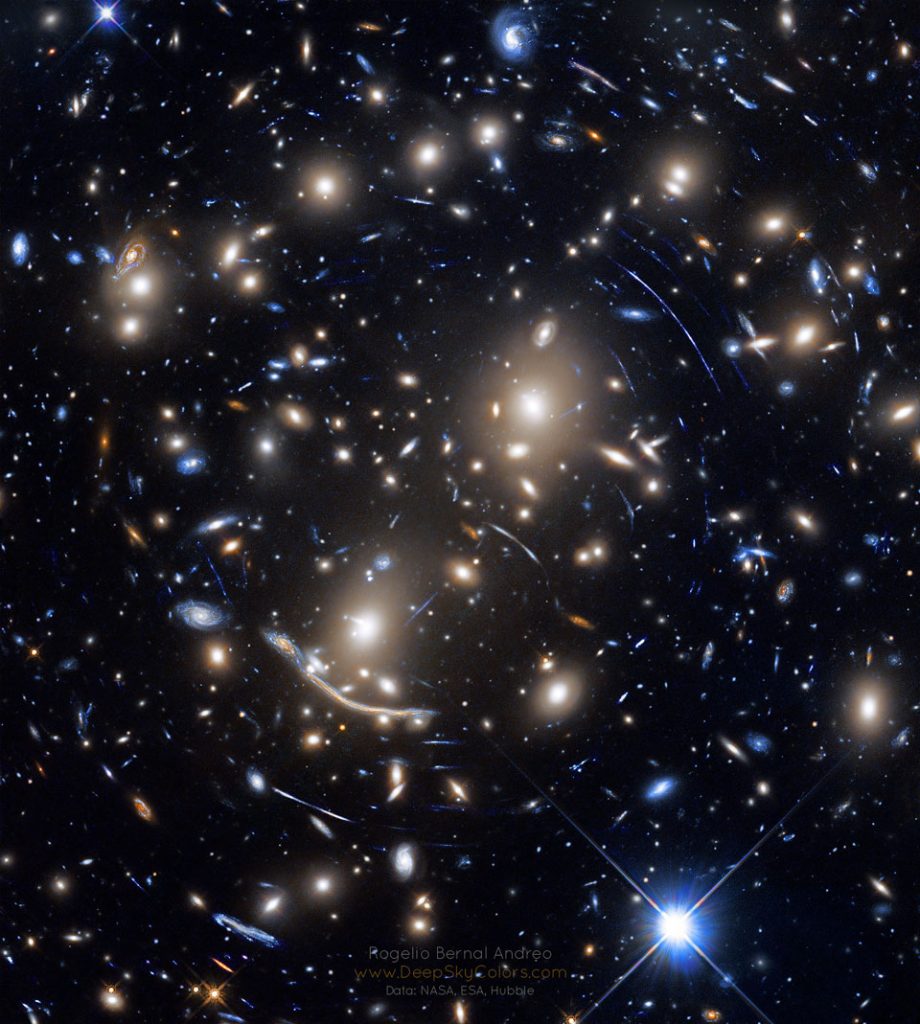
Research focuses on the processes driving the assembly and evolution of massive galaxies, from gas accretion and mergers to the emergence of present-day morphologies. It also aims to understand the mechanisms regulating star formation and the quenching of activity in the most massive systems. Finally, it explores the role of feedback in galaxy growth and in the enrichment of the intergalactic medium.
Cosmology
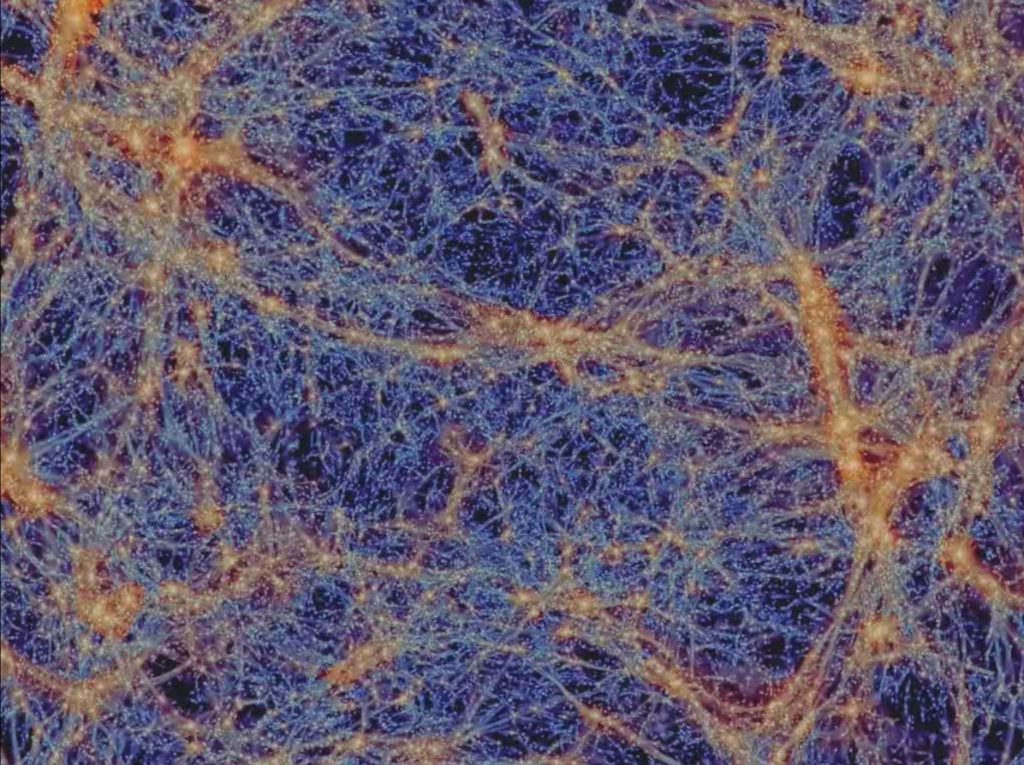
Research focuses on the formation and evolution of the largest structures in the Universe, as well as on their connection to the nature of dark matter and dark energy. It also explores the emergence of proto-clusters and their evolution into present-day galaxy clusters in order to constrain cosmological models.
Simulations
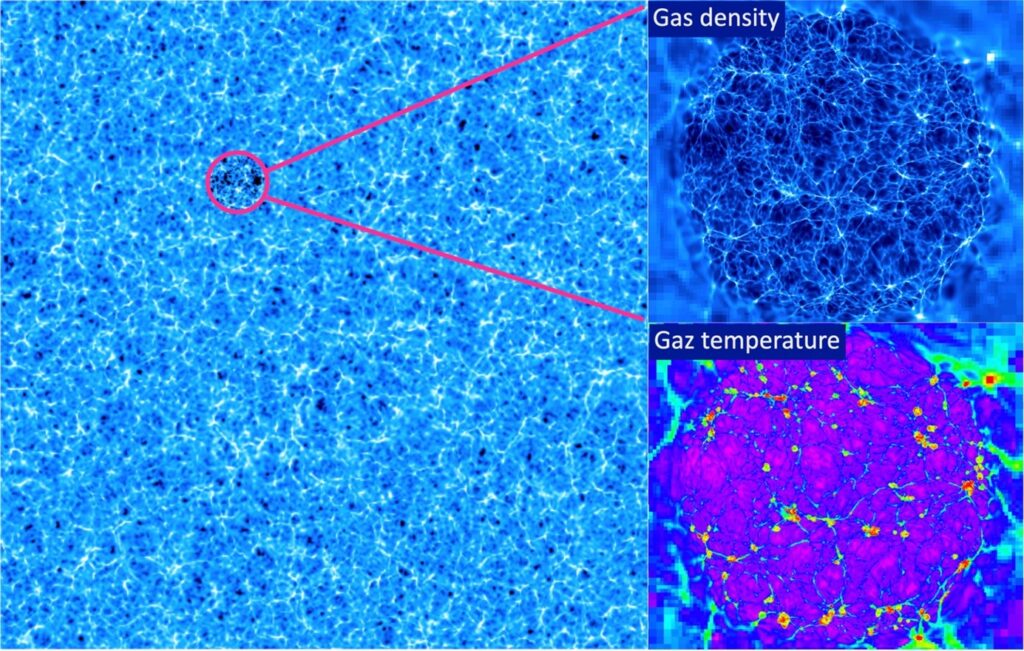
Research focuses on testing models of formation and evolution of the first galaxies and supermassive black holes. It aims to understand the connections between reionization, the development of large-scale cosmic structures, and galaxy evolution.