DeTeCS
The Detectors: Testing, Design, Simulation (DéTeCS) laboratory is tasked with developing detection systems that meet the needs of the IRFU’s major scientific projects in particle physics, nuclear physics and astrophysics. Its activities cover the entire instrumental chain, from detector design to the development of readout electronics, including device characterisation and qualification.
Driven by ambitious R&D programmes, the laboratory explores new detection concepts and proposes innovative solutions for the production and integration of complex instruments. Its expertise combines numerical calculation, advanced simulation, instrumentation and high-level technological know-how in a multidisciplinary approach.
Research and innovation in detection
Building on the expertise developed at DEDIP over many years, DéTeCS is at the forefront of innovation in the field of detectors. Its researchers propose and study new concepts as part of their own R&D programmes or feasibility and preliminary design phases for future instruments in particle physics, nuclear physics and astrophysics.
Its activities cover a wide range of applications:
Rare event physics, with the development of germanium bolometric detectors, spherical gas detectors and Micromegas detectors for axion research;
Trajectography for nuclear physics and particle physics experiments on accelerators;
Neutron beam diagnostics;
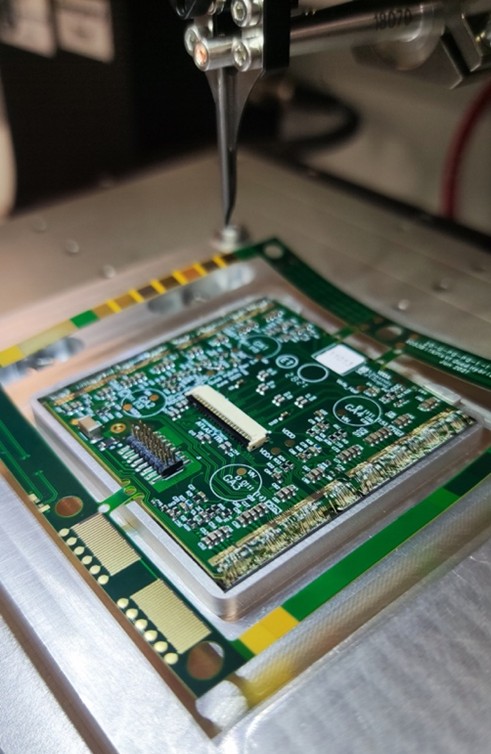
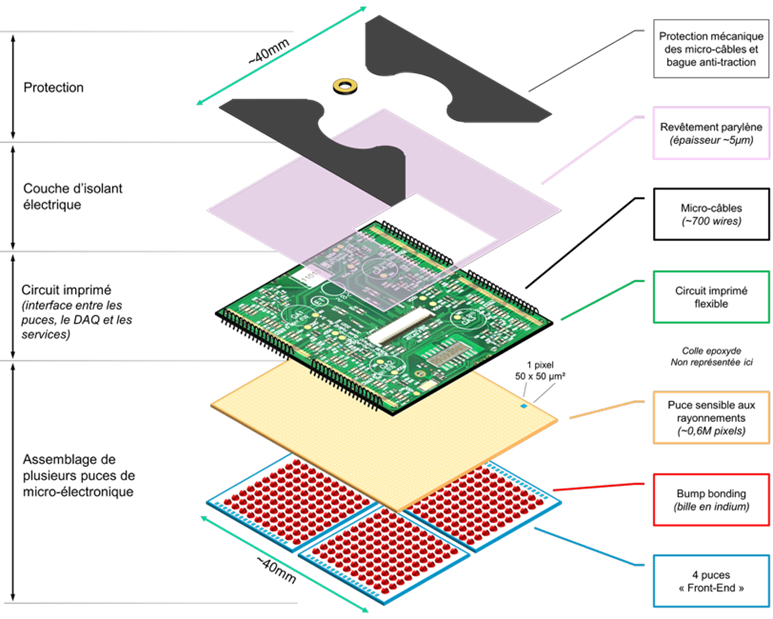
Imaging systems based on semiconductor detectors for spectrometry experiments in the fields of astrophysics and cosmology, from the near UV to the near infrared;
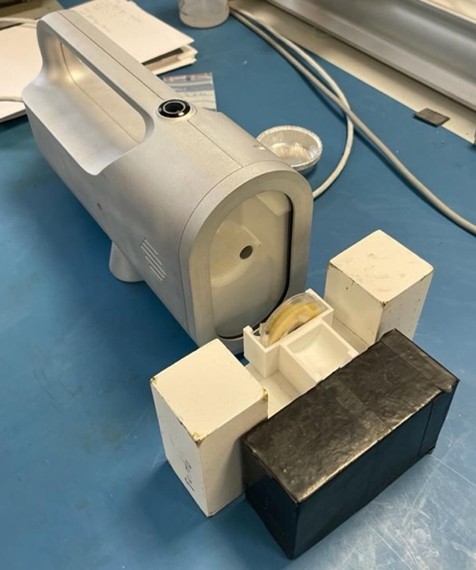
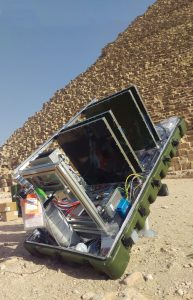
Societal applications, such as dosimetry for medical purposes, imaging for nuclear safety, and muon tomography of geological sites.
The laboratory also enjoys international recognition in the field of micro-segmented anode gas detectors, in particular thanks to the invention of the Micromegas (Micro-Mesh GASeous Structure) detector, to which it devotes a significant part of its activities.
Towards complete detection systems
In synergy with other DEDIP laboratories, DéTeCS contributes to the development of complete detection systems, combining detectors and electronics. This integrated approach is based on expertise covering:
- Particle detection and beam diagnostics,
- Simulation of physical and electronic phenomena,
- Front-end and coding electronics,
- Integration, metrology and prototyping,
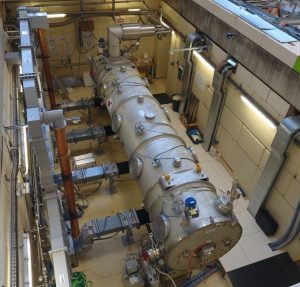
- Vacuum and cryogenic techniques,
- Management of industrial subcontracting with a focus on quality,
- Management of large-scale international projects.
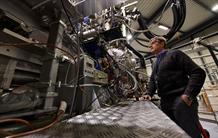
To carry out these missions, the laboratory has state-of-the-art equipment (evaporation benches, chemistry and low-pressure laboratories, optical benches, spectrometers, high-performance oscilloscopes and generators, micrometric alignment devices, etc.).