
LEARN staffs study the process and mechanisms at work in nuclear reactions and provide expertise to address issues in related topics or societal issues. Activities include the description and prediction of elementary-particle- (photons, neutrinos) or nucleon-induced nuclear reactions and development of the experimental and modeling tools needed for those studies.
Activities
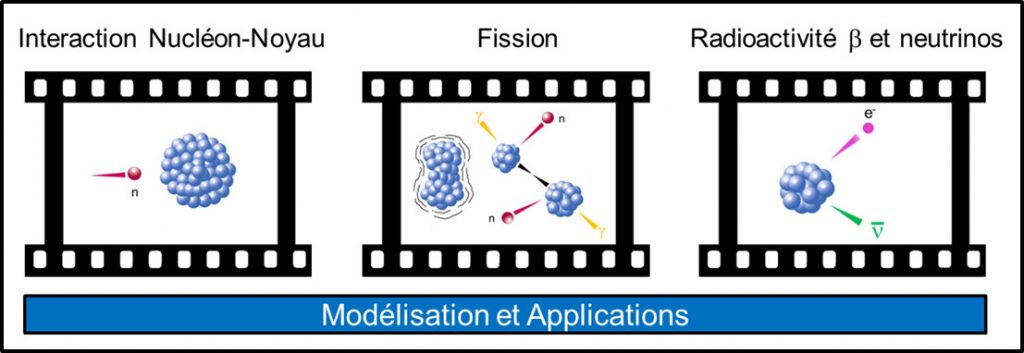
LEARN is focused on three main experimental activities:
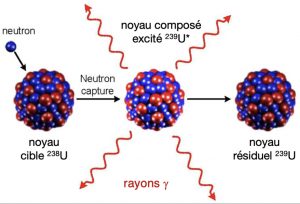
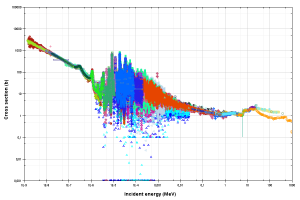
- Study of neutron-induced reactions;
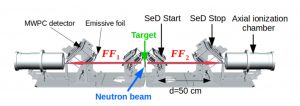
- Study of the fission process;
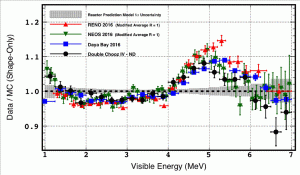
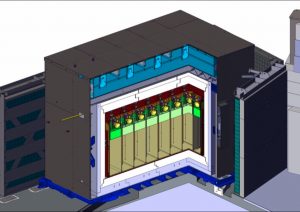
- Beta decay and study of reactor neutrinos.
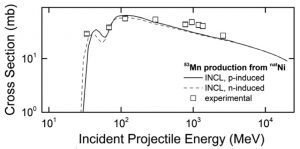
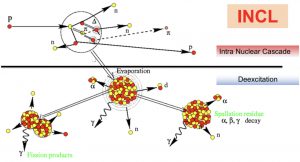
These activities are supported by a transverse modeling program with a particular emphasis on high energy reactions (spallation reactions).
LEARN projects make use of intense sources of neutrons (and neutrinos) in Europe covering the entire energy range from meV to GeV:
- Nuclear Physics at ILL (Grenoble);
- n_TOF at CERN and GELINA at JRC-Geel;
- NFS at GANIL/SPIRAL2.
Applications
LEARN brings its nuclear expertise for the development of new technologies such as the use of neutrinos for non-proliferation control of special nuclear material and for the development of new facilities such as compact neutron sources. It also makes available to users experimental data, which are disseminated via nuclear databases (JEFF, ENDF, JENDL), and nuclear reaction models through integration into the most widely used transport codes (GEANT4, MCNP6, PHITS). These activities help improve the accuracy of the simulation of complex systems required by numerous applications for research, nuclear energy, non-proliferation, health…