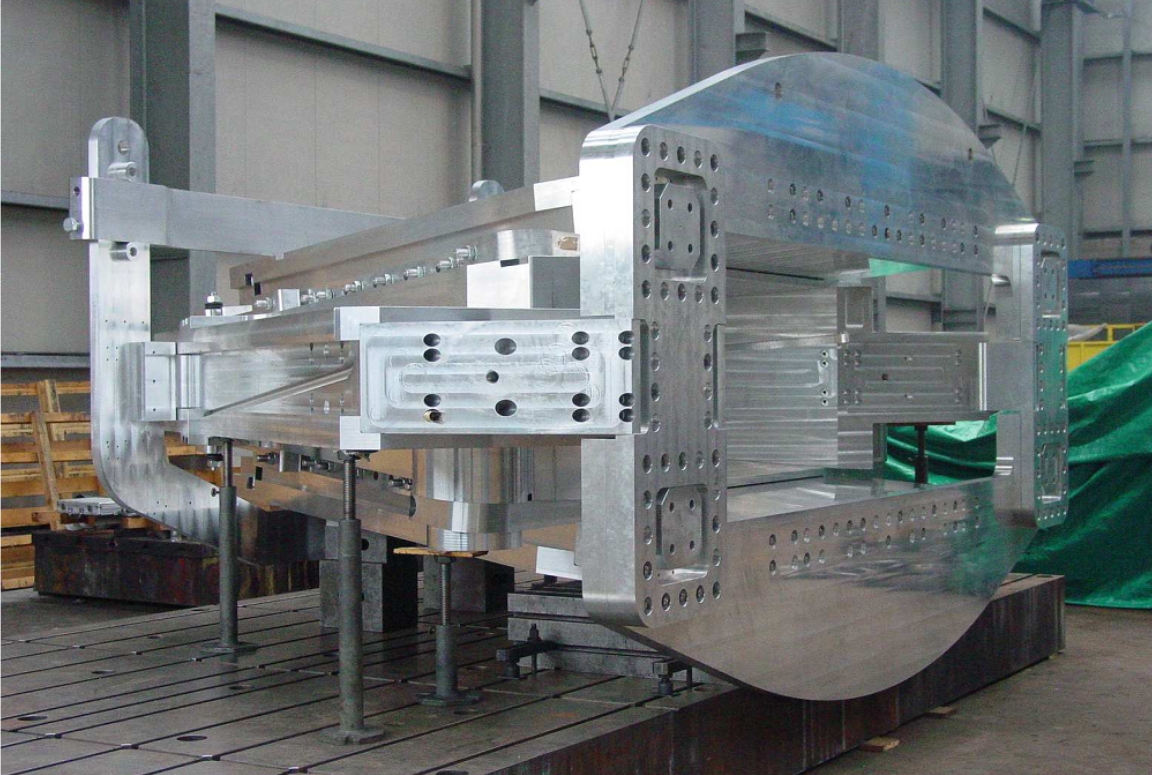
The Laboratory for Superconducting Magnet Research (LEAS) offers its expertise in magnetic fields to IRFU physicists, with a staff of 7 technicians, 20 engineers and one PhD student at the end of 2015.
The laboratory teams are responsible for the design and project management of superconducting magnets for experimental facilities, especially large magnets or those with high magnetic fields.
In designing superconducting magnets, LEAS applies its expertise to the optimization of coil geometry, conductor design, mechanical, electromagnetic, and thermal calculations, and magnetic protection in the event of quench. In addition to designing magnets, LEAS has the capacity to manage large projects, to develop magnets and integrate them into cryostats, and to supervise specific industrial projects. Magnets are inspected jointly with the Cryogenics Laboratory and Test Stations (LCSE). Measurement tasks include analyses of tests at ambient and cryogenic temperatures, including quench analyses and magnetic measurements.
Major projects completed recently, such as the GLAD dipole for the R3B spectrometer (reaching completion), or the solenoid coil for the Iseult imaging system, represent R&D work that keeps LEAS staff at its highest level of achievement.
The demand for high magnetic fields is also coming from laboratories such as the French National High Magnetic Field Laboratory (LNCMI) in Grenoble or CERN, in view of future circular accelerators such as the FCC (Future Circular Collider). This demand can only be satisfied by using niobium-tin (Nb3Sn), or high-temperature superconductors based on rare earth elements. These materials have been under active research and development for several years.
Significant developments also involve magnesium diboride (MgB2), which could eventually compete economically with niobium-titanium (NbTi).

 PHoCEA DSM 2024 - Tous droits réservés - Mentions légales - Ce site utilise Twitter Bootstrap
Dernière mise à jour : Jan 11th, 2024