

Three CEA laboratories (SGLS/ISAS/DES, DPHP/IRFU, BioMaps/SHFJ/JOLIOT) have combined their expertise to develop an innovative Deep Learning algorithm for enhancing the reconstruction of PET images acquired as part of the ClearMind project, a technology based on gamma photon detection using lead tungstate monolithic crystals. This represents a step toward more accurate PET imaging.
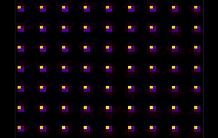
In the field of nuclear medicine, Positron Emission Tomography (PET) is a crucial imaging method for diagnostics in oncology, neurology, and cardiology. During the exam, radioactive positron-emitting atoms are injected into the patient in the form of a radiopharmaceutical. The decay of the radiotracer emits positrons, which annihilate into two back-to-back γ photons that reach a pair of opposing detectors surrounding the patient. These coincidentally detected photons are used to reconstruct the distribution of the tracer in the subject’s body. The accuracy of this imaging thus depends on the detectors’ ability to locate and time the interactions of the γ photons in the scintillators.
Recently, the ClearMind project proposed an innovative PET detector concept, composed of lead tungstate (PbWO4) monolithic crystals, sensitive to the position of the γ photons. This scintillator foresee superior sensitivity compared to traditional pixelated detectors but introduces additional complexity in signal processing for the spatial reconstruction of interactions.
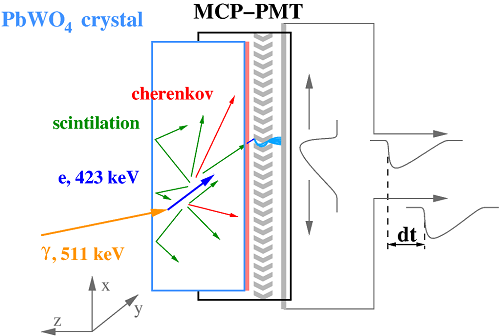
In this study, the consortium of researchers from the three laboratories of ISAS, DPHP-IRFU, and SHFJ-Joliot developed an innovative Deep Learning method to improve the localization of γ photon interactions in the scintillators developed by the ClearMind project. The team used a Density Neural Network trained on simulations of the detector, with a loss function incorporating some physical constraints of the detector (near the edges), as well as an estimation of the uncertainty inherent in the reconstruction process. This unique combination enabled more robust and reliable position estimates, and the results demonstrate the effectiveness of the proposed approach, highlighting the significant benefits of uncertainty estimation through the model.
By achieving their goal of more reliable and precise spatial reconstruction of γ interactions for PET imaging, the authors discuss how their method could be applied to other fields requiring analysis of complex sensor data. They foresee that their approach could transform the way spatial reconstructions are performed, paving the way for expanded applications and more precise, reliable medical imaging in connection with trustworthy AI.
Contacts Irfu DPHP: Viatcheslav Sharyy, Dominique Yvon