
The main mission of the Computer Science and Services Laboratory (LIS)

The main mission of the Computer Science and Services Laboratory (LIS) is to provide IT support for users throughout the Institute, as well as the resources needed for both day-to-day work and experimental calculations.

The LIS also manages the Institute’s purchasing and provides services, expertise and advice related to the purchasing function (Agora).

The LIS has a staff of 20, including 15 engineers and 2 apprentices. In collaboration with the CEA’s IT Department and partner institutes (CERN, CNRS, Université Paris/Saclay, etc.), the LIS defines the short and medium-term orientations of Irfu’s IT. Together with users, it defines and selects the resources to be deployed.

LIS carries out the following missions for Irfu:

User support (1000 people)

Administration of workstations (1,200 Windows, Mac and Linux computers) and servers (Windows and Linux)

Purchase of all software and hardware in accordance with CEA regulations

Definition, configuration and management of local infrastructure: machine rooms (31 bays, 600 A, 500 kW cooling), networks, backup robot (500 slots).

Definition, configuration and management of Linux-based clusters (HPC/Farms), in particular

  • Alfven HPC cluster (2400 cores, 12TB RAM, 1Pb storage)
  • Anais visualization cluster: 2 NVIDIA Quadro M600, 128 cores, RAM 2TB, storage 400TB,
  • ISIPIC HPC cluster (256 cores, 50TB)
  • An Iclust interactive and computational cluster(500 cores, 500 TB) for particle physics in particular.
  • A virtualization cluster (600 cores, 1.5 TB Ram, 2.5 Po)

Management of a Tier 2 computing and storage site for the WLCG grid, GRIF (Grille au service de la Recherche en Ile-de-France), comprising over 450 machines and more than 4PiB of storage. Irfu accounts for 40% of GRIF and 11% of French computing.

Contract management and monitoring of use by IRFU staff of the IN2P3 computing center in Lyon.

Security compliance in accordance with CEA directives

Active participation in CEA bodies (DSI/USCI/DRF, etc.)

Contact: Joel SURGET
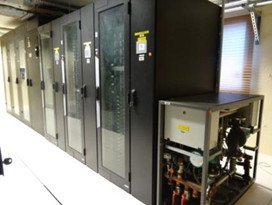
A machine room at Irfu

Projects

  • AGATA

    AGATA

    AGATA (Advanced Gamma-ray Tracking Array)is a new generation high-resolution γ-ray spectrometer providing unprecedented Doppler-correction capabilities thanks to a combination of fine detector…

  • ALICE

    ALICE

    The ALICE experiment is devoted to the study of nuclear matter under extreme conditions of temperature and density. It is specially designed to test the fundamental theory of the strong interaction,…

  • Antares, a high energy neutrino telescope

    Antares, a high energy neutrino telescope

    Overview Most of our current knowledge of the Universe comes from the observation of photons. Photons have many advantages as cosmic information carriers: they are copiously produced, they are…

  • ATHENA

    ATHENA

    Un satellite pour l’étude del’univers chaud et énergétique. Lancement prévu pour 2031. A satellite to study hot and energetic universe to be launched in 2031.

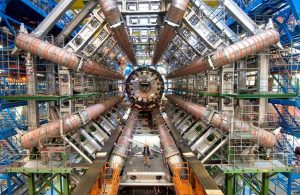
  • ATLAS

    ATLAS

    Atlas is one of the general purpose detectors which started operation in 2008 at the the CERN proton collider, to study the Higgs boson. Goals: Unifying the elementary constituants of matter and…

  • BABAR

    BABAR

    Goal The main goal of theexperiment was toperforma complete study of CP violation (CP is the symmetry linking particulesand antiparticules) in the systemof Bmesons. Moregenerally the experiment…

  • BAO

    BAO

    Most of the content of the Universe, about 70%, is dominated by an energetic component that is neither matter nor radiation: dark energy. This mysterious component, first observed in 1998 with…

  • CLAS12

    CLAS12

    Deeply Virtual Compton Scattering experiment at Jefferson Lab Hall B , with CLAS12, large acceptance spectrometer. Goals: Theoretical concepts asGeneralized Parton Distributions (GPD), enable to…

  • CLIC: CTF3-CALIFES

    Objectives The scientific exploitation of the LHC (Large Hadron Collider), planned to start operation in 2008 will be the higher priorityin high energy physics for the next coming years. In the…

  • CMS

    CMS

    CMS is the detector of one of the 2 multi-purpose experiments out of the 4 experiments located at the LHC at CERN near Geneva. CMS is installed at point 5 in Cessy. Main goals : During the last…

  • COAST  COmputational ASTrophysics

    COAST COmputational ASTrophysics

    Simulation numérique en astrophysique spécialisé dans l’activité de “calcul de haute performance”. Astrophysics digital simulation for “high performance computing”.

  • COAST  COmputational ASTrophysics

    COAST COmputational ASTrophysics

    Web site of the COASTproject Presentation The COAST project is a DAPNIA program of high performances computing in astrophysics. It includes developments of codes, numerical methods, visualization…

  • CTA (Cherenkov Telescope Array)

    CTA (Cherenkov Telescope Array)

    A new generation observatory to explore the high energy Universe. Une nouvelle génération d’observatoire pour explorer l’Univers à haute énergie.

  • D0

    D0

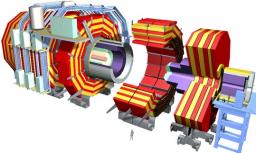
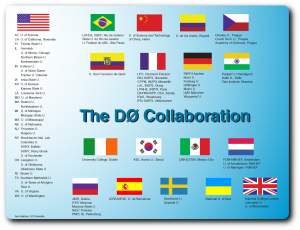
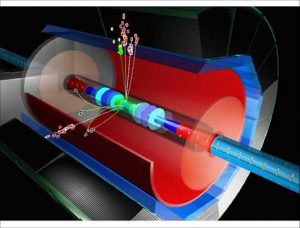
    Presentation The D0 experiment was located at the proton-antiproton Tevatron collider at the Fermilab laboratory (Chicago, USA). There was two data taking periods: Run I from 1992 to 1996 with a…

  • Detectors for linear collider

    Detectors for linear collider

    FELICE (acronym for “Future Electron LInear Collider Experiment”) is a group of physicists and engineers working for the physics and detectors at the ILC (International Linear Collider). An…

  • Edelweiss

    Edelweiss

    Objectives The goal of Edelweiss is to detect the dark matter of our Galaxy through its interactions in detectors operated in underground laboratory. The EROS experiment, searching for massive…

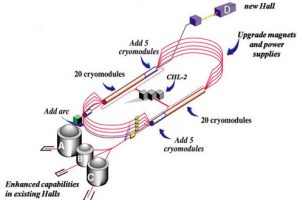
  • ESS: The European Spallation Source

    ESS: The European Spallation Source

    The linear accelerator includes a low-energy section (E≤ 90MeV) with a Radio Frequency Quadrupole (RFQ), a Drift Tube Linac (DTL), and a high-energy section made up of superconducting cavities that…

  • Fulis rotating Target

    Fulis rotating Target

    Objectives While the heaviest element on earth is 238-uranium (with traces of Pu and Np in natural nuclear reactors) whose lifetime is 5 billion years, the last 60 years have seen the synthesis of…

  • GBAR

    GBAR

    Aims: One of the fundamental questions of today’s physics concerns the action of gravity upon antimatter. No experimental direct measurement has ever been successfully performed with antimatter…

  • HESS

    HESS

    H.E.S.S. Exploring the High Energy gamma ray sky H.E.S.S stands for “High Energy Stereoscopic System”. This telescope system been designed and built by a large international collaboration which…

  • JWST

    JWST

    The James Webb Space Telescope (JWST) launched on 25 December 2021 isthe successor of the Hubble Space Telescope. This is a NASA led mission with the participation of Europe, under the…

  • LISA

    LISA (Laser Interferometer Space Antenna) is the large-class mission of the European Space Agency’s (ESA) long-term Cosmic Vision programme for the observation of gravitational waves. It will be the…

PhD thesis