Laboratory of Development and Integration of Control System (LDISC)

LDISC role in Irfu institute is to provide control system part of experiment and test stand.

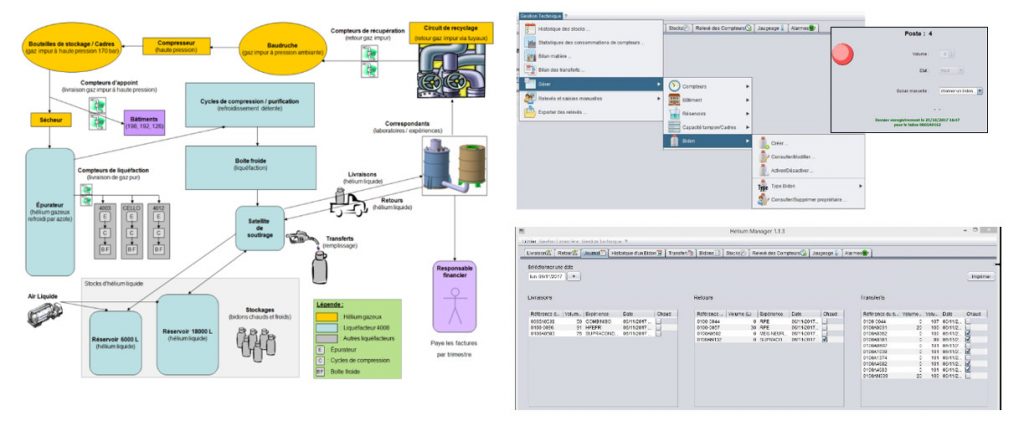
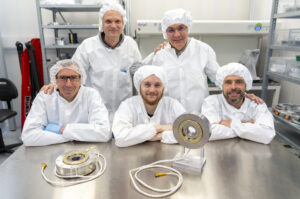
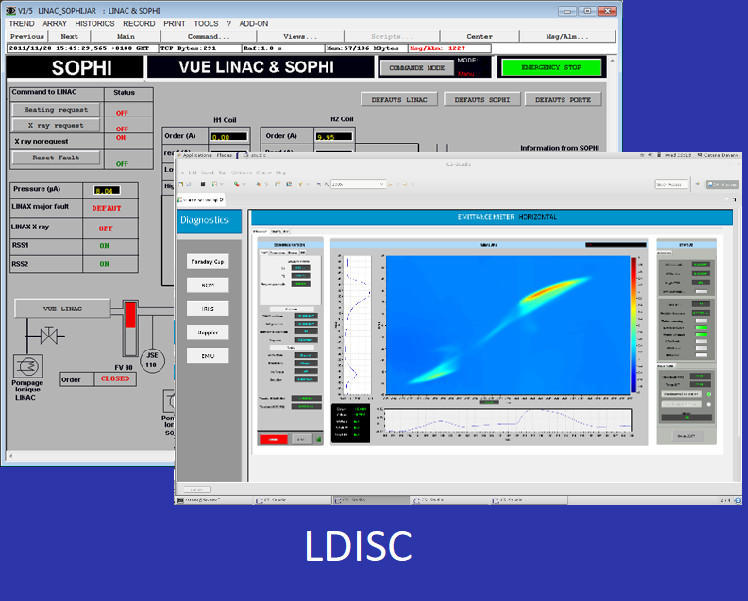
LDISC laboratory has strong skills in control with a specific acknowledge on cryogenic magnet cooling system, control and diagnostics of particle accelerator and prototype development for physic experiments. In 2019, LDISC is involved in more 40 projects in the country and outside. Laboratory team is compose of 23 technicians, engineers and project managers, and every year we are hosting several interns and apprentices.


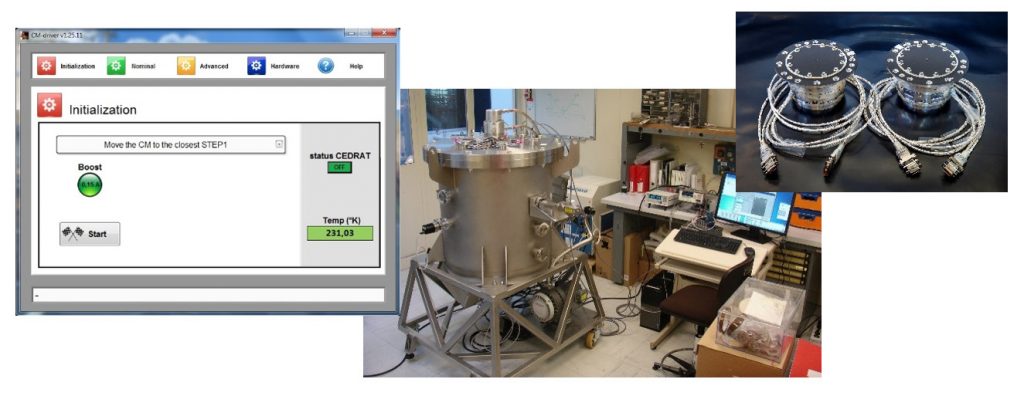
The LDISC is participating in all the phases of control system from studies, achievements, commissioning and maintenance. This is done by working closely with the physicists’ team and other engineering laboratories like electrical engineering (LEIGE) by integrating the control system in a cabinet, electronic team (LEI) by developing custom electronic front-end, and mechanical team (LCAP, LRI) by integrating instrumentation in the mechanical design of the solution.


We are participating to the experiment throughout his life, and so we are integrating since the beginning the maintenance phase in the design of our control system. To ensure a high operational level, we are using industrial solution like Siemens PLC, Nise Nexcom fanless PC, National Instrument CompactRIO or PXIe, ADAS VME, IOXOS MTCA, MRF Timing…


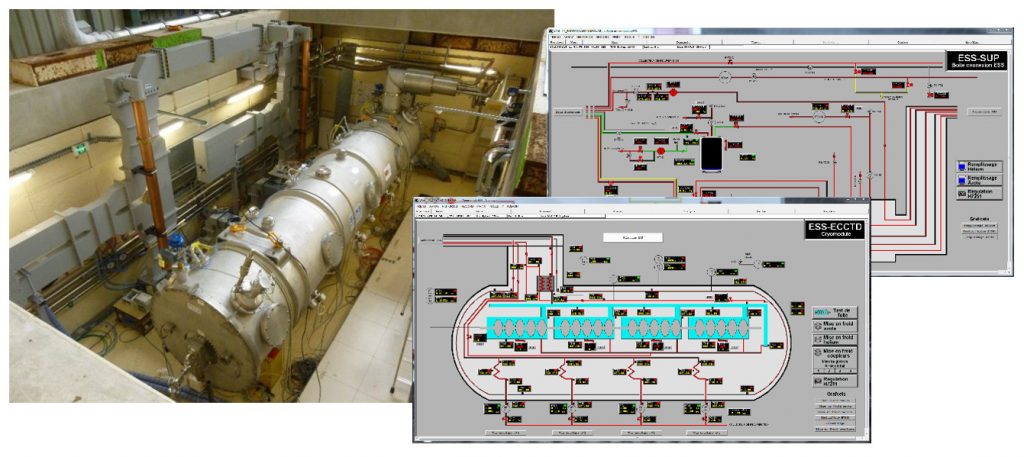
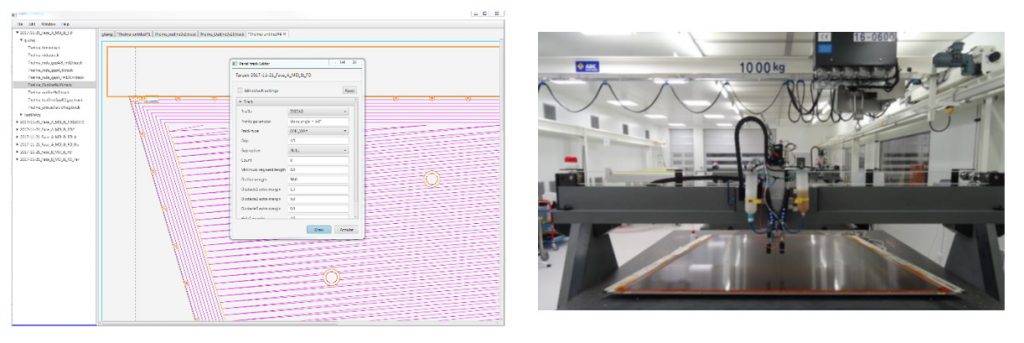
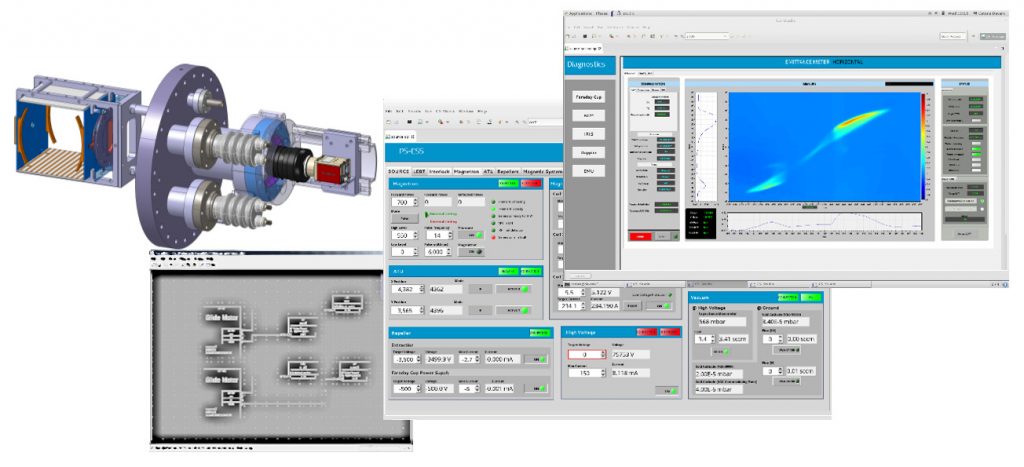
Because there are many different types of experiments at Irfu, we are adapting our developments and tools to the projects, but there are common points on physical experiments, and so we have developed technics and defined standards. For cryogenic cooling system, we have developed solution based on Siemens PLC and TIA Portal, SCADA associated to the PLC can be Muscade, WinCC or EPICS depending of target site. For beam diagnostics and RF control, we have developed patterns based on EPICS, MTCA IOXOS, MRF solutions, and custom tools in Java or Python. For test bench, we are using commonly National Instrument hardware (cRIO, PXIe) and LabVIEW software.

Projects

  • AGATA

    AGATA

    AGATA (Advanced Gamma-ray Tracking Array)is a new generation high-resolution γ-ray spectrometer providing unprecedented Doppler-correction capabilities thanks to a combination of fine detector…

  • ALICE

    ALICE

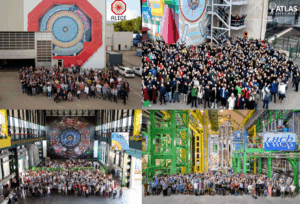
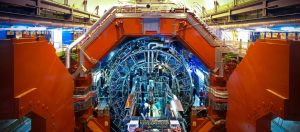
    The ALICE experiment is devoted to the study of nuclear matter under extreme conditions of temperature and density. It is specially designed to test the fundamental theory of the strong interaction,…

  • Antares, a high energy neutrino telescope

    Antares, a high energy neutrino telescope

    Overview Most of our current knowledge of the Universe comes from the observation of photons. Photons have many advantages as cosmic information carriers: they are copiously produced, they are…

  • ArTeMiS bolometer array

    ArTeMiS bolometer array

    Latest news : Artemis installed on APEX (25 sept. 2013) The Artemis camera has been successfully installed on APEX telescope during the summer 2013. The new camera has already delivered a…

  • ATLAS

    ATLAS

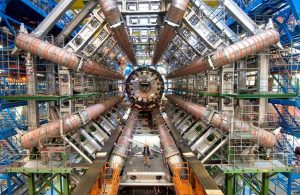
    Atlas is one of the general purpose detectors which started operation in 2008 at the the CERN proton collider, to study the Higgs boson. Goals: Unifying the elementary constituants of matter and…

  • BABAR

    BABAR

    Goal The main goal of theexperiment was toperforma complete study of CP violation (CP is the symmetry linking particulesand antiparticules) in the systemof Bmesons. Moregenerally the experiment…

  • CLAS12

    CLAS12

    Deeply Virtual Compton Scattering experiment at Jefferson Lab Hall B , with CLAS12, large acceptance spectrometer. Goals: Theoretical concepts asGeneralized Parton Distributions (GPD), enable to…

  • CLIC: CTF3-CALIFES

    Objectives The scientific exploitation of the LHC (Large Hadron Collider), planned to start operation in 2008 will be the higher priorityin high energy physics for the next coming years. In the…

  • CMS

    CMS

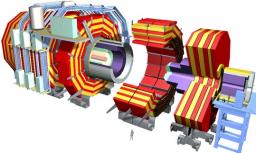
    CMS is the detector of one of the 2 multi-purpose experiments out of the 4 experiments located at the LHC at CERN near Geneva. CMS is installed at point 5 in Cessy. Main goals : During the last…

  • ISEULT

    ISEULT

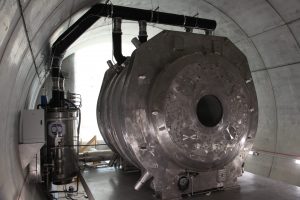
    The technique of magnetic resonance imaging (MRI) is a diagnostic tool for research and neuroscience. Its evolution led to instruments for whole body operating at very high field from 0.5 to 1.5…

  • ITER

    ITER

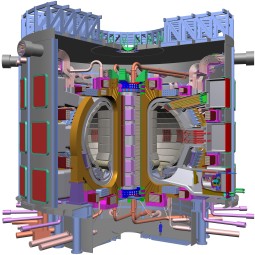
    Objective The objective of the ITER («way » in latine) project is to go through the steps still necessary to enable the construction of a prototype producing electricity through nuclear fusion in…

  • JWST

    JWST

    The James Webb Space Telescope (JWST) launched on 25 December 2021 isthe successor of the Hubble Space Telescope. This is a NASA led mission with the participation of Europe, under the…

  • LISA

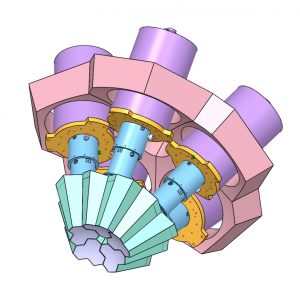
    LISA (Laser Interferometer Space Antenna) is the large-class mission of the European Space Agency’s (ESA) long-term Cosmic Vision programme for the observation of gravitational waves. It will be the…

  • MEGACAM

    MEGACAM

    Megacam MegaCam A major instrument at the CFHT observatory (Canada-France-Hawaii Telescope) The MegaCam camera was developed for the prime focus of the 3.6m diameter Canada-France-Hawaii Telescope…

  • MEGACAM

    MEGACAM

    Caméra installée au foyer du télescope de 3,6m de diamètre du CFHT. Camera installed on the 3,6m diameter telescope of the CFHT.

  • Mini Inca

    Mini Inca

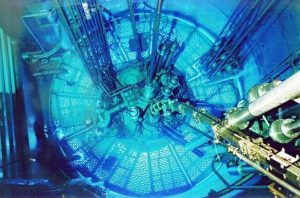
    Objectives: The objective of the Mini-INCA project is to study minor-actinide transmutation processes in high intensity thermal neutron fluxes, in view of proposing solutions to reduce the…

  • SPALADIN

    SPALADIN

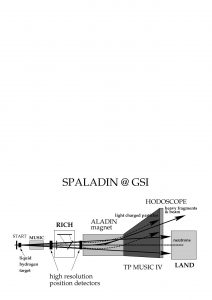
    Presentationof theproject Physics& programmes Spallation reaction study, physics data for nuclear energy Goals of the experiment The measurement in coincidence and in inverse kinematics of the…

  • SPIRAL2

    Presentation: SPIRAL2 [SPIRAL: Système de Production d’Ions Radioactifs Accélérés en Ligne, production system of on-line accelerated radioactive ions] is the project of a facility intended for the…

  • T2K

    T2K

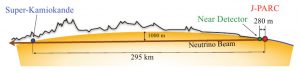
    T2K (Tokai to Kamioka) is the world leading experiment dedicated to the study of neutrino oscillations over a long distance using µ-neutrino and µ-anti-neutrino beams. Neutrinos exist in three…

PhD thesis

Actuellement aucune thèse disponible pour : dis