Detectors: physics and simulation (DEPHYS)

DEPHYS

The main mission of the DEtecteur Physics Laboratory: Physics and Simulation (DEPHYS) is to propose and study new innovative detector concepts as part of its own R&D projects and during the feasibility and preliminary design phases of instruments developed for IRFU scientific projects in particle physics, nuclear physics, and astrophysics. Other areas of application include detectors for rare event physics (Germanium bolometric detectors, spherical gas detectors, MICROMEGAS detectors for axion research), beam diagnostics (protons and neutrons), radiography applications for medical or homeland security purposes, and muon tomography of geological sites. Dephys is world-renowned in the field of micro-segmented anode gas detectors, having invented one of the leading examples, the MICROMEGAS (Micro-Mesh GASeous Structure) detector, to which more than two-thirds of its activities are devoted.

The laboratory draws on the expertise of its nine PhDs, who are specialists in modelling, simulation, design, development and performance testing of prototypes for ionising radiation detectors, whether liquid, gaseous or solid-state. The laboratory hosts and supervises post-doctoral research (four in 2016) and trains postgraduate doctoral students (two HDRs and one state thesis). In the early stages of Irfu projects, DEPHYS is a driving force within the department and participates in the preparation of bids for national and European tenders in the field of detectors. It is also heavily involved in internal and external scientific communication, as well as in teaching instrumentation at M2 level.
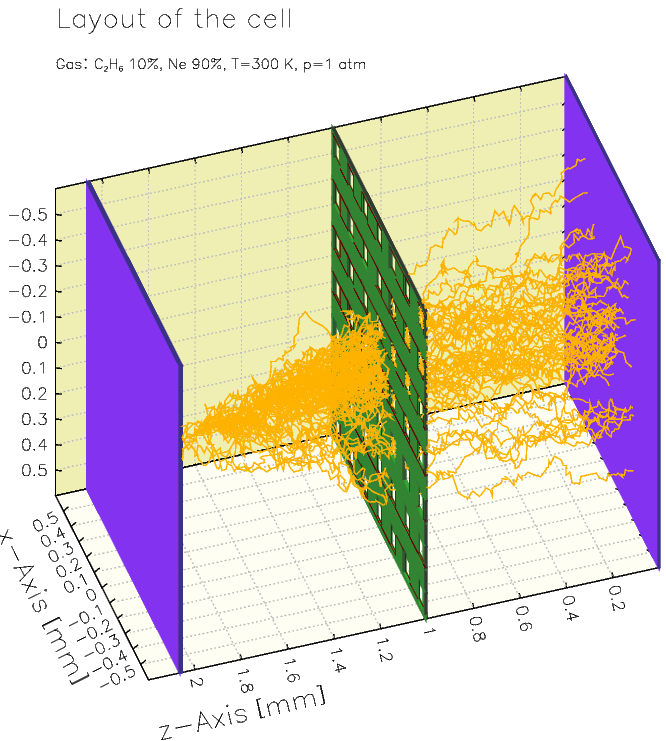
Simulation of the transfer of electrons in Ne (90%)+C2H6(10%) through a 7 microns thick electrofromed Nickel mesh (Garfield+Magbolz+neBEM code).

To optimise, secure and accelerate detector design, the laboratory is developing expertise in Monte Carlo simulation methods to model the physical processes involved in the creation, transport and collection of electrical charges or photons generated during the interaction of ionising radiation with the detector’s sensitive medium. A powerful workstation brings together the best software tools for the development of specific frameworks: GEANT4 (GEometry ANd Tracking), FLUKA, Garfield( ), Magoblz, COMSOL Multiphysics with AC/DC module and Lorentz 3D interfaced with neBEM (electrostatic and magnetic field map). The laboratory has a variety of radiation sources, such as X-ray sources (55Fe, 8 keV generator), a sources (241Am/Be), neutron sources (252Cf) and g sources (60Co from the COCASE irradiator) to measure the response of prototypes in its premises specifically equipped for testing gas and cryogenic detectors. High spatial resolution cosmic benches are also developed, maintained and used for detector characterisation, and the laboratory analyses test data using its own analysis tools based on ROOT libraries.

The Dephys are involved, as task leaders or project managers, in: EDELWEISS, NEWS, proto-DUNE, ESS diagnostics, n-TOF, MCube, CLAS12, ATLAS-NSW, semiconductor R&D, micro-pattern gas detector (MPGD) R&D, CERN/RD51, ASTRO-H, SVOM, and HARPO.
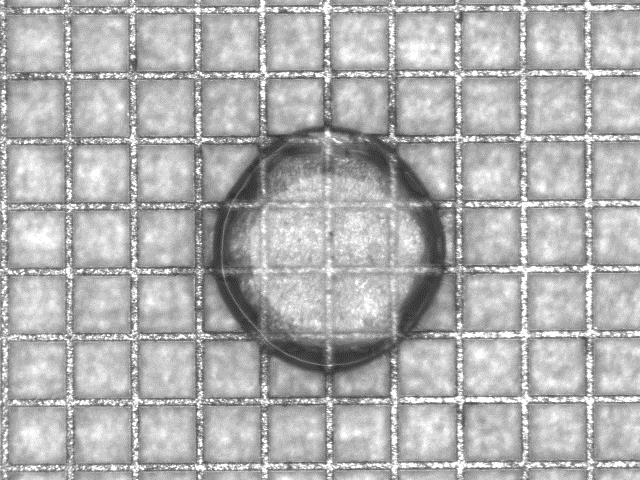
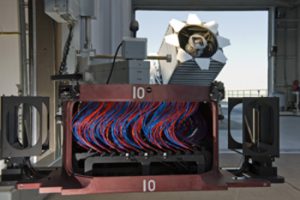
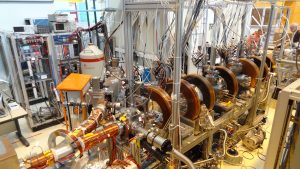
Picture of a MICROMEGAS woven mesh maintained at 128 microns above the anode PCB by an insulating pillar (bulk-micromegas technology)

Projects

  • AGATA

    AGATA

    AGATA (Advanced Gamma-ray Tracking Array)is a new generation high-resolution γ-ray spectrometer providing unprecedented Doppler-correction capabilities thanks to a combination of fine detector…

  • ALICE

    ALICE

    The ALICE experiment is devoted to the study of nuclear matter under extreme conditions of temperature and density. It is specially designed to test the fundamental theory of the strong interaction,…

  • Antares, a high energy neutrino telescope

    Antares, a high energy neutrino telescope

    Overview Most of our current knowledge of the Universe comes from the observation of photons. Photons have many advantages as cosmic information carriers: they are copiously produced, they are…

  • ATHENA

    ATHENA

    Un satellite pour l’étude del’univers chaud et énergétique. Lancement prévu pour 2031. A satellite to study hot and energetic universe to be launched in 2031.

  • ATLAS

    ATLAS

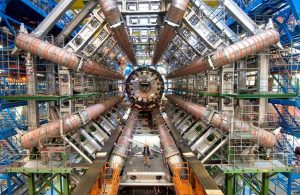
    Atlas is one of the general purpose detectors which started operation in 2008 at the the CERN proton collider, to study the Higgs boson. Goals: Unifying the elementary constituants of matter and…

  • BABAR

    BABAR

    Goal The main goal of theexperiment was toperforma complete study of CP violation (CP is the symmetry linking particulesand antiparticules) in the systemof Bmesons. Moregenerally the experiment…

  • BAO

    BAO

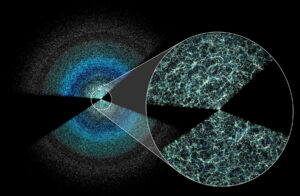
    Most of the content of the Universe, about 70%, is dominated by an energetic component that is neither matter nor radiation: dark energy. This mysterious component, first observed in 1998 with…

  • CLAS12

    CLAS12

    Deeply Virtual Compton Scattering experiment at Jefferson Lab Hall B , with CLAS12, large acceptance spectrometer. Goals: Theoretical concepts asGeneralized Parton Distributions (GPD), enable to…

  • CLIC: CTF3-CALIFES

    Objectives The scientific exploitation of the LHC (Large Hadron Collider), planned to start operation in 2008 will be the higher priorityin high energy physics for the next coming years. In the…

  • CMS

    CMS

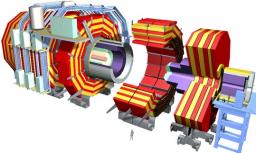
    CMS is the detector of one of the 2 multi-purpose experiments out of the 4 experiments located at the LHC at CERN near Geneva. CMS is installed at point 5 in Cessy. Main goals : During the last…

  • COAST  COmputational ASTrophysics

    COAST COmputational ASTrophysics

    Simulation numérique en astrophysique spécialisé dans l’activité de “calcul de haute performance”. Astrophysics digital simulation for “high performance computing”.

  • COAST  COmputational ASTrophysics

    COAST COmputational ASTrophysics

    Web site of the COASTproject Presentation The COAST project is a DAPNIA program of high performances computing in astrophysics. It includes developments of codes, numerical methods, visualization…

  • CTA (Cherenkov Telescope Array)

    CTA (Cherenkov Telescope Array)

    A new generation observatory to explore the high energy Universe. Une nouvelle génération d’observatoire pour explorer l’Univers à haute énergie.

  • D0

    D0

    Presentation The D0 experiment was located at the proton-antiproton Tevatron collider at the Fermilab laboratory (Chicago, USA). There was two data taking periods: Run I from 1992 to 1996 with a…

  • Detectors for linear collider

    Detectors for linear collider

    FELICE (acronym for “Future Electron LInear Collider Experiment”) is a group of physicists and engineers working for the physics and detectors at the ILC (International Linear Collider). An…

  • Edelweiss

    Edelweiss

    Objectives The goal of Edelweiss is to detect the dark matter of our Galaxy through its interactions in detectors operated in underground laboratory. The EROS experiment, searching for massive…

  • ESS: The European Spallation Source

    ESS: The European Spallation Source

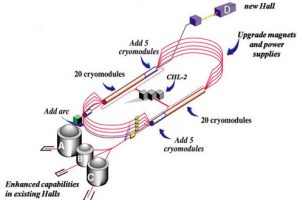
    The linear accelerator includes a low-energy section (E≤ 90MeV) with a Radio Frequency Quadrupole (RFQ), a Drift Tube Linac (DTL), and a high-energy section made up of superconducting cavities that…

  • Fulis rotating Target

    Fulis rotating Target

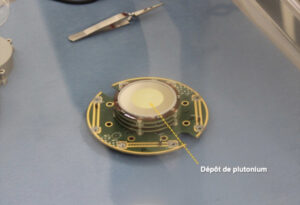
    Objectives While the heaviest element on earth is 238-uranium (with traces of Pu and Np in natural nuclear reactors) whose lifetime is 5 billion years, the last 60 years have seen the synthesis of…

  • GBAR

    GBAR

    Aims: One of the fundamental questions of today’s physics concerns the action of gravity upon antimatter. No experimental direct measurement has ever been successfully performed with antimatter…

  • HESS

    HESS

    H.E.S.S. Exploring the High Energy gamma ray sky H.E.S.S stands for “High Energy Stereoscopic System”. This telescope system been designed and built by a large international collaboration which…

  • JWST

    JWST

    The James Webb Space Telescope (JWST) launched on 25 December 2021 isthe successor of the Hubble Space Telescope. This is a NASA led mission with the participation of Europe, under the…

  • LISA

    LISA (Laser Interferometer Space Antenna) is the large-class mission of the European Space Agency’s (ESA) long-term Cosmic Vision programme for the observation of gravitational waves. It will be the…

PhD thesis