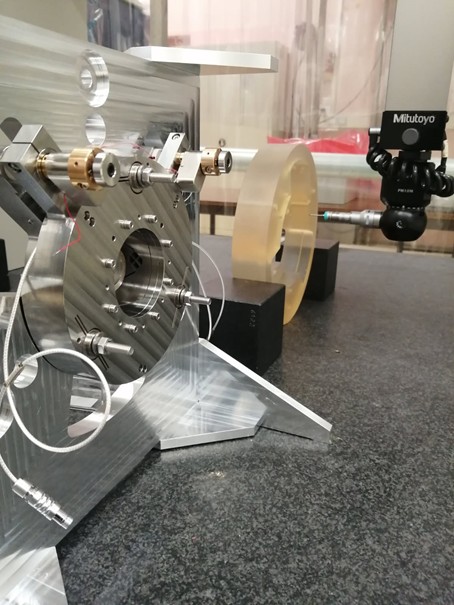

The Standard Model of particle physics leaves many questions open, not least the expected description of 95% of the Universe’s energy content, in the form of dark energy and dark matter. Another major question is the link between the three fundamental interactions described by the standard model of particle physics and the fourth, gravity, described by an incompatible formalism, that of general relativity. The DPhP tackles these questions by getting involved in cosmology from the angles of cosmology (DESI), very high-energy gamma-ray astronomy (CTA), the search for axions (GLEAD) and the detection of gravitational waves (LISA).
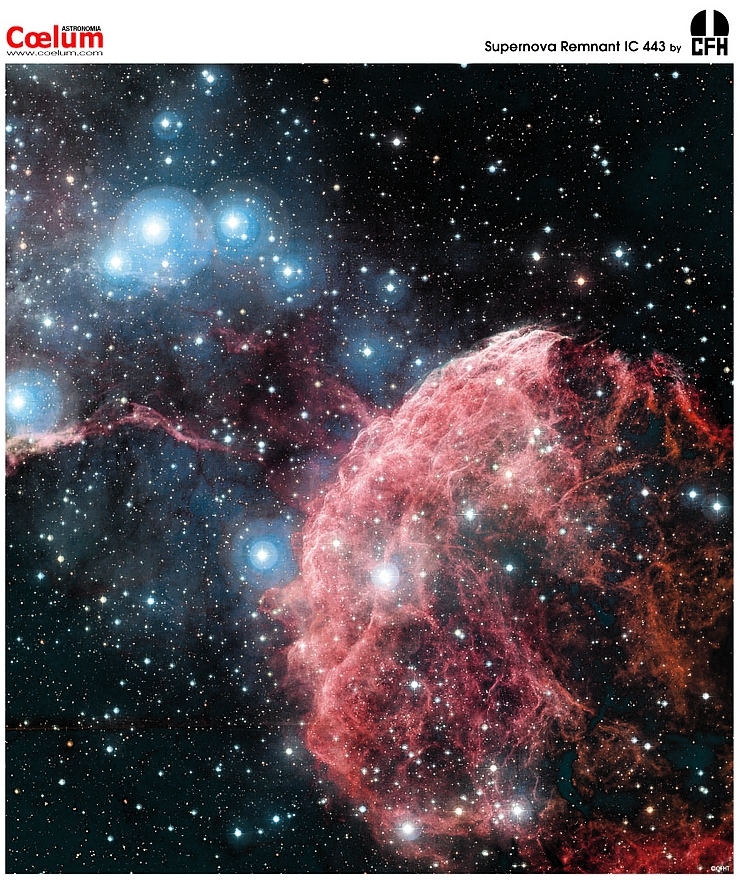
The DPhP tackles cosmology from the angles of large-scale structure formation and the cosmic microwave background (CMB). Large-scale spectroscopic surveys provide 3D maps of the Universe, making it possible to study the aggregation of matter over more than 12 billion years. These surveys provide access to two physical effects: baryonic acoustic oscillations (BAO) and redshift space distortions (RSD), to unlock the mystery of dark energy and study the effects of gravity at cosmological distances. As for the CMB, it’s its polarization that interests physicists. In addition to studying dark matter and dark energy, these CMB measurements will enable us to search for signatures of primordial gravitational waves, a signature of inflation, and will help constrain neutrino masses.
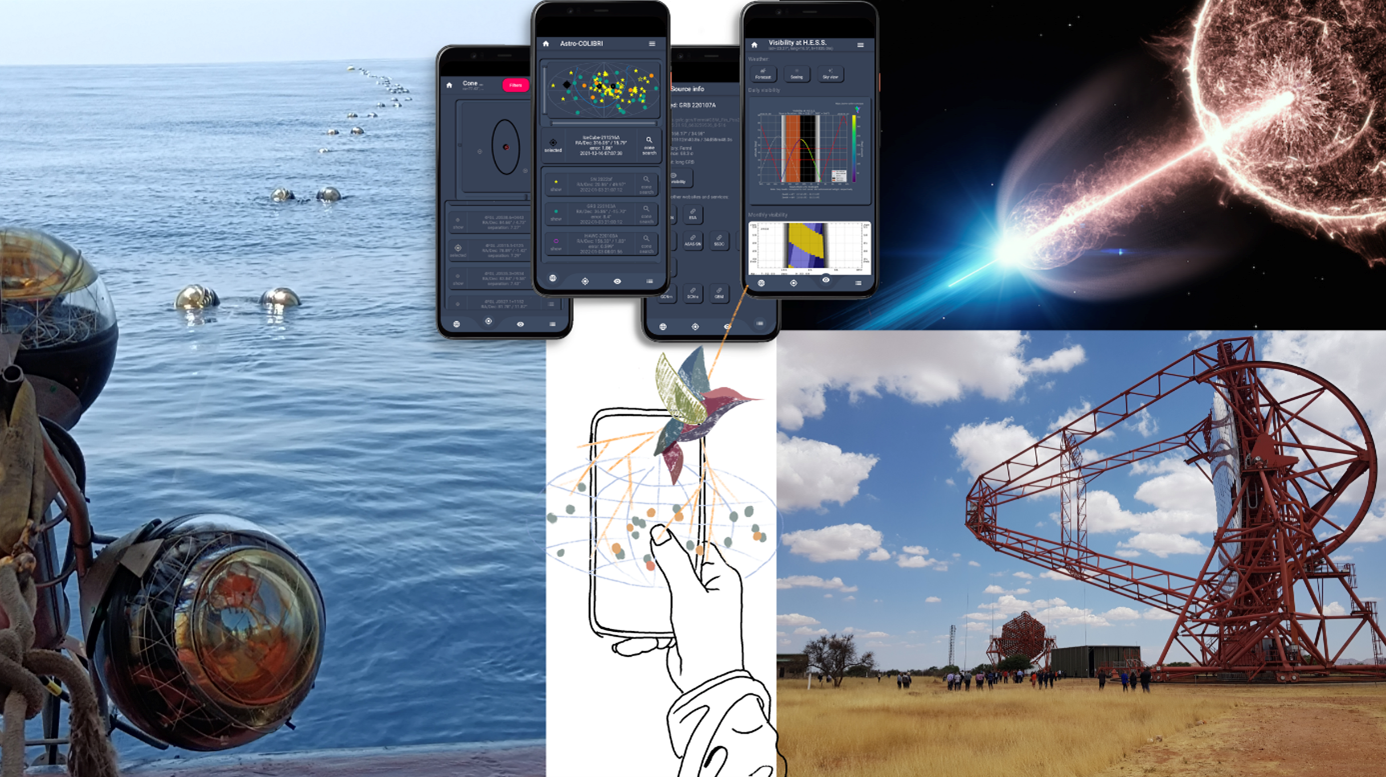
Most transient astrophysical sources emit full-spectrum electromagnetic radiation, as well as other cosmic messengers such as neutrinos, gravitational waves or charged cosmic rays. In recent years, the field of transient astrophysics, and in particular multimessenger astrophysics, has seen considerable progress and advances. The IRFU is at the forefront of this new field: detection of transient phenomena using ground- and space-based detectors of all cosmic messengers, such as radio telescopes like the Nançay Observatory, satellites like SVOM, and the ANTARES neutrino telescope, or the LISA mission in the future; follow-up observations of transient events across the electromagnetic spectrum using ground-based observatories such as H.E.S.S. and CTA, but also dedicated platforms such as Astro-COLIBRI.
Groups
-
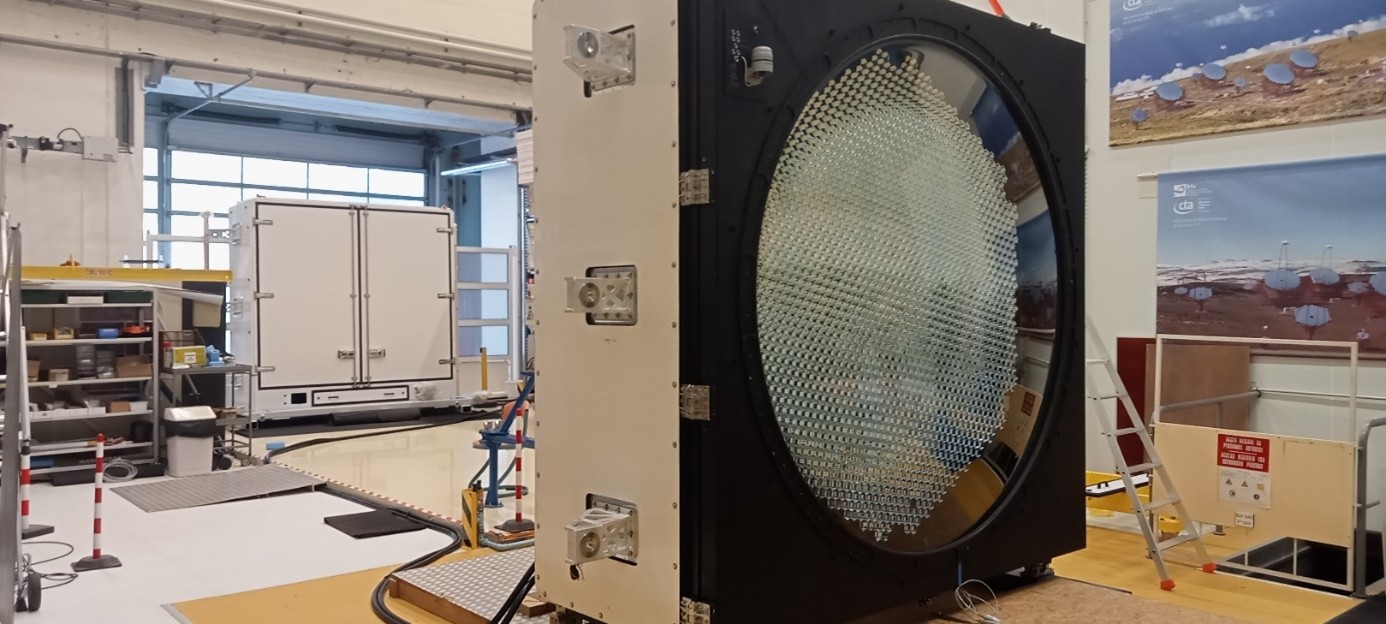
The DPhP’s High-Energy Gamma-Ray Astronomy group studies the most extreme phenomena in the Universe. These sources can be the vicinity of compact objects such as black holes and neutron stars, or dense cosmic structures where dark matter particles could annihilate. The group uses ground-based Cherenkov telescopes to analyze atmospheric sprays produced by high-energy gamma-ray photons,…
-
The DPhP has long experience of multi-messenger observations and has stepped up its contributions in recent years. A notable example is its participation in the TAToO alert system for the ANTARES neutrino telescope, which analyzed the data stream in real time, identified significant energetic events and automatically sent alerts to partner observatories. With ANTARES having…
-
Physicists of the SPP Cosmology groupuse several cosmological probes to constrain the energy content of the Universe: the baryon acoustic oscillation (BAO), with participation to the BOSS, eBOSS,…
-
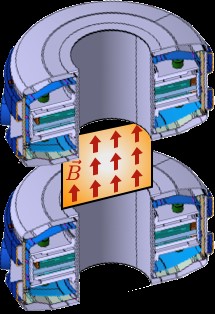
Axions are particles that resolve the strong CP fine-tuning problem in quantum chromodynamics, which, in general, should not respect CP symmetry. Produced nonthermally in the early universe, they are excellent candidates for cold dark matter (DM), despite expected masses on the order of µeV. Axions couple to the classical electromagnetic field via an effective two-photon…
-
LISA (Laser Interferometer Space Antenna) is a space mission of the European Space Agency aimed at detecting low-frequency gravitational waves (GW), between 0.02 mHz and 1 Hz. LISA consists of three satellites forming a quasi-equilateral triangle 2.5 million km on each side, exchanging laser beams to measure variations in distance on the order of tens…