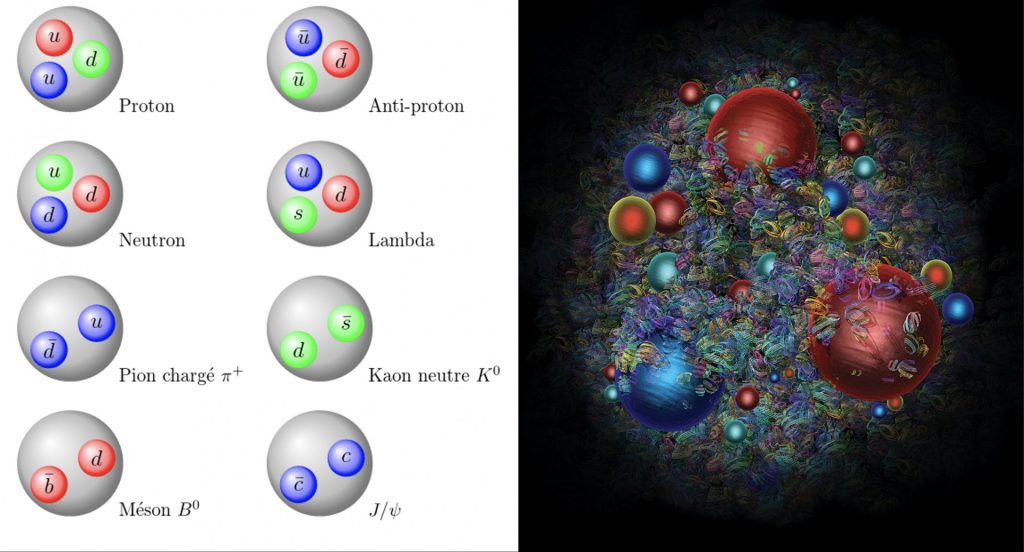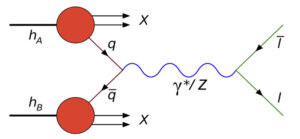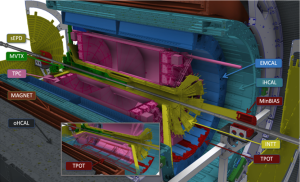

The Nucleon Structure Laboratory leads research programs in hadron physics and Quantum Chromodynamics (QCD) with a specific focus on the internal structure of hadrons. Its activities can be classified into three major branches:
- Experimental nuclear physics: propose, conceive, build and run new experiments, perform data acquisition and analysis, apply statistical methods for physics analysis , and also prospect for future experimental facilities (Electron-Ion Collider : EIC).
- Theoretical nuclear physics: modelling the hadron structure, ab initio computations, study of polarization effects in lepton or hadron scattering, theoretical analysis of experimental data, phenomenology of hadron structure functions.
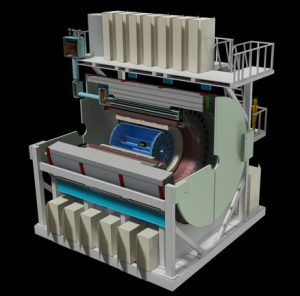
- Detector physics: research and development of innovative detectors, including potential applications beyond nuclear and particle physics.
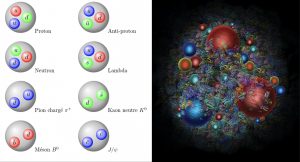
The research programs of the Nucleon Structure Laboratory cover in a consistent way all the modern aspects of nucleon structure, from the theoretical motivation of some key problems to the design of the required associated detectors.