
Structure and evolution of the Universe

Structure and evolution of the Universe

Studying the structuration of the Universe consists in studying how galaxies, galaxy clusters, stars and planets form and evolve. The starting point of the structuration of the Universe is well known: the tiny inhomogeneities in the diffuse cosmological background, as observed by WMAP and more recently by Planck. The theoretical framework of the studies is the so-called “cosmological concordance model”, with its two components: dark energy and dark matter. Then, observing the structuration of the Universe is also a way to test the cosmological model. Structuration of the Universe and observational cosmology are strongly interleaved. The studies are made from multi-wavelenghts observations and multi-scales numerical simulations.
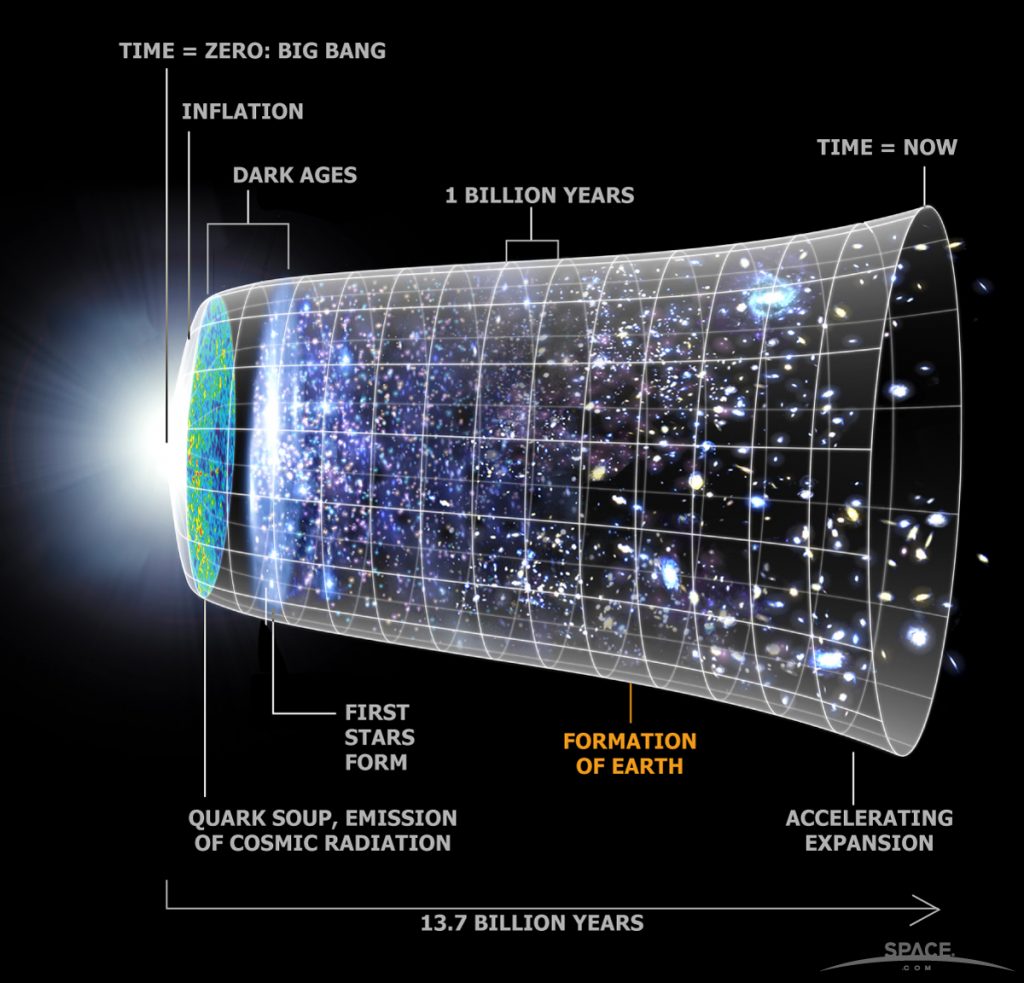

Cosmological concordance model. Credit: Hubble Space Telescope Science Institute

Projets

  • ArTeMiS bolometer array

    ArTeMiS bolometer array

    Latest news : Artemis installed on APEX (25 sept. 2013) The Artemis camera has been successfully installed on APEX telescope during the summer 2013. The new camera has already delivered a…

  • BAO

    BAO

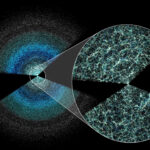
    Most of the content of the Universe, about 70%, is dominated by an energetic component that is neither matter nor radiation: dark energy. This mysterious component, first observed in 1998 with…

  • CASSINI-CIRS

    CASSINI-CIRS

    CASSINI-CIRS An infrared spectrometer of the CASSINI probe The Composite InfraRed Spectrometer (CIRS for “Composite InfraRed Spectrometer”) is one of the instruments on board the Cassini probe. The…

  • COAST  COmputational ASTrophysics

    COAST COmputational ASTrophysics

    Web site of the COASTproject Presentation The COAST project is a DAPNIA program of high performances computing in astrophysics. It includes developments of codes, numerical methods, visualization…

  • CTA (Cherenkov Telescope Array)

    CTA (Cherenkov Telescope Array)

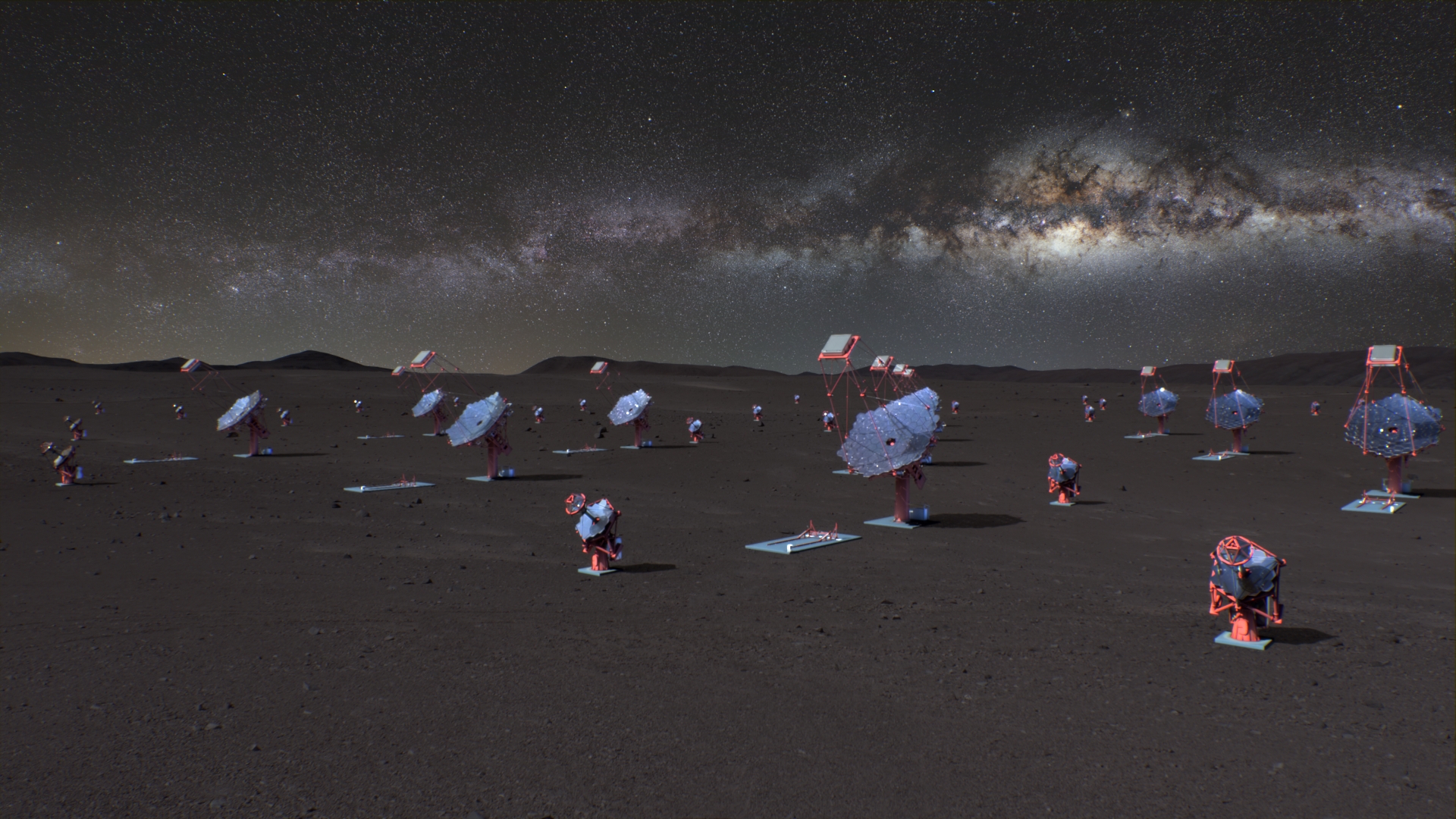
    A new generation observatory to explore the high energy Universe. Une nouvelle génération d’observatoire pour explorer l’Univers à haute énergie.

  • Edelweiss

    Edelweiss

    Objectives The goal of Edelweiss is to detect the dark matter of our Galaxy through its interactions in detectors operated in underground laboratory. The EROS experiment, searching for massive…

  • ExoplANETS-A

    ExoplANETS-A

    Tools development to characterize exoplanets’ atmospheres

  • GBAR

    GBAR

    Aims: One of the fundamental questions of today’s physics concerns the action of gravity upon antimatter. No experimental direct measurement has ever been successfully performed with antimatter…

  • HESS

    HESS

    H.E.S.S. Exploring the High Energy gamma ray sky H.E.S.S stands for “High Energy Stereoscopic System”. This telescope system been designed and built by a large international collaboration which…

  • JWST

    JWST

    The James Webb Space Telescope (JWST) launched on 25 December 2021 isthe successor of the Hubble Space Telescope. This is a NASA led mission with the participation of Europe, under the…

  • MagBURST

    MagBURST

    Ttitle of ERC project : Exploding stars from first principles: MAGnetars as engines of hypernovae and gamma-ray BURSTs PI : Jérôme Guilet

  • MEGACAM

    MEGACAM

    Megacam MegaCam A major instrument at the CFHT observatory (Canada-France-Hawaii Telescope) The MegaCam camera was developed for the prime focus of the 3.6m diameter Canada-France-Hawaii Telescope…