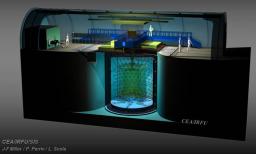
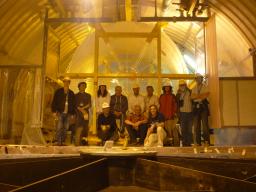
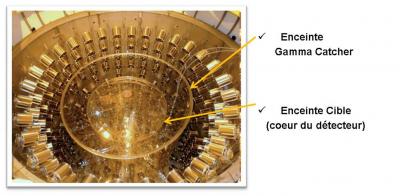
The Double Chooz collaboration recently completed its neutrino detector which will see anti-neutrinos coming from the Chooz nuclear power plant in the French Ardennes. The experiment is now ready to take data in order to measure fundamental neutrino properties with important consequences for particle and astro-particle physics.
contacts:
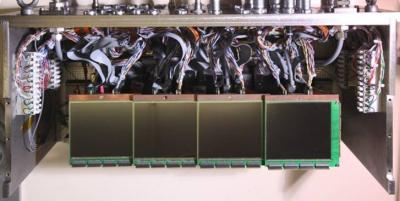
A team of physicists, engineers and technicians from IRFU are developing a new generation of MicroMegas trackers. The planned Compass II experiment at CERN, together with the Clas12 experiment at the Jefferson Lab, will impose new operational constraints preventing the current generation of trackers from working with nominal performance. Tests on a new generation of detectors have been carried out using particle beams generated at CERN. These tests have achieved both of their objectives; a reduction of the discharge rate which is a limiting factor in high flux experiments such as Compass, and a demonstration of their ability to operate under intense magnetic fields, a requirement for the gas detectors of the future Clas12 spectrometer. In a wider perspective, the development of MicroMegas technology is an essential component of the current IRFU research strategy with the recent establishment of a workshop dedicated to the design of this type of detectors.
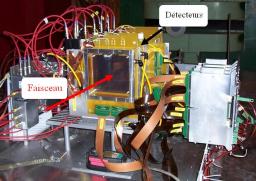
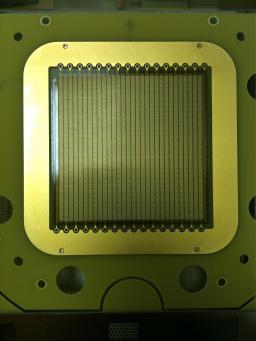
In August 2010 at CERN in Geneva, a team of physicists from SEDI and SPP working in collaboration with a group from ETH-Zurich obtained the first successful results from a MicroMegas detector operating in a time projection chamber filled with pure cryogenic argon at a temperature of 87.2 kelvin.
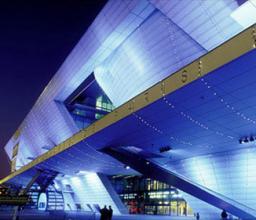
The 35th International Conference on High-Energy Physics was held at the Palais des Congrès in Paris from 22 to 28 July—an opportunity for the LHC teams to present their first results. IRFU is involved in three of the four major collaborative projects that have set up their detectors at the collision points in the ring: Alice, Atlas, and CMS. Our teams have contributed in particular to some fundamental analyses for the control of the detectors, whose performance has exceeded expectations.
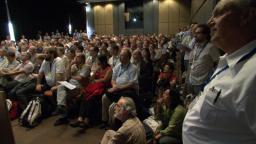
Physicist working on the CDF and D0 experiments using Fermilab's Tevatron accelerator in Chicago, including scientists from IN2P3/CNRS and IRFU/CEA, announced their latest results on 26 July at the International Conference on High-Energy Physics (ICHEP 2010) in Paris. Their measurement further constrain the Higgs boson mass domain still open within the standard model of particle physics. This means that CDF and D0 have ruled out a Higgs Boson with a mass between 158 and 175 GeV/c2.
An increasing amount of experimental results points to a low mass for this famous boson; will a solution to this puzzle be found sometime in the next two years strong?
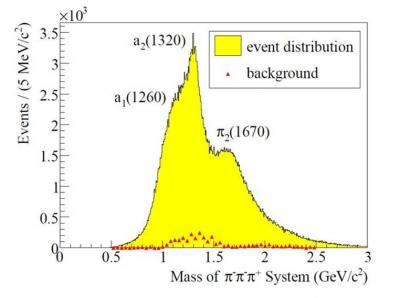
The pion, predicted by Yukawa in 1935 and discovered in 1947, was the first of a family of particles called mesons: a family that has continued to grow ever since. Ordinary mesons consist of a quark and an antiquark. The theory of strong interaction also predicts the existence of more complex mesons, called ‘exotic' mesons. The existence of exotic mesons has not yet been formally proven, but scientists have been searching for them for over more than a decade. The Compass experiment at CERN, an international partnership collaboration that includes a team from the Nuclear Physics department of IRFU, revealed an exotic meson during a preliminary experiment. This is a promising sign that many more particles will may be found in the future. The meson observed by the COMPASS physicists has a mass of 1660 MeV/c2 (Millions of electron-volts/c2). Its mass is about 12 times greater than that of a pion, but that in itself is not surprising. It was the quantum properties of this particle that intrigued the scientists. These properties are ruled out for ordinary mesons, and indicate that this must have been an exotic meson.
These results have just been published in Physical Review Letters (PRL 104, 241803, 2010).
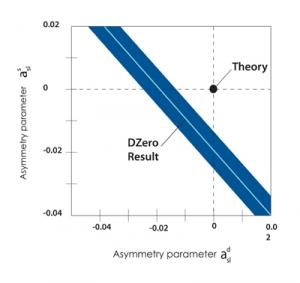
The D0 experiment at the Tevatron accelerator at Fermilab (Chicago), in which physicists from CEA/IRFU and CNRS/IN2P3 are involved, has measured a significant matter-antimatter _asymmetry_ in the behaviour of particles containing b quarks, known as B mesons (or beauty mesons) beyond the predictions of the standard model (the current theory of particle physics). This result has been submitted for publication in the Journal Physical Review D.
On April 14, Thierry Lasserre received the CNRS bronze medal from the new director of the In2p3, Jacques Martino. Since 1954, CNRS has awarded three medals each year to renowned researchers or promising young scientists. This Bronze Medal rewards a researcher's first work, which marks that person as a promising specialist in his or her field. The work of Thierry Lasserre concerned the most abundant massive particle in the universe: the neutrino.
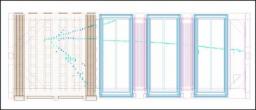
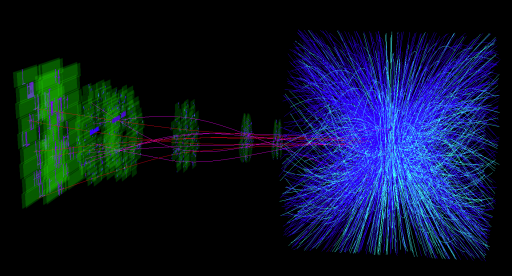
In Japan at the end of January 2010, the detectors of the Tokai to Superkamiokande (T2K, [ti:tu:kei]), developed at Saclay, observed their first neutrinos. These detectors consist of two large chambers where the tracks of charged particles are able to be reconstructed and the neutrino beam can be characterized. In this experiment, neutrinos are created by a proton beam coming from the Tokai accelerator. These same neutrinos are then measured 300 km away, at Kamioka, in a large water vessel 40 m in diameter and 40 m high, which was previously used to study neutrinos coming from cosmic ray interactions in the atmosphere and to definitively prove the phenomena of neutrino oscillation (leading to a Nobel Prize for Masatoshi Koshiba in 2002). The first interaction with a neutrino coming from Tokai was observed at the end of February in the detector at Kamioka, marking the beginning of a very exciting new phase in neutrino physics.
A company from the Vosges Department in France, NEOTEC, received the 2009 "Outstanding Implementations" award, at the International MIDEST Exhibition attended by the Industry Minister, Christian Estrosi, for their production of very special chambers. This equipment forms part of an important component of the Double-Chooz experiment which, before the end of the year, will measure neutrinos emitted by the reactor at the Chooz nuclear power station in the Ardennes.

At a meeting in Brussels of the NUPECC Committee(1) on December 9, the researchers presented their long term plan for maintaining the leading position currently enjoyed by European institutions in the field of nuclear physics. The Spiral2 project in Caen, a collaboration between the CNRS/IN2P3(2) and the CEA/DSM(3), is one of the projects already contributing to this European strategy.
The long term plan for nuclear physics may be found on the NUPECC site in a number of forms, including the full 200 page report, a 20 page summary and a 20 minute video.
http://www.nupecc.org/index.php?display=lrp2010/main
Contact:
Philippe CHOMAZ, chef de l'Institut
After almost a year collecting data from proton-proton collisions, the LHC at CERN began the injection of lead ions at the beginning of November, with the first collisions obtained on November 8. The energy in the nucleon-nucleon center of mass is 2.76 TeV, around ten times greater than that achieved previously by the RHIC in Brookhaven USA. The first results from ALICE have been made available without delay.
A team of physicists, engineers and technicians from IRFU are developing a new generation of MicroMegas trackers. The planned Compass II experiment at CERN, together with the Clas12 experiment at the Jefferson Lab, will impose new operational constraints preventing the current generation of trackers from working with nominal performance. Tests on a new generation of detectors have been carried out using particle beams generated at CERN. These tests have achieved both of their objectives; a reduction of the discharge rate which is a limiting factor in high flux experiments such as Compass, and a demonstration of their ability to operate under intense magnetic fields, a requirement for the gas detectors of the future Clas12 spectrometer. In a wider perspective, the development of MicroMegas technology is an essential component of the current IRFU research strategy with the recent establishment of a workshop dedicated to the design of this type of detectors.
The instrument known as MUSETT1 detected its first heavy nuclei during a commissioning experiment that took place in early April 2010 at the GANIL2 accelerator in Caen. MUSETT was built for identifying very heavy elements: transfermium, which are the elements beyond fermium (Z=100). Nuclear physicists are interested in these extreme state of matter for testing the theoretical models that describe the nuclei. Initial results obtained with MUSETT are highly satisfactory, providing very good identification of the produced isotopes, thanks to an original method called ‘genetic correlations’. This method can tag nuclei by detecting its decay. MUSETT provides a preview of the detection for the future Super Separator Spectrometer S3, dedicated to the hyper-intense SPIRAL23 beams, which will allow scientists to explore the heaviest nuclei.
The pion, predicted by Yukawa in 1935 and discovered in 1947, was the first of a family of particles called mesons: a family that has continued to grow ever since. Ordinary mesons consist of a quark and an antiquark. The theory of strong interaction also predicts the existence of more complex mesons, called ‘exotic' mesons. The existence of exotic mesons has not yet been formally proven, but scientists have been searching for them for over more than a decade. The Compass experiment at CERN, an international partnership collaboration that includes a team from the Nuclear Physics department of IRFU, revealed an exotic meson during a preliminary experiment. This is a promising sign that many more particles will may be found in the future. The meson observed by the COMPASS physicists has a mass of 1660 MeV/c2 (Millions of electron-volts/c2). Its mass is about 12 times greater than that of a pion, but that in itself is not surprising. It was the quantum properties of this particle that intrigued the scientists. These properties are ruled out for ordinary mesons, and indicate that this must have been an exotic meson.
These results have just been published in Physical Review Letters (PRL 104, 241803, 2010).
The Phenix and Star collaborations, which include physicists from CEA-IRFU and CNRS-IN2P3, have announced major discoveries on the nature of the quark-gluon plasma. These conclusive results, which advance our understanding of nuclear material subjected to extreme conditions, shed new light on the birth of the universe. They have been published in the journal Physical Review Letters.

The CHyMENE project (Cible d'Hydrogène Mince pour l'Etude des Noyaux Exotiques -Thin hydrogen target for the study of exotic nuclei) has the ambitious goal of producing a thin target of pure hydrogen, without using a container, suitable for experiments using the low-energy heavy ion beam planned for SPIRAL2.
A team from IRFU (SPhN and SACM) and from l'Inac/SBT have recently applied cryogenic techniques to successfully produce a ribbon of solid hydrogen 100 μm thick. The target will soon be tested in the beam. This will be a world first.
Below: Interview with Alain GILLIBERT, who is working on the CHyMENE project with Alexandre OBERTELLI and Emmanuel POLLACO
Start image: a solid hydrogen ribbon of extruded H2 (width 10 mm, thickness 100 μm), viewed through the porthole of the vacuum chamber (Photo V. Lapoux).
A major international collaboration [1], involving researchers from the CEA-IRFU Astrophysics Department, CEA-IRAMIS and CEA-DAM, has succeeded in measuring for the first time the effects of light absorption by nickel in high temperature plasmas similar to those found around Cepheid-type variable stars. These stars are important indicators of distance in the Universe. They exhibit a periodic pulsing behavior caused by sudden increases in the absorption of light by the hot gas surrounding the star. These variations result from interactions between partially ionized elements including helium, oxygen, iron and nickel. Until now, these absorptions could only be evaluated using complex models of atomic physics and plasmas. Using a pulsed laser, the researchers have succeeded in recreating a nickel plasma in the laboratory at temperatures of between 116 000 and 440 000 degrees and with densities of around a few milligrams per cubic centimeter, similar in magnitude to the ionic distributions found in stellar envelopes. A direct measurement of the opacity of nickel is an essential step in the verification of current models of star structures.
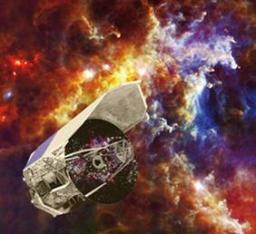
An international team of astronomers, including several French researchers, has just completed a precise measurement of the distance to five distant galaxies using the ESA Herschel Space Observatory together with ground-based data from the interferometer operated by the Institute for Millimetric Radioastronomy (IRAM)1 . The research team has shown that the light from these galaxies has travelled for around ten thousand million years before reaching Earth. In order to obtain these results, the team developed an entirely new technique, making use of the 'gravitational lens' effect for the first time in the sub-millimetric domain2 . Such a gravitational lens provides a form of magnifying glass on a cosmic scale that can be detected by Herschel. Until now very difficult to observe, these distant and rapidly evolving galaxies are a key component in improving our understanding of the history of the galaxies in our Universe. These results were published in the journal Science on November 5, 2010.
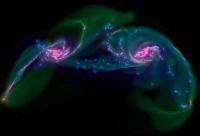
‘High-resolution’ numerical simulations carried out by scientists at the Astrophysics Department of the CEA-Irfu/AIM have just revealed that the most famous galactic collision ever, the Antennae collision, produces far more stars than observations suggested. When two galaxies meet, the resulting gas compression causes the ignition of new stars. Until now, it seemed that these new stars appeared only in high-density regions, mainly near the core of the collision. A computer re-creation of the collision, with a sufficiently high resolution to pick out the smallest gas clouds for the first time, shows that the starburst is in fact distributed far more uniformly inside the large number of star superclusters scattered across the disks of the galaxies. This important result helps scientists to understand why, in certain collisions, around 100 to 1000 stars per year can appear at the same time. This work was published in Astrophysical Journal Letters.
The Planck satellite has just discovered a supercluster of galaxies thanks to its imprint on fossil radiation—witness to the first moments in the life of the Universe. This is a first for the satellite, which also revealed new clusters of galaxies with great precision.
These objects, which contain hundreds or thousands of galaxies, are the largest known structures in the Universe. Thanks to these data, scientists hope to gain a better understanding of how dark matter and visible matter come together in the form of these structures.
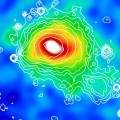
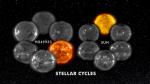
An international team[1] led by a CEA astrophysicist of the AIM Laboratory- Astrophysics Department of the CEA-Irfu has observed, for the first time, the cycle of magnetic activity in a star using stellar seismology - the study of vibrations in a star. The observations of HD49933 by the CoRoT[2] satellite revealed an cycle of magnetic activity identical to that seen in the Sun, but much shorter. This result paves the way for many stars to be examined using the techniques of asteroseismology, for a better understanding of the mechanisms responsible for activity cycles, including the Sun’s. The results were published in the journal Science on 27th August 2010.
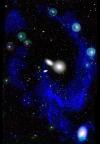
An international team led by astrophysicists from the Lyon Observatory (CRAL, CNRS/INSU, Université Lyon 1) and the AIM laboratory (CEA-Irfu, CNRS, Université Paris 7) has just shed some light on the origins of the giant gas ring in Leo. The astrophysicists were able to detect an optical counterpart to this cloud, which corresponds to stars in formation, using the Canada-France-Hawaii telescope (INSU-CNRS, CNRC, U. Hawaii). The scientists then carried out numerical simulations on the supercomputers at the CEA and suggested a scenario for the formation of this ring. This involved a violent collision between two galaxies. The researchers were able to identify the galaxies involved in the collision and estimate the date of impact. This discovery supports the assertion that the gas in the ring is not primordial, but of galactic origin. This work was published in Astrophysical Journal Letters.
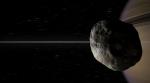
Numerical simulations peformed by a group of astrophysicists of the AIM-CEA Saclay Laboratory (University Paris Diderot, CEA, CNRS) and the Nice observatory, based on images collected by the Cassini mission, show that some tiny moons of Saturn are still forming now from material of the Saturn's rings, some billion years after the end of the formation of planets and satellites inside the Solar system. The simulations can also give some clues about the formation of the Earth's moon. These results are published in the June 10th issue of the Nature magazine.
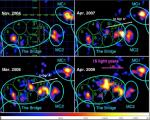
The central black hole of the Galaxy, today surprisingly quiet, has undergone, several hundred years ago, a violent phase of activity. This is the conclusion reached by an international team led by astrophysicists of the APC laboratory and including scientists of the Service d'Astrophysique of CEA-Irfu, by studying the high energy emission of molecular clouds located in the central regions of the Galaxy. The scientists have indeed discovered complex variations of this emission, with some of them showing propagation velocity greater than the speed of light. They reveal that a giant outburst, most probably generated by the black hole, took place about 400 years ago. The powerful flare is visible today after reflection by the molecular clouds that play the role of celestial mirrors. The recent history of the region retraced in this way shows that the black hole of the galactic centre is not so different from the supermassive black holes of the active galactic nuclei. This work, based on two long term observing programs of the XMM-Newton and Integral satellites, is the object of two complementary publications in The Astrophysical Journal.
The D0 experiment at the Tevatron accelerator at Fermilab (Chicago), in which physicists from CEA/IRFU and CNRS/IN2P3 are involved, has measured a significant matter-antimatter _asymmetry_ in the behaviour of particles containing b quarks, known as B mesons (or beauty mesons) beyond the predictions of the standard model (the current theory of particle physics). This result has been submitted for publication in the Journal Physical Review D.
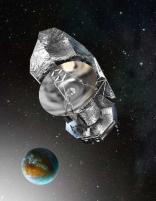
One year on from the launch of the Herschel European satellite, the European Space Agency (ESA) is carrying out an initial scientific assessment of the mission, starting with the first symposium of Herschel scientific results, held from 4th to 7th May on the ESTEC site in Noordwijk (Netherlands).
The scientific community has been analyzing the initial data received since Herschel was declared 'science-ready' in September 2009. More than 400 scientists gathered at ESTEC to present their initial results, which have lived up to everyone's expectations. These results are due for publication in a special issue of Astronomy & Astrophysics in the autumn of 2010, and are mentioned in a CNRS-CEA press release.
The French community is deeply involved in the Herschel project, accounting for 25% of the participants, including several teams from the Astrophysics Department of the CEA-IRFU-AIM Laboratory.
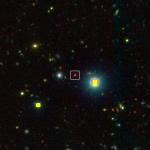
An international team of astronomers led by Dr. Masato Onodera at the Astrophysical Department of the Commissariat a l'Energie Atomique in France [1] has used the Subaru Telescope [2] to take an infrared spectra of a very distant, extremely bright, massive elliptical galaxy. This galaxy is 10 billion light-years from Earth and is observed at time when the Universe was only about one-quarter of its current age. Paradoxically, and in contrast with some previous studies, this galaxy appears to be a similar to its cousins in the local Universe. This research deepens the puzzle as to how some elliptical galaxies seem to be "fully grown" early in the evolution of the Universe while other, very compact ones, can increase in volume a hundred times over the age of the Universe. The results are published in the The Astrophysical Journal of 20 Mai 2010
Do the massive elliptical galaxies change sizes ?
The most massive galaxies in the nearby Universe are giant ellipticals. They have a regular, oval shapes and do not have disks like spiral galaxies such as our own Milky Way.
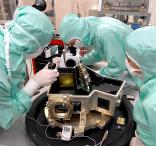
The Astrophysics Department of CEA-Irfu, which has scientific and technical responsibility for the MIRIM imager (Mid Infrared Imager) on the MIRI spectro-imager, one of the major instruments of the forthcoming James Webb Space Telescope (JWST), has just delivered the final model of the imager to the Appleton Rutherford laboratory in England, who will carry out the final test before the delivering it for integration into the JWST at the start of 2011 [1]. The JWST, a joint mission of the American (NASA), Canadian (CSA) and European (ESA) space agencies, is a satellite weighing more than 6 tonnes and containing a 6.5 m diameter telescope whose launch, on an Ariane 5 rocket, is planned for mid-2014.
The MIRIM camera is a key instrument for achieving the main objective of the JWST which is to explore the universe as it was 13 billion years ago, at the moment when the first luminous objects were formed. MIRIM should be able to make major new discoveries in understanding the formation of stars and galaxies, as well as contributing to the search for remote planets thanks to a very innovative device, the phase mask coronagraph, which allows the light from a star to be "extinguished" in order that any potential planet close to the star can be seen more easily.
 View the animation showing the "extinguishing" of a star in the coronagraph
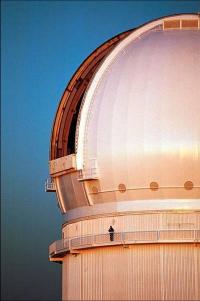
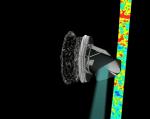
The SNLS collaboration (Supernova Legacy Survey, at the Canada-France-Hawaii telescope) has just published a new method which allows the determination of the recession velocity of supernovae, those "standard candles" which have appeared in the universe throughout its history. The novelty of the method is its ability to study these cataclysmic explosions without needing to turn to spectroscopy, which requires too much observation time, even when using the planet's largest telescopes. The method relies solely on photometric data collected with the Megacam camera. Close to half of the thousand supernovae observed by the SNLS experiment since 2003 would have had to be abandoned without this new approach. For future projects, which are aiming at a million supernovae, this type of analysis will be absolutely crucial. The methodology developed has just been published in Astronomy & Astrophysics
Figure 1: The dome sheltering the 3.60 m diameter telescope at the Canada-France-Hawaii Observatory, situated on Mauna Kea in Hawaii.
Following its launch on 14 May 2009, the Planck satellite [1] has been continually observing the celestial vault and has mapped the entire sky since 13 August to obtain the first very high resolution image of the dawn of the universe. The Planck satellite has just finished its first sky coverage. The preliminary images reveal undreamed of details of emissions of gas and dust in our own galaxy. Scientists from CEA-IRFU, as part of a broad international collaboration, are currently working on the extraction and exploitation of the catalogues of objects detected by Planck. These preliminary catalogues are essential to understanding and subtracting stray foreground emissions from the background light of the universe, a fossil trace of its earliest epochs. It is also improving understanding of the formation of the largest structures in the universe, clusters of galaxies. The first catalogue will be published in January 2011. In contrast, the definitive scientific publications on the first light of the universe are not expected until the end of 2012.
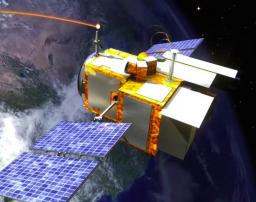
The Space Electronics Laboratory (LEDES) of the (CEA-IRFU) Astrophysics Division has recently signed a partnership agreement with the industrial company Skylab Industries to manufacture and distribute space equipment including the computer software known as "SpacewireCEA" which was initially developed at the CEA for the PACS infrared camera on the Herschel satellite. This software, which is integrated into the on-board electronics, is able to transfer observational data at a high rate from the space instruments. It can achieve a maximum data flow-rate of 400 Megabits per second [1], whilst meeting the international "Spacewire" standard, a very demanding set of technical constraints drawn up by the European Space Agency (ESA) in order to ensure compatibility between different pieces of satellite equipment.
A team of physicists, engineers and technicians from IRFU are developing a new generation of MicroMegas trackers. The planned Compass II experiment at CERN, together with the Clas12 experiment at the Jefferson Lab, will impose new operational constraints preventing the current generation of trackers from working with nominal performance. Tests on a new generation of detectors have been carried out using particle beams generated at CERN. These tests have achieved both of their objectives; a reduction of the discharge rate which is a limiting factor in high flux experiments such as Compass, and a demonstration of their ability to operate under intense magnetic fields, a requirement for the gas detectors of the future Clas12 spectrometer. In a wider perspective, the development of MicroMegas technology is an essential component of the current IRFU research strategy with the recent establishment of a workshop dedicated to the design of this type of detectors.
In August 2010 at CERN in Geneva, a team of physicists from SEDI and SPP working in collaboration with a group from ETH-Zurich obtained the first successful results from a MicroMegas detector operating in a time projection chamber filled with pure cryogenic argon at a temperature of 87.2 kelvin.
‘High-resolution’ numerical simulations carried out by scientists at the Astrophysics Department of the CEA-Irfu/AIM have just revealed that the most famous galactic collision ever, the Antennae collision, produces far more stars than observations suggested. When two galaxies meet, the resulting gas compression causes the ignition of new stars. Until now, it seemed that these new stars appeared only in high-density regions, mainly near the core of the collision. A computer re-creation of the collision, with a sufficiently high resolution to pick out the smallest gas clouds for the first time, shows that the starburst is in fact distributed far more uniformly inside the large number of star superclusters scattered across the disks of the galaxies. This important result helps scientists to understand why, in certain collisions, around 100 to 1000 stars per year can appear at the same time. This work was published in Astrophysical Journal Letters.
An international team led by astrophysicists from the Lyon Observatory (CRAL, CNRS/INSU, Université Lyon 1) and the AIM laboratory (CEA-Irfu, CNRS, Université Paris 7) has just shed some light on the origins of the giant gas ring in Leo. The astrophysicists were able to detect an optical counterpart to this cloud, which corresponds to stars in formation, using the Canada-France-Hawaii telescope (INSU-CNRS, CNRC, U. Hawaii). The scientists then carried out numerical simulations on the supercomputers at the CEA and suggested a scenario for the formation of this ring. This involved a violent collision between two galaxies. The researchers were able to identify the galaxies involved in the collision and estimate the date of impact. This discovery supports the assertion that the gas in the ring is not primordial, but of galactic origin. This work was published in Astrophysical Journal Letters.
The Astrophysics Department of CEA-Irfu, which has scientific and technical responsibility for the MIRIM imager (Mid Infrared Imager) on the MIRI spectro-imager, one of the major instruments of the forthcoming James Webb Space Telescope (JWST), has just delivered the final model of the imager to the Appleton Rutherford laboratory in England, who will carry out the final test before the delivering it for integration into the JWST at the start of 2011 [1]. The JWST, a joint mission of the American (NASA), Canadian (CSA) and European (ESA) space agencies, is a satellite weighing more than 6 tonnes and containing a 6.5 m diameter telescope whose launch, on an Ariane 5 rocket, is planned for mid-2014.
The MIRIM camera is a key instrument for achieving the main objective of the JWST which is to explore the universe as it was 13 billion years ago, at the moment when the first luminous objects were formed. MIRIM should be able to make major new discoveries in understanding the formation of stars and galaxies, as well as contributing to the search for remote planets thanks to a very innovative device, the phase mask coronagraph, which allows the light from a star to be "extinguished" in order that any potential planet close to the star can be seen more easily.
View the animation showing the "extinguishing" of a star in the coronagraph
The LHC is about to start up for an initial two-year period of data acquisition which will produce a flow rate and volume of data among the largest that the man has ever needed to process. During recent tests under real conditions, the Paris region research grid (GRIF) was able to provide the required performance, allowing physicists to access reconstructed data only four hours after it had been recorded at CERN. In 2010, the volume of data to process will be 100 times larger. The teams from IRFU have shown, by this first success, that they will be ready to meet this challenge.


Forest fires are a constant danger, particularly for arid countries. They act as a brake on economic development and are a threat to environment, by the large scale release of greenhouse gases as well as by the destruction of ecosystems.
The FORFIRE project, which includes the use of Micromegas1 detectors, has been supported by the European Union (FP7 program) in order to develop a network of sensors sensitive to the light emitted during a forest fire, allowing its almost instantaneous detection (opposed to the several minutes required by current methods).
The Space Electronics Laboratory (LEDES) of the (CEA-IRFU) Astrophysics Division has recently signed a partnership agreement with the industrial company Skylab Industries to manufacture and distribute space equipment including the computer software known as "SpacewireCEA" which was initially developed at the CEA for the PACS infrared camera on the Herschel satellite. This software, which is integrated into the on-board electronics, is able to transfer observational data at a high rate from the space instruments. It can achieve a maximum data flow-rate of 400 Megabits per second [1], whilst meeting the international "Spacewire" standard, a very demanding set of technical constraints drawn up by the European Space Agency (ESA) in order to ensure compatibility between different pieces of satellite equipment.
‘High-resolution’ numerical simulations carried out by scientists at the Astrophysics Department of the CEA-Irfu/AIM have just revealed that the most famous galactic collision ever, the Antennae collision, produces far more stars than observations suggested. When two galaxies meet, the resulting gas compression causes the ignition of new stars. Until now, it seemed that these new stars appeared only in high-density regions, mainly near the core of the collision. A computer re-creation of the collision, with a sufficiently high resolution to pick out the smallest gas clouds for the first time, shows that the starburst is in fact distributed far more uniformly inside the large number of star superclusters scattered across the disks of the galaxies. This important result helps scientists to understand why, in certain collisions, around 100 to 1000 stars per year can appear at the same time. This work was published in Astrophysical Journal Letters.
An international team led by astrophysicists from the Lyon Observatory (CRAL, CNRS/INSU, Université Lyon 1) and the AIM laboratory (CEA-Irfu, CNRS, Université Paris 7) has just shed some light on the origins of the giant gas ring in Leo. The astrophysicists were able to detect an optical counterpart to this cloud, which corresponds to stars in formation, using the Canada-France-Hawaii telescope (INSU-CNRS, CNRC, U. Hawaii). The scientists then carried out numerical simulations on the supercomputers at the CEA and suggested a scenario for the formation of this ring. This involved a violent collision between two galaxies. The researchers were able to identify the galaxies involved in the collision and estimate the date of impact. This discovery supports the assertion that the gas in the ring is not primordial, but of galactic origin. This work was published in Astrophysical Journal Letters.
The LHC is about to start up for an initial two-year period of data acquisition which will produce a flow rate and volume of data among the largest that the man has ever needed to process. During recent tests under real conditions, the Paris region research grid (GRIF) was able to provide the required performance, allowing physicists to access reconstructed data only four hours after it had been recorded at CERN. In 2010, the volume of data to process will be 100 times larger. The teams from IRFU have shown, by this first success, that they will be ready to meet this challenge.
The CHyMENE project (Cible d'Hydrogène Mince pour l'Etude des Noyaux Exotiques -Thin hydrogen target for the study of exotic nuclei) has the ambitious goal of producing a thin target of pure hydrogen, without using a container, suitable for experiments using the low-energy heavy ion beam planned for SPIRAL2.
A team from IRFU (SPhN and SACM) and from l'Inac/SBT have recently applied cryogenic techniques to successfully produce a ribbon of solid hydrogen 100 μm thick. The target will soon be tested in the beam. This will be a world first.
Below: Interview with Alain GILLIBERT, who is working on the CHyMENE project with Alexandre OBERTELLI and Emmanuel POLLACO
Start image: a solid hydrogen ribbon of extruded H2 (width 10 mm, thickness 100 μm), viewed through the porthole of the vacuum chamber (Photo V. Lapoux).
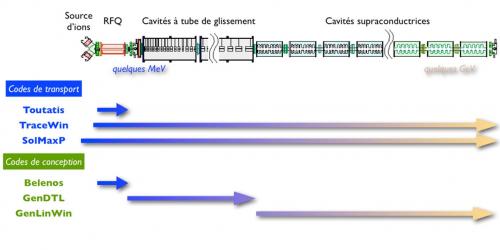
Since 1995, the Accelerators, Cryogenics and Magnetism Division (SACM) has initiated a software development for designing structures and simulating beam transport in accelerators. Since 2000, these codes have been distributed to many laboratories and companies around the world. This professional software suite is now distributed under license from the CEA.