|
Accelerators, Cryogenics and Magnetism Department (SACM)
SACM
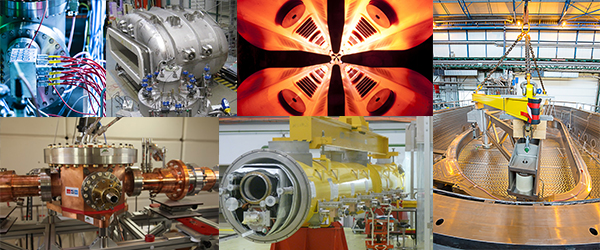
SACM develops and builds particle accelerators, cryogenic systems, and superconducting magnets for IRFU's scientific programs and for those of the CEA in general. It is organized to manage large-scale projects. These are conducted within the IRFU project organizational structure, in close collaboration with the Institute's other physics and technology departments, and in particular with the Systems Engineering Department (SIS).
In 2009, 67 engineers and 50 technicians worked for SACM, together with five doctorate students, several visiting researchers, and more than fifteen students. The workforce is divided among four laboratories: Ø the Accelerator Research and Development Laboratory (LEDA), Ø the Laboratory for the Study of Accelerating and Radiofrequency Structures (LESAR), Ø the Laboratory for Superconducting Magnet Research (LEAS), Ø the Cryogenics Laboratory and Test Stations (LCSE).
A Scientific and Technical Committee, the CSTS, made up of 16 members, including 5 international experts from outside the organization, meets on a yearly basis to take stock of ongoing activities and examine new proposals. The CSTS assists the Head of SACM in defining research and development strategy within the Department. More specifically, it examines the guidelines laid down in European programs, and the files submitted to the French National Research Agency (ANR).
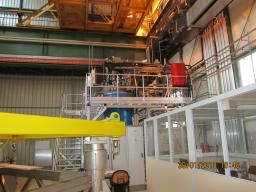
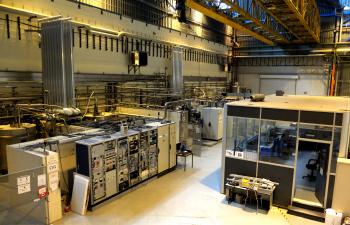
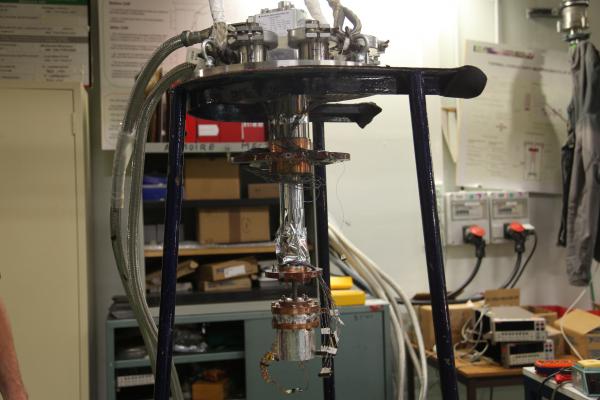
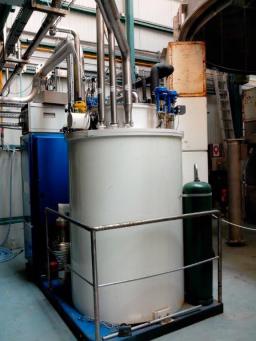
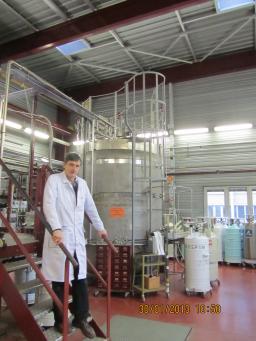
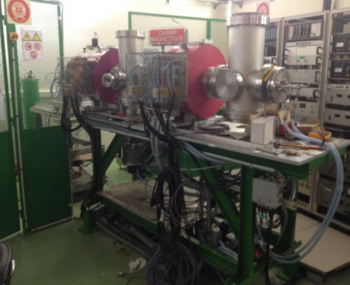
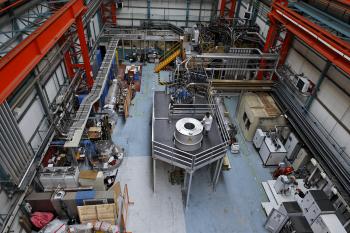
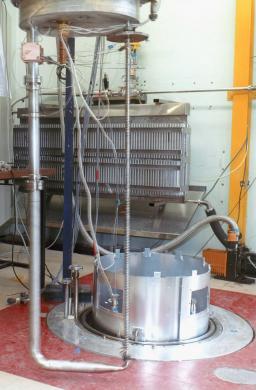
SACM has access to a wide range of technical facilities to help it achieve these objectives, such as: Ø specially equipped laboratories for performing electrical, cryogenic, mechanical, and radiofrequency tests, characterizing materials, and chemical surface treatments; Ø 4.2 K and 1.8 K testing stations, designed for testing superconducting elements or electromagnets up to 20,000 A, superconducting accelerating cavities, equipped with their power couplers, and the required acquisition and analysis equipment; Ø a liquefier to produce liquid helium, and three refrigerators for the test stations.
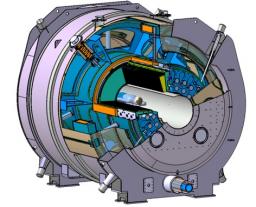
In the last three years, SACM has scored a number of successes. In October 2007, the Supratech research center, set up as part of the initiative to bring research teams closer together, conducted its first tests on its new site, previously occupied by the Saturne accelerator. In the summer 2008, SACM took part in starting up ATLAS and CMS, the two large detector magnets of the Large Hadron Collider at CERN. This rewarded nearly fifteen years of commitment and effort by Saclay teams. In September 2009, the last W7-X coil left Saclay, following a long test campaign on the 70 coils of the stellarator currently under construction in Greifswald, Germany. In addition, SACM consolidated its expertise in ECR proton sources, routinely injecting continuous 100 mA currents, making significant progress in the construction of the IPHI (high-intensity proton injector) and its RFQ accelerating cavities, and in mastering vital techniques for new accelerators such as FAIR and ESS.
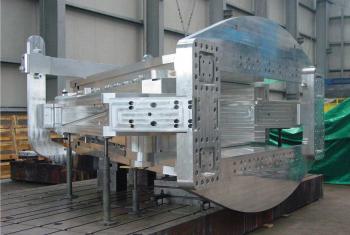
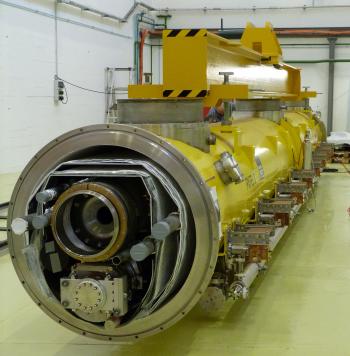
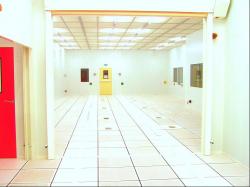
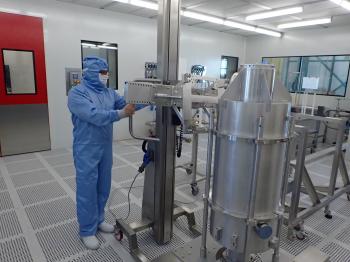
Following on from these achievements, new ambitious projects have emerged. First, was realized the development of accelerator facilities, with the construction of the Spiral 2, IFMIF-injector, and SOPHI bunkers and the large clean room, and the preparation of the assembly hall for the XFEL cryomodules. Second, in the field of cryomagnetism, the Iseult project has gone from success to success in its development plan and the industrial-scale production of the 51 tons of superconductor has now begun. The highly innovative coils of the R3B-GLAD spectrometer have been produced, also on an industrial scale.
Activities over the next three years will focus on completing the IPHI high-intensity proton injector, achieving industrial production of the cryomodules for the XFEL project, building and testing equipment for the IFMIF-EVEDA prototype, and performing and monitoring testing on the Spiral 2 cryomodules.
In the field of cryomagnetism, the JT-60SA coil test station will be completed by 2014, opening up the possibility of technological extensions to the ITER program. The R3B-GLAD spectrometer will be assembled and tested; the coils and cryostats for the Neurospin-Iseult medical imaging magnet will be installed to achieve its ambitious performance levels in terms of magnetic field, homogeneity, and stability. SACM will also be involved in developing the new high-field magnets required for the LHC luminosity upgrade.
Between now and 2014, the Department will forge ahead with its complementary work in the fields of accelerators and cryomagnetism, meeting the CEA's key scientific challenges and looking to the surrounding communities to secure the success of the Saclay Campus.
Antoine Daël, Head of SACM
Inauguration of the large clean room last update : 04-25 17:49:25-2013 (732) |