
43 Result(s)
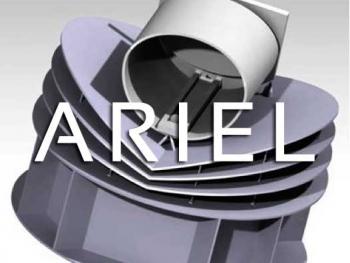
Télescope de l'Agence Spatiale Européenne (ESA) dédié à l'observation dans l'infrarouge des exoplanètes.
ESA space telescope for extra solar planets infrared observation.
ArTéMiS est une caméra dédiée à la recherche en astrophysique dans le domaine submillimétrique.
Elle est installée sur le télescope APEX, dans le désert d’Atacama au Chili, à 5100 m d’altitude.
ArTéMiS est le seul instrument imageur disponible pour ces longueurs d’onde (observations simultanées à 350 et 450 microns) dans l’hémisphère sud.
Latest news : Artemis installed on APEX (25 sept. 2013)
The Artemis camera has been successfully installed on APEX telescope during the summer 2013. The new camera has already delivered a spectacularly detailed view of the Cat’s Paw Nebula.
APEX telescope at 5100 m on Llano Chajnantor in Chile (Credit ESO).
The commissioning team that installed ArTeMIS had to battle against extreme weather conditions to complete the task.
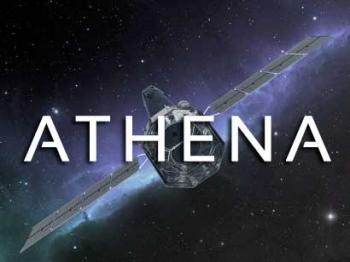
Un satellite pour l'étude de l’univers chaud et énergétique. Lancement prévu pour 2031.
A satellite to study hot and energetic universe to be launched in 2031.
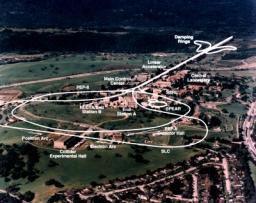
Goal
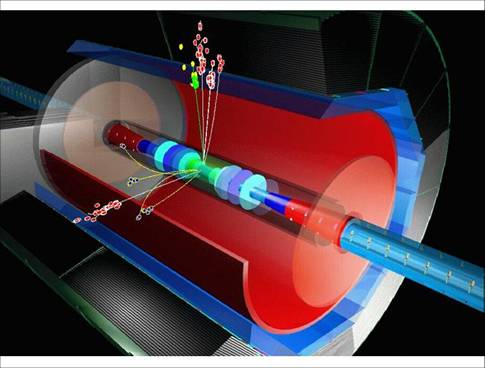
The main goal of the experiment was to perform a complete study of CP violation (CP is the symmetry linking particules and antiparticules) in the system of B mesons.
More generally the experiment studied the physics of heavy flavors: mesons and baryons with a b or a c quark and tau leptons.
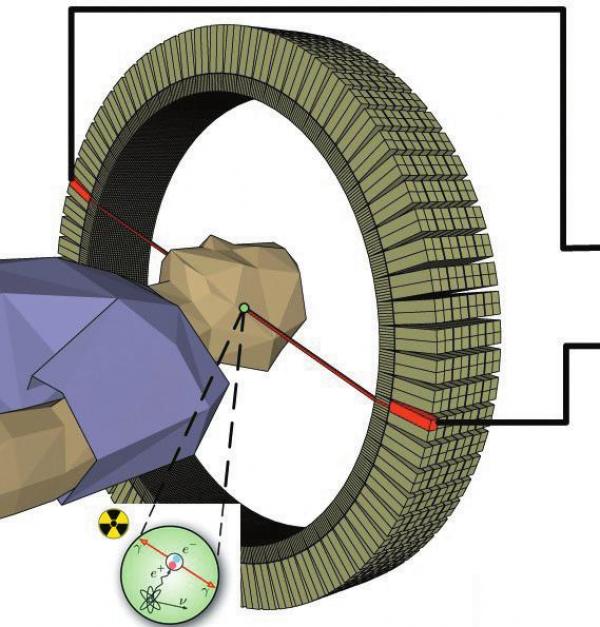
Positron emission tomography (PET) is a powerful nuclear imaging technique used widely nowadays in oncology, cardiology and neuropsychiatry.
The PET technology consists in injecting the patient with a radioactive tracer, of interest to probe a biochemical process. The decay of the tracer emits a positron which annihilate with an electron. As a result of the annihilation, two photons with energy 511 keV are emitted back-to-back and registered by the dedicated detectors.
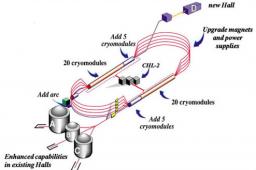
Deeply Virtual Compton Scattering experiment at Jefferson Lab Hall B , with CLAS12, large acceptance spectrometer.
Goals:
Theoretical concepts as Generalized Parton Distributions (GPD), enable to probe with a dramatic accuracy the nucleon structure, and access the quark confinement in hadrons.
Objectives
The scientific exploitation of the LHC (Large Hadron Collider), planned to start operation in 2008 will be the higher priority in high energy physics for the next coming years.
In the following step new large instruments will be required to reach a fine characterization of LHC discoveries, and analyse new phenomena around the TeV scale. The energy required (probably a few TeV), will be precised by the first results of the LHC, i.e. about 2010.

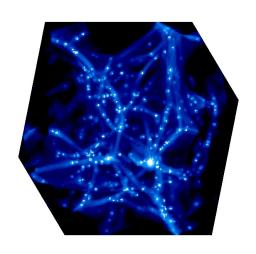
Simulation numérique en astrophysique spécialisé dans l’activité de "calcul de haute performance".
Astrophysics digital simulation for "high performance computing".
Web site of the COAST project
Presentation
The COAST project is a DAPNIA program of high performances computing in astrophysics. It includes developments of codes, numerical methods, visualization tools, distributed databases, optimization and parallelization methods.
A new generation observatory to explore the high energy Universe.
Une nouvelle génération d'observatoire pour explorer l'Univers à haute énergie.
FELICE (acronym for "Future Electron LInear Collider Experiment") is a group of physicists and engineers working for the physics and detectors at the ILC (International Linear Collider). An electron-positron linear collider, with a centre-of-mass energy up to 1 TeV, has been chosen by a majority of physicists worldwide as the big project in High Energy Physics, after the commissioning of the LHC at CERN.
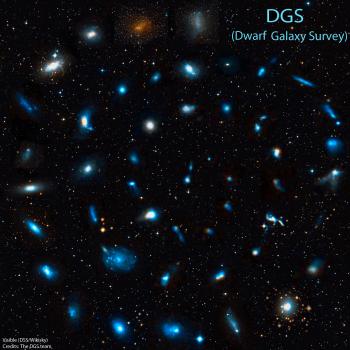
"The ISM in Low Metallicity Environments: Bridging the Gap Between Local Universe and Primordial Galaxies"
The Herschel Dwarf Galaxy Survey is a Guaranteed Time Key Program led by Suzanne Madden.
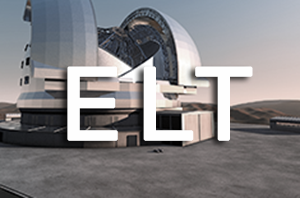
Spectro-imageur dans l'infrarouge au foyer du télescope géant ELT.
Infrared spectral imager made to be installed in the ELT.

Tools development to characterize exoplanets’ atmospheres
FERMI-GLAST
GLAST successfully launched on 11th June, 2008 : see Actualités
The GLAST telescope was renamed the FERMI telescope after its launch on August 26th, 2008 as a tribute to the famous Italian physicist.
Fermi : the Gamma-ray Large Area Space Telescope
Fermi is a NASA observatory dedicated to the study of gamma rays in the energy band between 20 MeV and 300 GeV.
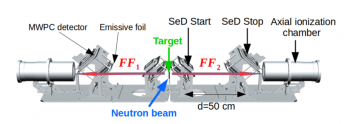
This experiment aims to provide accurate data on actinide neutron-induced fission fragment characteristics (mass distributions, kinetic energy) and neutron multiplicities in the energy range between 500 keV and 20 MeV. Those data are of particular interest for the nuclear community in view of the development of the fast reactor technology. For thermal neutron energies, a lot of fission reaction data are available. Some of them are still partial or suffer from insufficient accuracy.
Objectives
While the heaviest element on earth is 238-uranium (with traces of Pu and Np in natural nuclear reactors) whose lifetime is 5 billion years, the last 60 years have seen the synthesis of dozens of new elements in laboratory, with shorter lifetimes. In 2007, The heaviest elements which has been named is the Darmstadtium, with 111 protons. Z=112 has also been claimed, as well as Z=113 from a japanese team.
Aims:
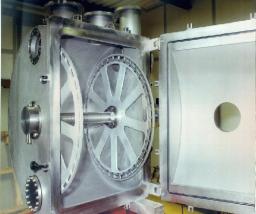
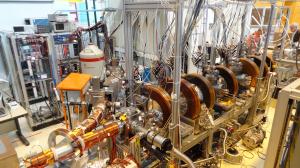
One of the fundamental questions of today’s physics concerns the action of gravity upon antimatter. No experimental direct measurement has ever been successfully performed with antimatter particles. CERN has thus launched a research program with the Antiproton Decelerator (AD) allowing to prepare a measurement of the effect of gravity on antihydrogen atoms.
The primary aim of this experiment is to determine how antimatter reacts to gravity.
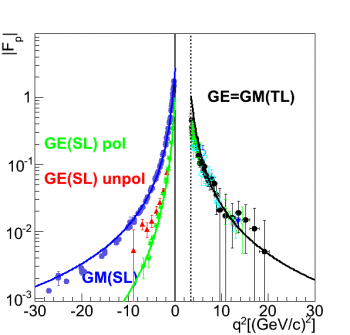
Hadron electromagnetic form factors parametrize the internal structure of hadrons, the dynamical distribution of magnetization and charge created by the inner constituents.
They are considered fundamental quantities as they are a privileged background for interplay between theory and experiment.
Herschel
An Infrared and Sub-millimetre Observatory
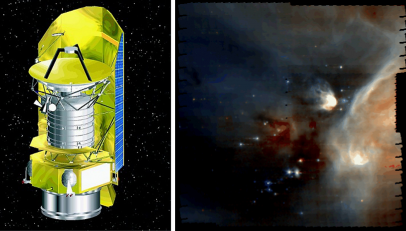
The Herschel telescope is a scientific space mission developed by the European Space Agency (ESA) dedicated to observing the Universe in the infrared and sub-millimetre ranges (wavelengths between 60 et 670 µm), a window of the electromagnetic spectrum that is still largely unexplored. It measures 9 m in length, 4 m in diameter and will weigh over 3 metric tons upon launch.
La mission spatiale ASTRO-H est un observatoire X et gamma de nouvelle génération
The ASTRO-H mission is a new generation observatory for x-ray and gamma-ray.

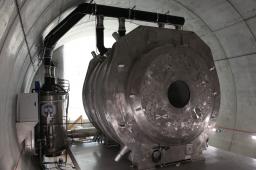
The technique of magnetic resonance imaging (MRI) is a diagnostic tool for research and neuroscience. Its evolution led to instruments for whole body operating at very high field from 0.5 to 1.5 tesla for medical examinations and 3 to 5 tesla for research instruments.
Objectives
Neurospin project aims to develop a centre with 4 MRI systems:
o Clinic Research : MRI 3T and 7T (Siemens)
o Pre Clinic Research : MRI 17T, small aperture (Bruker)
o Clinic Research : MRI 11.
Objective
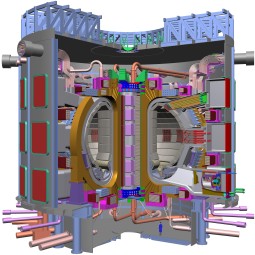
The objective of the ITER (« way » in latine) project is to go through the steps still necessary to enable the construction of a prototype producing electricity through nuclear fusion in the years 2050's.
Context
Research activities in the field of fusion:
Started in 1958, the fusion activity in France has been boosted with the construction and the operation of the Tore-Supra tokamak, built in Cadarache between 1983 and 1988.
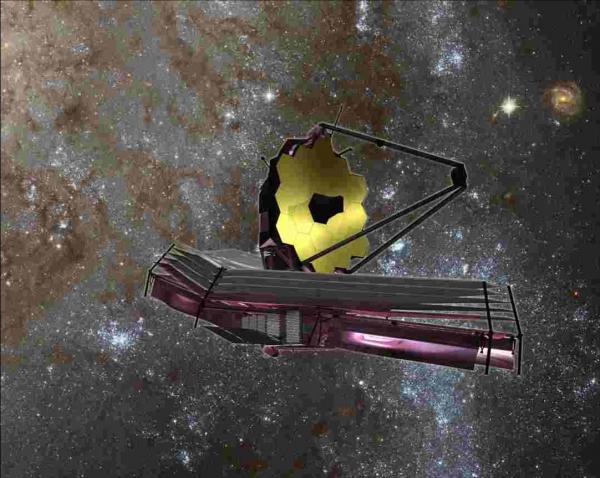
The James Webb Space Telescope (JWST) launched on 25 December 2021 is the successor of the Hubble Space Telescope. This is a NASA led mission with the participation of Europe, under the responsibility of the European Space Agency (ESA), and of Canada through the Canadian Space Agency (CSA). The telescope has a collecting area 7 times larger than that of the HST and is dedicated to observe the Universe in the infrared radiation (from 1 to 27 micrometers).
Analyse de la dynamique stellaire (rotation) par l’asteroseismologie
Stellar dymanics analysis using asteroseismology.
Pour les détails sur la mission KEPLER, voir le site Kepler-NASA
For details on the KEPLER mission, see the Kepler-NASA website
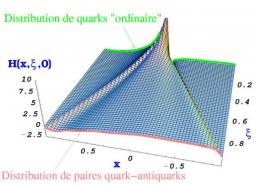
La nature de ces nouvelles fonctions
Des progrès théoriques importants survenus dans les cinq dernières années permettent d'étendre considérablement la notion de distributions de partons dans un nucléon ou un méson.
Neutrinoless double beta decay is a very rare nuclear transition, whose existence can provide essential information about neutrino properties like the hierarchy and the absolute mass scale. If observed, this process will prove that the lepton number conservation law can be violated and that we need to extend the Standard Model.

Ttitle of ERC project : Exploding stars from first principles: MAGnetars as engines of hypernovae and gamma-ray BURSTs
PI : Jérôme Guilet
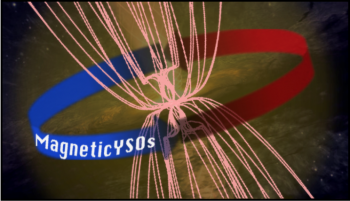
Title of ERC projec: Interpreting Dust Polarization Maps to Characterize the Role of the Magnetic Field in Star Formation Processes
PI: Anaelle Maury
NIKA (New IRAM KID Arrays): une camera continuum pour l'astronomie millimétrique.
Continuum camera for milimetrical astronomy.
Mesurer l’émission polarisée des grains de poussière du milieu interstellaire.
Measuring polarized emission of dust particles in interstellar medium.

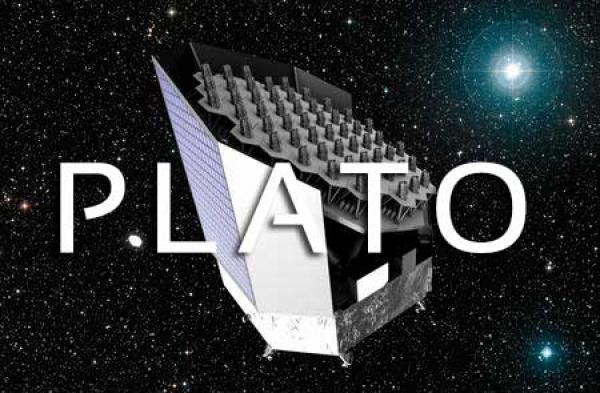
A space observatory developed by ESA for the characterization of exo-planetary systems launched in late 2026.
ESA stellar exo-planet system characterization to be launched at the end of 2026.
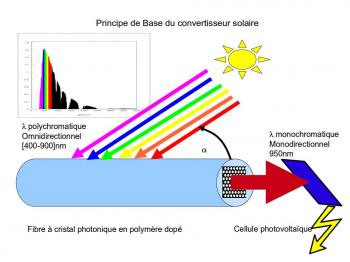
Basic principle of a Solar Concentrator with Rotating Photons Optical Fibers
Coming from fundamental research on solar neutrino, the Solar Quantum Concentrator( CSQ) is a future low-cost and high efficiency solution for photovoltaic solar energy. CSQ is made of a carpet bundle of Rotating Photon Optical Fibers (FORP) trapping, converting and guiding solar light towards a photovoltaic cell.
A small ribbon of photovoltaic cell is put on the perimeter of the fiber carpet.
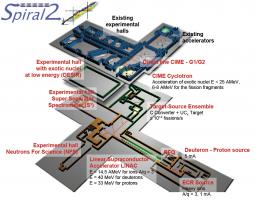
The future superconducting linear accelerator of Spiral2 will provide very high intensity of stable ions beams. They can be used to produce nuclei with very low cross sections, like superheavy elements or neutron deficient nuclei close to the limit of stability. S3 has been designed to handle these intense beams and select the rare nuclei of interest among the majority of contaminants, to identify and study them.
Simbol-X
A new generation space telescope for high-energy astrophysics
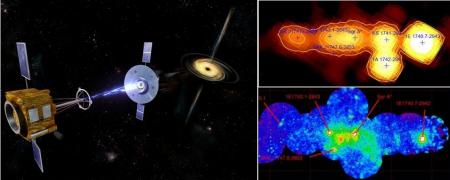
The Simbol-X project is a new generation high energy telescope operating in the 0.5 to 80 keV energy range, using in all this domain the principle of a telescope, i.e. the concentration of the radiation on a small sensitive surface (the eye, a photographic plate, a CCD camera, etc.).
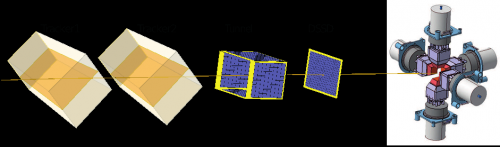
The high-intensity stable beams of the superconducting linear accelerator of the SPIRAL2 facility at GANIL coupled with the Super Separator Spectrometer (S3) and a high-performance focal-plane spectrometer will open new horizons for the research in the domains of rare nuclei and low cross-section phenomena at the limit of nuclear stability.
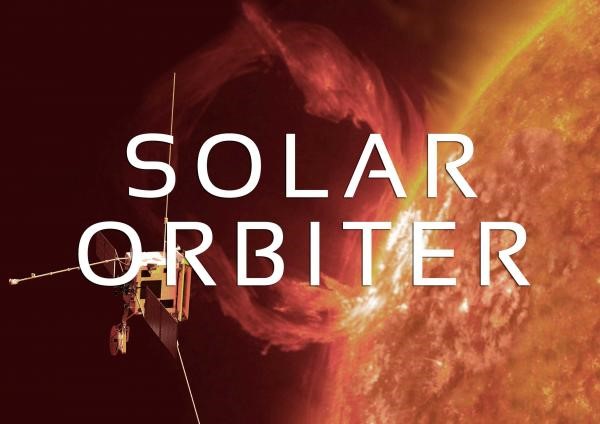
The objective of the Solar Orbiter mission is to understand the Sun's influence on the heliosphere (its magnetic cocoon), in order to understand how our star influences our solar system.

NASA's Spitzer space telescope, JWST's predecessor, was a very successful mission, observing in particular the spectra of several tens of thousands of sources at wavelengths ranging from around 5µm to 38µm. These observations complement JWST/MIRI data for long-wavelength diagnostics, and provide valuable diagnostics in conjunction with JWST or in preparation for future infrared missions.
Studying rotation dynamics of magnetic stars and their interaction with their planet system.
SPIRE - Stars: dynamical Processes driving tidal Interactions, Rotation and Evolution
Projet ERC (European Research Council) # 647383
Porteur CEA : S. Mathis

A mission dedicated to the study of gamma ray bursts
The SVOM Mission (Space based multi-band astronomical Variable Objects Monitor) is a chinese and french project dedicated to the detection and detailed study of GRBs. The launch of the satellite is planned for the beginning of the next decade.
Concept de télescope déployable pour l'observation dans l'infrarouge lointain.
Concept of a deployable telescope for far-infrared observation.


Understanding the physical mechanisms underlying the eruptive activity of the Sun and its stellar twins

